
 AI Fuels MLCC Market Growth; Breakthroughs in Barium Titanate Powder Spray Dryers Boost Rapid Domestic SubstitutionMarket Opportunities and Challenges of Barium Titanate Powder Amid the AI Boom
As AI technology penetrates 5G communications, IoT, automotive electronics and other sectors, demand for MLCCs, known as the "industrial staple", has exploded. Statistics show that premium 5G smartphones consume more MLCCs than their 4G counterparts, while new energy vehicles use five times as many MLCCs as conventional fuel cars in power systems, ranging from 2,000 to 2,500 pieces. The global MLCC market size is expected to exceed 149 billion RMB by 2025. As the world’s largest consumer market accounting for 45% of global demand, China boasts huge potential for domestic substitution.
As the core dielectric raw material of MLCCs, barium titanate (BaTiO₃) directly determines the dielectric constant, reliability and miniaturization potential of MLCCs. High-purity nano-sized barium titanate powder has become the mainstream market product. After sintering, it forms dense sintered bodies that enhance ceramic toughness and strength while lowering sintering temperatures. Nevertheless, the global high-end barium titanate powder market has long been monopolized by enterprises including Japan’s Sakai Chemical and U.S.-based Ferro. Domestic leading firm Sinocera holds merely 10% market share, making domestic substitution of high-performance powder an urgent priority.
Core Bottlenecks Restricting Domestic Production of Barium Titanate MLCC Powder
Liquid-phase methods (hydrothermal synthesis, sol-gel method, etc.) dominate the preparation of barium titanate MLCC powder. Grinding and drying are core processes governing powder quality, yet they are plagued by four major technical bottlenecks:
(1) Pain Points in the Grinding Stage
Severe particle agglomeration: Nano barium titanate has a large specific surface area, and van der Waals forces readily trigger hard agglomeration during grinding, worsening powder flowability and increasing porosity of sintered ceramics.
Uneven particle size distribution: Fluctuations in the rotational speed and media ratio of traditional sand mills widen the particle size span factor (ideal value < 1.2), resulting in inconsistent dielectric performance of MLCCs.
Risk of impurity contamination: Wear of grinding media and equipment surfaces easily introduces metallic impurities. Excess Fe²⁺, for instance, will degrade the insulation performance of MLCCs.
Conflict between energy consumption and efficiency: Conventional equipment requires over 8 hours of grinding to reach D50 = 100 nm, consuming massive energy and risking crystal phase transformation of barium titanate, which reduces its dielectric constant.
(2) Challenges in the Drying Stage
Thermal susceptibility defects: Barium titanate tends to undergo crystal transformation when drying temperature exceeds 200 °C, leading to higher dielectric loss.
Poor particle size control: Standard spray dryers feature a wide droplet size distribution (±10%), resulting in uneven powder particle sizes after drying and impairing uniformity during MLCC lamination molding.
Wall adhesion and contamination: Wet powder sticks to tower walls and forms secondary agglomerates. If the equipment is made of ordinary stainless steel, the leaching rate of Fe and Ni ions can reach 0.05%, lowering powder purity.
Insufficient sphericity: Traditional processes fail to achieve high spherical granulation (sphericity < 70%), leading to sintered MLCC compactness below 95% and unstable electrical performance.
Longxin Intelligent Full-Chain Solution: Disruptive Innovation Covering Grinding to Drying
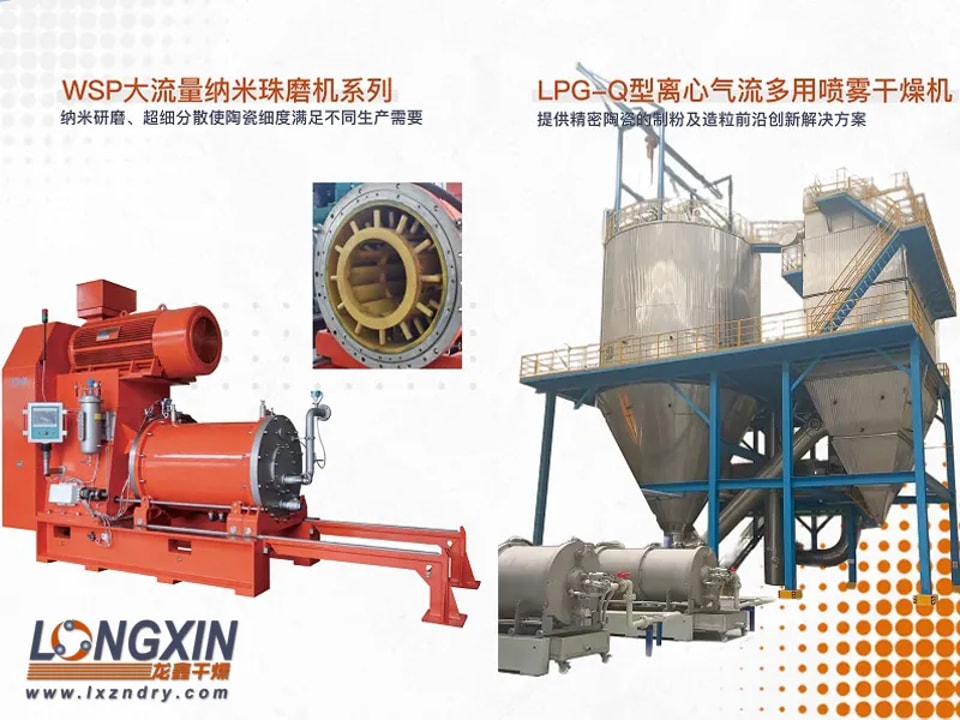
To address the above pain points, Longxin Intelligent launches an integrated solution combining turbine pin-type nano dual-power sand mill and centrifugal airflow multi-purpose spray dryer, enabling precise full-process control.
Turbine Pin-Type Nano Dual-Power Sand Mill: Revolutionary Breakthrough in Grinding Technology
Dual-Power Feeding & Silicon Carbide Grinding Chamber
A combined screw pump and peristaltic pump feeding system delivers precise flow control from 50 to 1000 L/h, compatible with slurries of various solid contents. The grinding chamber lined with silicon carbide features over 10 times higher wear resistance and superior thermal conductivity compared with conventional stainless steel. It stabilizes chamber temperature within a narrow range and eliminates crystal phase transformation of barium titanate caused by overheating.
The hybrid turbine-pin disperser generates 3D turbulent flow. Raw powder with D50 = 5 μm can be refined to a smaller D50 with a low particle size span factor after treatment.
Screenless Centrifugal Separation Technology
The self-developed screenless centrifugal separator is equipped with an independent drive motor adjustable from 5,000 to 12,000 rpm. During operation, centrifugal force from the disperser pushes 99% of zirconia grinding beads toward the chamber periphery to flow alongside materials and reduce collision wear. The high-speed rotating separator generates centrifugal force exceeding pump pressure to retain zirconia beads inside the chamber, while materials flow out through the separator center. Separation efficiency hits 99.9% with minimal bead wear, completely solving screen clogging issues.
Intelligent Control System
Integrated PLC algorithms monitor multiple parameters in real time and automatically optimize grinding strategies. Variable frequency drive technology cuts energy consumption and boosts grinding efficiency, shortening processing cycles compared with traditional equipment.
Centrifugal Airflow Multi-Purpose Spray Dryer: Precision Control for Drying and Granulation
Dual-Mode Atomization System
Centrifugal atomization unit: The high-speed gear-boosted atomizer achieves a disc linear velocity of 220 m/s with adjustable rotational speed for accurate droplet size control. The patented vortex liquid distribution plate (Patent No. ZL 2021 2 2093525.2) prevents nozzle blockage and delivers high-sphericity spherical granulation.
Airflow atomization unit: Two-fluid atomizing nozzles paired with compressed air can atomize high-viscosity slurries. Multiple spray guns can be installed to expand production capacity when a single nozzle cannot meet output demands, catering to micro-nano powder manufacturing.
Switching between the two modes can be completed within 30 minutes to satisfy diverse process requirements for MLCC formulation powder.
High-Purity & Uniformity Assurance Technology
All material contact components adopt mirror-polished 316L stainless steel (low Ra value) and zirconia ceramics. An annular air curtain inside the drying tower avoids wall adhesion and secondary agglomeration, delivering powder purity above 99%.
A multi-stage hot air distributor paired with a PID temperature control system maintains precise temperature gradients inside the tower. Optimized mixing modes of hot air and liquid droplets accommodate the thermal sensitivity of barium titanate precursors.
Automation & Intelligent Upgrades
An AI model built on thousands of experimental datasets automatically recommends optimal drying parameters (inlet air temperature: 150–300 °C, outlet air temperature: 80–120 °C) and dynamically adjusts settings in real time. Built-in IoT modules support remote equipment monitoring, shorten fault early warning response time and improve maintenance efficiency.
Value of Technological Innovation: Core Engine for Domestic Substitution
Superior performance indicators: Uniform particle size, high sphericity, high dielectric constant and low dielectric loss, reaching the top-tier level of equivalent products worldwide.
Distinct cost advantages: Reduced overall energy consumption, lower production cost per ton of powder and higher MLCC manufacturing yield.
Expanded production capacity: A single intelligent production line delivers high annual output, double the capacity of traditional lines, helping electronic ceramic material manufacturers gain access to major supply chains.
Driven by the AI trend toward miniaturization and high performance of electronic components, Longxin Intelligent delivers core equipment support branded "Longxin Intelligent Manufacturing" for MLCC domestic substitution through full-chain technological breakthroughs in grinding and drying. The company accelerates the localization rate of barium titanate powder and reshapes the industrial landscape of electronic ceramic materials.
Read More
AI Fuels MLCC Market Growth; Breakthroughs in Barium Titanate Powder Spray Dryers Boost Rapid Domestic SubstitutionMarket Opportunities and Challenges of Barium Titanate Powder Amid the AI Boom
As AI technology penetrates 5G communications, IoT, automotive electronics and other sectors, demand for MLCCs, known as the "industrial staple", has exploded. Statistics show that premium 5G smartphones consume more MLCCs than their 4G counterparts, while new energy vehicles use five times as many MLCCs as conventional fuel cars in power systems, ranging from 2,000 to 2,500 pieces. The global MLCC market size is expected to exceed 149 billion RMB by 2025. As the world’s largest consumer market accounting for 45% of global demand, China boasts huge potential for domestic substitution.
As the core dielectric raw material of MLCCs, barium titanate (BaTiO₃) directly determines the dielectric constant, reliability and miniaturization potential of MLCCs. High-purity nano-sized barium titanate powder has become the mainstream market product. After sintering, it forms dense sintered bodies that enhance ceramic toughness and strength while lowering sintering temperatures. Nevertheless, the global high-end barium titanate powder market has long been monopolized by enterprises including Japan’s Sakai Chemical and U.S.-based Ferro. Domestic leading firm Sinocera holds merely 10% market share, making domestic substitution of high-performance powder an urgent priority.
Core Bottlenecks Restricting Domestic Production of Barium Titanate MLCC Powder
Liquid-phase methods (hydrothermal synthesis, sol-gel method, etc.) dominate the preparation of barium titanate MLCC powder. Grinding and drying are core processes governing powder quality, yet they are plagued by four major technical bottlenecks:
(1) Pain Points in the Grinding Stage
Severe particle agglomeration: Nano barium titanate has a large specific surface area, and van der Waals forces readily trigger hard agglomeration during grinding, worsening powder flowability and increasing porosity of sintered ceramics.
Uneven particle size distribution: Fluctuations in the rotational speed and media ratio of traditional sand mills widen the particle size span factor (ideal value < 1.2), resulting in inconsistent dielectric performance of MLCCs.
Risk of impurity contamination: Wear of grinding media and equipment surfaces easily introduces metallic impurities. Excess Fe²⁺, for instance, will degrade the insulation performance of MLCCs.
Conflict between energy consumption and efficiency: Conventional equipment requires over 8 hours of grinding to reach D50 = 100 nm, consuming massive energy and risking crystal phase transformation of barium titanate, which reduces its dielectric constant.
(2) Challenges in the Drying Stage
Thermal susceptibility defects: Barium titanate tends to undergo crystal transformation when drying temperature exceeds 200 °C, leading to higher dielectric loss.
Poor particle size control: Standard spray dryers feature a wide droplet size distribution (±10%), resulting in uneven powder particle sizes after drying and impairing uniformity during MLCC lamination molding.
Wall adhesion and contamination: Wet powder sticks to tower walls and forms secondary agglomerates. If the equipment is made of ordinary stainless steel, the leaching rate of Fe and Ni ions can reach 0.05%, lowering powder purity.
Insufficient sphericity: Traditional processes fail to achieve high spherical granulation (sphericity < 70%), leading to sintered MLCC compactness below 95% and unstable electrical performance.
Longxin Intelligent Full-Chain Solution: Disruptive Innovation Covering Grinding to Drying
To address the above pain points, Longxin Intelligent launches an integrated solution combining turbine pin-type nano dual-power sand mill and centrifugal airflow multi-purpose spray dryer, enabling precise full-process control.
Turbine Pin-Type Nano Dual-Power Sand Mill: Revolutionary Breakthrough in Grinding Technology
Dual-Power Feeding & Silicon Carbide Grinding Chamber
A combined screw pump and peristaltic pump feeding system delivers precise flow control from 50 to 1000 L/h, compatible with slurries of various solid contents. The grinding chamber lined with silicon carbide features over 10 times higher wear resistance and superior thermal conductivity compared with conventional stainless steel. It stabilizes chamber temperature within a narrow range and eliminates crystal phase transformation of barium titanate caused by overheating.
The hybrid turbine-pin disperser generates 3D turbulent flow. Raw powder with D50 = 5 μm can be refined to a smaller D50 with a low particle size span factor after treatment.
Screenless Centrifugal Separation Technology
The self-developed screenless centrifugal separator is equipped with an independent drive motor adjustable from 5,000 to 12,000 rpm. During operation, centrifugal force from the disperser pushes 99% of zirconia grinding beads toward the chamber periphery to flow alongside materials and reduce collision wear. The high-speed rotating separator generates centrifugal force exceeding pump pressure to retain zirconia beads inside the chamber, while materials flow out through the separator center. Separation efficiency hits 99.9% with minimal bead wear, completely solving screen clogging issues.
Intelligent Control System
Integrated PLC algorithms monitor multiple parameters in real time and automatically optimize grinding strategies. Variable frequency drive technology cuts energy consumption and boosts grinding efficiency, shortening processing cycles compared with traditional equipment.
Centrifugal Airflow Multi-Purpose Spray Dryer: Precision Control for Drying and Granulation
Dual-Mode Atomization System
Centrifugal atomization unit: The high-speed gear-boosted atomizer achieves a disc linear velocity of 220 m/s with adjustable rotational speed for accurate droplet size control. The patented vortex liquid distribution plate (Patent No. ZL 2021 2 2093525.2) prevents nozzle blockage and delivers high-sphericity spherical granulation.
Airflow atomization unit: Two-fluid atomizing nozzles paired with compressed air can atomize high-viscosity slurries. Multiple spray guns can be installed to expand production capacity when a single nozzle cannot meet output demands, catering to micro-nano powder manufacturing.
Switching between the two modes can be completed within 30 minutes to satisfy diverse process requirements for MLCC formulation powder.
High-Purity & Uniformity Assurance Technology
All material contact components adopt mirror-polished 316L stainless steel (low Ra value) and zirconia ceramics. An annular air curtain inside the drying tower avoids wall adhesion and secondary agglomeration, delivering powder purity above 99%.
A multi-stage hot air distributor paired with a PID temperature control system maintains precise temperature gradients inside the tower. Optimized mixing modes of hot air and liquid droplets accommodate the thermal sensitivity of barium titanate precursors.
Automation & Intelligent Upgrades
An AI model built on thousands of experimental datasets automatically recommends optimal drying parameters (inlet air temperature: 150–300 °C, outlet air temperature: 80–120 °C) and dynamically adjusts settings in real time. Built-in IoT modules support remote equipment monitoring, shorten fault early warning response time and improve maintenance efficiency.
Value of Technological Innovation: Core Engine for Domestic Substitution
Superior performance indicators: Uniform particle size, high sphericity, high dielectric constant and low dielectric loss, reaching the top-tier level of equivalent products worldwide.
Distinct cost advantages: Reduced overall energy consumption, lower production cost per ton of powder and higher MLCC manufacturing yield.
Expanded production capacity: A single intelligent production line delivers high annual output, double the capacity of traditional lines, helping electronic ceramic material manufacturers gain access to major supply chains.
Driven by the AI trend toward miniaturization and high performance of electronic components, Longxin Intelligent delivers core equipment support branded "Longxin Intelligent Manufacturing" for MLCC domestic substitution through full-chain technological breakthroughs in grinding and drying. The company accelerates the localization rate of barium titanate powder and reshapes the industrial landscape of electronic ceramic materials.
Read More Tap into the Big Health Market: Oligosaccharide Spray Dryers Usher in a New Era of High-Quality Functional SugarsOligosaccharides: The Golden Ingredient for Functional Foods Amid the Big Health Boom
As guardians of intestinal health, functional oligosaccharides keep unlocking massive market potential thanks to their unique physiological functions and application strengths. Among them, Isomaltooligosaccharide (IMO) ranks as the most widely produced and applied functional oligosaccharide, dominating the industry with four core advantages:
Low sweetness with no health burdens to meet wellness demands
It delivers only 30%–50% of sucrose’s sweetness with a mild, non-cloying taste. It can partially replace sucrose in low-sugar and low-calorie foods, eliminating health risks brought by traditional high-sugar diets.
Anti-cavity oral protection suitable for all age groups
It cannot be broken down by oral bacteria to produce acid that erodes tooth enamel. Widely used in children’s snacks and elderly food, it addresses the cavity risks of conventional candies and baked goods.
High tolerance for broad application coverage
Most consumers will not suffer bloating or diarrhea after intake. It avoids sharp blood sugar spikes for diabetics and serves as a dairy substitute for lactose-intolerant people, catering to all age brackets.
Excellent thermal and acid stability to break process limitations
It boasts outstanding resistance to heat and acid. Its molecular structure remains intact during high-temperature baking and acidic beverage production at pH 2–12 without losing functional activity. Compatible with baking, sterilization and long-term storage, it offers food manufacturers greater room for formula innovation.
Surging Market Demand for Functional Oligosaccharides
Market demand for functional oligosaccharides is exploding. Industry statistics show the global market registers an annual growth rate well above average. As the world’s largest producer and consumer, China’s market size exceeded 8 billion RMB in 2024.
Application boundaries have expanded beyond traditional dairy and beverages to infant formula, health supplements and pharmaceutical excipients. For instance, Galactooligosaccharide (GOS) is added to infant milk powder to mimic the prebiotic benefits of breast milk; isomaltooligosaccharide acts as the core raw material for intestinal regulators in health products. Such applications raise stricter standards for oligosaccharide powder: high purity, fine particle size and zero impurities. The technical performance of spray drying equipment directly determines whether manufacturers can seize market opportunities.
Prominent Industry Pain Points: Four Core Challenges of Conventional Oligosaccharide Spray Dryers
Despite bright market prospects, traditional spray drying equipment suffers poor material adaptability, a major bottleneck restricting high-quality industrial development. Given oligosaccharide syrup’s high viscosity and strong hygroscopicity, conventional centrifugal spray dryers face four critical drawbacks:
Severe tower wall buildup leading to heavy material loss and safety hazards
High viscosity and surface tension cause atomized syrup droplets to stick to the tower inner wall, forming agglomerated powder deposits. Long-term high-temperature baking darkens and scorches the deposits. Factories must halt production every shift to clean wall buildup, then re-dissolve, concentrate and re-dry recovered materials. This pushes up labor time and energy consumption. Worse, incomplete cleaning may mix burnt particles into finished powder, forming black specks that compromise purity and food safety.
Inadequate drying leading to excessive moisture content
Conventional drying towers often feature insufficient effective volume or underpowered heating systems, failing to fully dry atomized droplets inside the tower. For example, a centrifugal spray dryer designed to produce powder with 95% dry matter often yields products exceeding moisture standards. Extra post-drying procedures cut production efficiency and risk damaging oligosaccharide functionality via secondary heating.
Flawed structural design exacerbating process defects
Many towers suffer oversized cone angles and poorly configured air outlets. Overly large cones shorten material residence time, preventing full contact with hot airflow; ill-designed outlets create turbulent air and uneven droplet distribution, worsening wall adhesion and incomplete drying.
Poor atomization resulting in inconsistent particle size
Unstable atomization and overlong spray distances of traditional centrifugal atomizers produce droplets with drastically varying diameters (some exceeding 200 μm). Tiny droplets are swept away by hot air as dust loss, while oversized droplets retain excess moisture and form wet powder. The final product features uneven particle size and poor flowability, complicating subsequent packaging and application.
These issues translate into low output, high energy consumption and high reject rates. They also fail downstream clients’ requirements for high-purity, high-activity and stable oligosaccharide powder, becoming a stumbling block for manufacturers competing in the big health market.
Against the backdrop of the in-depth implementation of the Healthy China 2030 Strategy, functional food stands among the fastest-growing segments of the food industry. Consumers’ rising demand for natural, healthy and functional ingredients drives upgrades across the food additive sector. Functional oligosaccharides such as IMO, Fructooligosaccharide (FOS) and Xylooligosaccharide (XOS), with core prebiotic properties, form a vital link connecting food manufacturing and the big health industry.
Spray drying, the core process converting oligosaccharide syrup into high-purity powder, emerges as the decisive factor governing product quality, production efficiency and market competitiveness. With years of R&D expertise in drying equipment, Longxin Drying has launched an innovative pressure spray dryer tailored to the oligosaccharide industry’s pain points. Groundbreaking technology eliminates traditional process bottlenecks and opens a new chapter of premium production for functional sugars, sugar alcohols and food additives.
Innovation Solves Industrial Difficulties: Technical Breakthroughs of Longxin’s New Pressure Spray Dryer
Drawing on decades of drying equipment R&D experience and the physical properties of oligosaccharide syrup, Longxin Drying has developed the all-new YPG Oligosaccharide-Specific Pressure Spray Dryer. Five core technical innovations eliminate inherent flaws of conventional units and deliver efficient, energy-saving, high-quality production:
Precision Atomization System: Accurate particle control to resolve incomplete drying
Customized for high-viscosity oligosaccharide syrup, the multi-channel pressure atomizer comes with interchangeable ceramic or stainless steel inserts (orifice sizes: 0.5–3.0 mm) and precisely adjustable atomization angles for tight control over average droplet size. Unlike centrifugal atomizers plagued by overlong spray distances and uneven particle distribution, this system instantly boosts droplet specific surface area for full contact with hot air and rapid moisture evaporation. It eliminates incomplete drying and excess moisture, stabilizing dry matter content of finished powder above 95% to meet high-purity standards.
Optimized Drying Tower Structure: Anti-stick design to cut material loss
Two structural breakthroughs address tower wall powder buildup:
Optimized cone angle: Set at 45°, much narrower than the 60°+ cones of traditional equipment, it extends material residence time for thorough drying. The tower body adopts mirror-polished 304 stainless steel to reduce adhesion surfaces and minimize wall deposits.
Upgraded hot air distributor: A 3D stereoscopic hot air distributor delivers uniform wind speed with minimal deviation, generating stable spiral hot airflow to avoid local overheating and burnt powder. Droplets disperse evenly without direct impact on tower walls, fundamentally reducing adhesion.
The tower is also equipped with an air-swept anti-stick system and timed air hammers to clear minor deposits in real time, removing the need for frequent production halts and lowering material loss rates.
Two-Stage Powder Recovery System: Efficient capture to boost output and purity
Conventional single-stage bag dust collectors easily suffer blocked filter bags that reduce airflow and limit throughput. Longxin adopts a dual recovery system combining two-stage cyclone separators and pulse back-blow bag dust collectors for superior powder capture efficiency.
Intelligent Temperature & Feeding System: Stable production compatible with complex processes
To preserve oligosaccharide functionality, multi-mode heating (steam, electric, gas optional) is fitted with a Siemens PLC and advanced PID intelligent algorithm for precise, adjustable inlet air temperature control. Accurate temperature regulation prevents local overheating that causes oligosaccharide hydrolysis or denaturation.
The feeding system uses positive displacement diaphragm pumps with adjustable flow rates of 0.5–20 m³/h, integrated with online viscometers and pressure sensors. It monitors feed viscosity and delivery pressure in real time and automatically adjusts feeding speed to maintain consistent atomization, accommodating oligosaccharide syrups of varying concentrations without repeated parameter tuning.
Energy-Saving & Eco-Friendly Design: Cost reduction and sustainable green production
For energy efficiency, waste heat recovery technology recycles residual heat from exhaust gas to preheat incoming fresh air, cutting overall energy consumption by 10–20% versus traditional dryers. For environmental compliance, an exhaust treatment system combining pulse dust removal and activated carbon adsorption delivers low emission concentrations to meet national environmental standards, supporting manufacturers’ green production targets amid tightening environmental regulations.
Empowering Industrial Upgrade: Longxin Technology Helps Manufacturers Capture Big Health Market Opportunities
The new Longxin pressure spray dryer resolves efficiency and quality bottlenecks in oligosaccharide production and creates multi-dimensional value for industry clients:
Premium product quality
Spherical powder with uniform particle size, excellent flowability and instant solubility is directly applicable to high-end segments including infant formula and health supplements, lifting product added value.
Higher production efficiency
Single-unit output surpasses traditional equipment, shortening annual production hours and slashing labor costs.
Expanded application scope
The dryer suits drying of various functional ingredients such as FOS, XOS and sugar alcohols. It supports both hot-air drying and cold-air granulation modes to cover beverage, baking, pharmaceutical and other production lines. One machine fulfills multiple production demands and reduces capital expenditure on separate equipment.
Tap Into the Big Health Market Through Technological Innovation
Amid the booming big health industry, functional oligosaccharides as golden ingredients hold untapped market potential. Spray drying, a core production link, forms a core competitive moat for manufacturers.
Guided by the mission of solving industrial pain points and driving industrial upgrading, Longxin Drying delivers customized, high-performance drying solutions for functional sugar, sugar alcohol and food additive manufacturers through continuous technological innovation. Moving forward, Longxin will deepen research into oligosaccharide processing technology and develop more efficient, energy-saving and intelligent equipment. We support more manufacturers to seize big health market opportunities and jointly write a new chapter of high-quality development for functional sugars.Read More
Tap into the Big Health Market: Oligosaccharide Spray Dryers Usher in a New Era of High-Quality Functional SugarsOligosaccharides: The Golden Ingredient for Functional Foods Amid the Big Health Boom
As guardians of intestinal health, functional oligosaccharides keep unlocking massive market potential thanks to their unique physiological functions and application strengths. Among them, Isomaltooligosaccharide (IMO) ranks as the most widely produced and applied functional oligosaccharide, dominating the industry with four core advantages:
Low sweetness with no health burdens to meet wellness demands
It delivers only 30%–50% of sucrose’s sweetness with a mild, non-cloying taste. It can partially replace sucrose in low-sugar and low-calorie foods, eliminating health risks brought by traditional high-sugar diets.
Anti-cavity oral protection suitable for all age groups
It cannot be broken down by oral bacteria to produce acid that erodes tooth enamel. Widely used in children’s snacks and elderly food, it addresses the cavity risks of conventional candies and baked goods.
High tolerance for broad application coverage
Most consumers will not suffer bloating or diarrhea after intake. It avoids sharp blood sugar spikes for diabetics and serves as a dairy substitute for lactose-intolerant people, catering to all age brackets.
Excellent thermal and acid stability to break process limitations
It boasts outstanding resistance to heat and acid. Its molecular structure remains intact during high-temperature baking and acidic beverage production at pH 2–12 without losing functional activity. Compatible with baking, sterilization and long-term storage, it offers food manufacturers greater room for formula innovation.
Surging Market Demand for Functional Oligosaccharides
Market demand for functional oligosaccharides is exploding. Industry statistics show the global market registers an annual growth rate well above average. As the world’s largest producer and consumer, China’s market size exceeded 8 billion RMB in 2024.
Application boundaries have expanded beyond traditional dairy and beverages to infant formula, health supplements and pharmaceutical excipients. For instance, Galactooligosaccharide (GOS) is added to infant milk powder to mimic the prebiotic benefits of breast milk; isomaltooligosaccharide acts as the core raw material for intestinal regulators in health products. Such applications raise stricter standards for oligosaccharide powder: high purity, fine particle size and zero impurities. The technical performance of spray drying equipment directly determines whether manufacturers can seize market opportunities.
Prominent Industry Pain Points: Four Core Challenges of Conventional Oligosaccharide Spray Dryers
Despite bright market prospects, traditional spray drying equipment suffers poor material adaptability, a major bottleneck restricting high-quality industrial development. Given oligosaccharide syrup’s high viscosity and strong hygroscopicity, conventional centrifugal spray dryers face four critical drawbacks:
Severe tower wall buildup leading to heavy material loss and safety hazards
High viscosity and surface tension cause atomized syrup droplets to stick to the tower inner wall, forming agglomerated powder deposits. Long-term high-temperature baking darkens and scorches the deposits. Factories must halt production every shift to clean wall buildup, then re-dissolve, concentrate and re-dry recovered materials. This pushes up labor time and energy consumption. Worse, incomplete cleaning may mix burnt particles into finished powder, forming black specks that compromise purity and food safety.
Inadequate drying leading to excessive moisture content
Conventional drying towers often feature insufficient effective volume or underpowered heating systems, failing to fully dry atomized droplets inside the tower. For example, a centrifugal spray dryer designed to produce powder with 95% dry matter often yields products exceeding moisture standards. Extra post-drying procedures cut production efficiency and risk damaging oligosaccharide functionality via secondary heating.
Flawed structural design exacerbating process defects
Many towers suffer oversized cone angles and poorly configured air outlets. Overly large cones shorten material residence time, preventing full contact with hot airflow; ill-designed outlets create turbulent air and uneven droplet distribution, worsening wall adhesion and incomplete drying.
Poor atomization resulting in inconsistent particle size
Unstable atomization and overlong spray distances of traditional centrifugal atomizers produce droplets with drastically varying diameters (some exceeding 200 μm). Tiny droplets are swept away by hot air as dust loss, while oversized droplets retain excess moisture and form wet powder. The final product features uneven particle size and poor flowability, complicating subsequent packaging and application.
These issues translate into low output, high energy consumption and high reject rates. They also fail downstream clients’ requirements for high-purity, high-activity and stable oligosaccharide powder, becoming a stumbling block for manufacturers competing in the big health market.
Against the backdrop of the in-depth implementation of the Healthy China 2030 Strategy, functional food stands among the fastest-growing segments of the food industry. Consumers’ rising demand for natural, healthy and functional ingredients drives upgrades across the food additive sector. Functional oligosaccharides such as IMO, Fructooligosaccharide (FOS) and Xylooligosaccharide (XOS), with core prebiotic properties, form a vital link connecting food manufacturing and the big health industry.
Spray drying, the core process converting oligosaccharide syrup into high-purity powder, emerges as the decisive factor governing product quality, production efficiency and market competitiveness. With years of R&D expertise in drying equipment, Longxin Drying has launched an innovative pressure spray dryer tailored to the oligosaccharide industry’s pain points. Groundbreaking technology eliminates traditional process bottlenecks and opens a new chapter of premium production for functional sugars, sugar alcohols and food additives.
Innovation Solves Industrial Difficulties: Technical Breakthroughs of Longxin’s New Pressure Spray Dryer
Drawing on decades of drying equipment R&D experience and the physical properties of oligosaccharide syrup, Longxin Drying has developed the all-new YPG Oligosaccharide-Specific Pressure Spray Dryer. Five core technical innovations eliminate inherent flaws of conventional units and deliver efficient, energy-saving, high-quality production:
Precision Atomization System: Accurate particle control to resolve incomplete drying
Customized for high-viscosity oligosaccharide syrup, the multi-channel pressure atomizer comes with interchangeable ceramic or stainless steel inserts (orifice sizes: 0.5–3.0 mm) and precisely adjustable atomization angles for tight control over average droplet size. Unlike centrifugal atomizers plagued by overlong spray distances and uneven particle distribution, this system instantly boosts droplet specific surface area for full contact with hot air and rapid moisture evaporation. It eliminates incomplete drying and excess moisture, stabilizing dry matter content of finished powder above 95% to meet high-purity standards.
Optimized Drying Tower Structure: Anti-stick design to cut material loss
Two structural breakthroughs address tower wall powder buildup:
Optimized cone angle: Set at 45°, much narrower than the 60°+ cones of traditional equipment, it extends material residence time for thorough drying. The tower body adopts mirror-polished 304 stainless steel to reduce adhesion surfaces and minimize wall deposits.
Upgraded hot air distributor: A 3D stereoscopic hot air distributor delivers uniform wind speed with minimal deviation, generating stable spiral hot airflow to avoid local overheating and burnt powder. Droplets disperse evenly without direct impact on tower walls, fundamentally reducing adhesion.
The tower is also equipped with an air-swept anti-stick system and timed air hammers to clear minor deposits in real time, removing the need for frequent production halts and lowering material loss rates.
Two-Stage Powder Recovery System: Efficient capture to boost output and purity
Conventional single-stage bag dust collectors easily suffer blocked filter bags that reduce airflow and limit throughput. Longxin adopts a dual recovery system combining two-stage cyclone separators and pulse back-blow bag dust collectors for superior powder capture efficiency.
Intelligent Temperature & Feeding System: Stable production compatible with complex processes
To preserve oligosaccharide functionality, multi-mode heating (steam, electric, gas optional) is fitted with a Siemens PLC and advanced PID intelligent algorithm for precise, adjustable inlet air temperature control. Accurate temperature regulation prevents local overheating that causes oligosaccharide hydrolysis or denaturation.
The feeding system uses positive displacement diaphragm pumps with adjustable flow rates of 0.5–20 m³/h, integrated with online viscometers and pressure sensors. It monitors feed viscosity and delivery pressure in real time and automatically adjusts feeding speed to maintain consistent atomization, accommodating oligosaccharide syrups of varying concentrations without repeated parameter tuning.
Energy-Saving & Eco-Friendly Design: Cost reduction and sustainable green production
For energy efficiency, waste heat recovery technology recycles residual heat from exhaust gas to preheat incoming fresh air, cutting overall energy consumption by 10–20% versus traditional dryers. For environmental compliance, an exhaust treatment system combining pulse dust removal and activated carbon adsorption delivers low emission concentrations to meet national environmental standards, supporting manufacturers’ green production targets amid tightening environmental regulations.
Empowering Industrial Upgrade: Longxin Technology Helps Manufacturers Capture Big Health Market Opportunities
The new Longxin pressure spray dryer resolves efficiency and quality bottlenecks in oligosaccharide production and creates multi-dimensional value for industry clients:
Premium product quality
Spherical powder with uniform particle size, excellent flowability and instant solubility is directly applicable to high-end segments including infant formula and health supplements, lifting product added value.
Higher production efficiency
Single-unit output surpasses traditional equipment, shortening annual production hours and slashing labor costs.
Expanded application scope
The dryer suits drying of various functional ingredients such as FOS, XOS and sugar alcohols. It supports both hot-air drying and cold-air granulation modes to cover beverage, baking, pharmaceutical and other production lines. One machine fulfills multiple production demands and reduces capital expenditure on separate equipment.
Tap Into the Big Health Market Through Technological Innovation
Amid the booming big health industry, functional oligosaccharides as golden ingredients hold untapped market potential. Spray drying, a core production link, forms a core competitive moat for manufacturers.
Guided by the mission of solving industrial pain points and driving industrial upgrading, Longxin Drying delivers customized, high-performance drying solutions for functional sugar, sugar alcohol and food additive manufacturers through continuous technological innovation. Moving forward, Longxin will deepen research into oligosaccharide processing technology and develop more efficient, energy-saving and intelligent equipment. We support more manufacturers to seize big health market opportunities and jointly write a new chapter of high-quality development for functional sugars.Read More Leveraging the Huge Health Market: Oligosaccharide Spray Dryers Usher in a New Era of High-Quality Functional SugarsFueled by the steady implementation of the Healthy China 2030 Strategy and consumption upgrading, the big health industry is witnessing tremendous growth opportunities. As a core segment of the big health sector, functional food has become the key driver for transformation and upgrading within the food manufacturing industry.
Oligosaccharides, a mainstream type of prebiotics widely popular in functional foods, deliver multiple physiological benefits: regulating intestinal flora, boosting immunity, low calorific value and anti-cavity properties. They are rapidly applied in dairy products, beverages, baked goods, health care products, pharmaceuticals and many other fields, accompanied by continuously rising market demand.
However, as the market sets higher standards for oligosaccharide product quality, traditional spray drying processes are confronted with prominent challenges. Especially when converting oligosaccharide syrup into high-purity, high-flowability powder, conventional equipment suffers from multiple technical bottlenecks that greatly limit improvements in product quality and production efficiency.
Three Core Pain Points of Traditional Equipment for Oligosaccharide Spray Drying
Heavy wall adhesion due to high-viscosity oligosaccharide syrup
Oligosaccharides feature complex molecular structures, so atomized syrup droplets remain highly adhesive. If the drying system is poorly designed, droplets will stick to the inner wall of the drying tower, causing material loss, difficult cleaning, and even halts in continuous production.
Inadequate drying and poor moisture control
Many existing devices adopt drying towers with insufficient effective volume or underpowered heating systems. Atomized droplets cannot be fully dried within limited residence time, resulting in finished powder with excessive moisture. This undermines the solubility and flowability of products, and may trigger caking, mildew and other quality hazards, severely impairing performance in downstream end products.
Defective structural design leading to severe powder buildup on tower walls
Problems including excessively large tower cone angles, unreasonable air outlet layout and uneven hot air distribution create turbulent airflow. Partially dried materials collide with and adhere to the tower wall ahead of schedule. Besides, unsatisfactory atomization or excessive spray distance causes droplets to hit the tower wall before full drying, forming wet powder agglomerates and lowering product yield and purity.
More critically, residual powder left uncleaned will carbonize in high-temperature areas such as the tower top and generate black spots, which directly contaminate finished products and damage product appearance and food safety.
To tackle these common industry-wide hurdles, Longxin Drying relies on technological innovation, conducts in-depth research on the material properties and drying mechanisms of oligosaccharides, and releases the new-generation YPG Pressure Spray Drying & Cooling Unit. Custom-designed for functional sugars, sugar alcohols and food additive manufacturers, this unit fully breaks through the technical bottlenecks of oligosaccharide spray drying.
Innovation as the Core of Progress: Technical Breakthroughs of Longxin Pressure Spray Dryers
Integrating high-efficiency drying, precision granulation, intelligent control and energy conservation, Longxin YPG Pressure Spray Dryer adopts six coordinated optimized core systems to reinvent advanced drying technologies for functional sugars.
Intelligent Feeding System Ensuring Stable Conveyance
Equipped with high-precision diaphragm pumps and an online viscosity monitoring device, the system enables stable high-pressure delivery of high-viscosity oligosaccharide syrup to the atomizer, eliminating pulsation and blockage to realize consistent and uninterrupted feeding.
Precision Atomization System Enabling Micron-Scale Droplet Control
Fitted with multi-channel pressure atomizers with adjustable nozzle diameters (0.5–3.0 mm) and atomization angles (60°–90°), the machine atomizes syrup into ultrafine droplets of 10–200 μm. Its specific surface area reaches 500–1500 ㎡/kg, greatly accelerating water evaporation and shortening drying time to 15–60 seconds, making it perfectly suitable for heat-sensitive materials.
Dynamic Drying System Optimizing Airflow and Thermal Field Distribution
The self-developed 3D three-dimensional hot air distributor delivers evenly distributed hot air with minimal wind speed deviation. Combined with a drying tower with optimized cone angle, the design eliminates airflow dead zones and avoids material wall adhesion. The tower body is fitted with an automatic air hammer/electric hammer knocking system and a cooling air ring at the lower cone to prevent burnt powder.
Multi-Stage Separation System Boosting Recovery Rate and Purity
A dual-stage powder collection setup consisting of cyclone separators and pulse back-blow bag dust collectors achieves a total material recovery rate of over 95%. The automatic pulse back-blow function clears powder accumulated on filter bags, preventing air volume drop caused by filter blockage and securing long-term stable system operation.
Modular Secondary Treatment Meeting Diversified Production Needs
Clients can optionally install a ZLG vibrating fluidized bed secondary drying system to further reduce powder moisture and improve flowability; or integrate a CIP clean-in-place system to realize automatic cleaning and sterilization, complying with strict hygiene and safety standards.
Intelligent Control System Realizing Full-Process Automation
Adopting Siemens PLC + touch screen control system, it monitors real-time key parameters including inlet/outlet air temperature, feed liquid pressure and tower negative pressure, and supports remote monitoring and data recording. Advanced PID control algorithms stabilize production processes, reduce manual intervention and guarantee consistent batch quality.
From Capable Drying to Premium Drying: Longxin Fuels the Upgrade of the Functional Sugar Industry
Centered on maximizing customer value, Longxin Drying provides full-lifecycle services targeting the drying demands of high-value products such as oligosaccharides and sugar alcohols, covering process design, pilot test verification and turnkey projects. We help customers achieve production goals of high yield, high purity, low energy consumption and low failure rate.
Against the backdrop of the booming big health industry, the functional sugar sector is shifting from extensive production to refined precision manufacturing. As a pioneer in spray drying technological innovation, Longxin Drying will keep focusing on the functional sugar drying sector, empower industrial upgrading with innovative technologies, assist customers in gaining an upper hand in fierce market competition, and jointly write a new chapter for high-quality development of functional sugars.
Longxin Spray Dryers — Every particle of functional sugar carries the weight of health!Read More
Leveraging the Huge Health Market: Oligosaccharide Spray Dryers Usher in a New Era of High-Quality Functional SugarsFueled by the steady implementation of the Healthy China 2030 Strategy and consumption upgrading, the big health industry is witnessing tremendous growth opportunities. As a core segment of the big health sector, functional food has become the key driver for transformation and upgrading within the food manufacturing industry.
Oligosaccharides, a mainstream type of prebiotics widely popular in functional foods, deliver multiple physiological benefits: regulating intestinal flora, boosting immunity, low calorific value and anti-cavity properties. They are rapidly applied in dairy products, beverages, baked goods, health care products, pharmaceuticals and many other fields, accompanied by continuously rising market demand.
However, as the market sets higher standards for oligosaccharide product quality, traditional spray drying processes are confronted with prominent challenges. Especially when converting oligosaccharide syrup into high-purity, high-flowability powder, conventional equipment suffers from multiple technical bottlenecks that greatly limit improvements in product quality and production efficiency.
Three Core Pain Points of Traditional Equipment for Oligosaccharide Spray Drying
Heavy wall adhesion due to high-viscosity oligosaccharide syrup
Oligosaccharides feature complex molecular structures, so atomized syrup droplets remain highly adhesive. If the drying system is poorly designed, droplets will stick to the inner wall of the drying tower, causing material loss, difficult cleaning, and even halts in continuous production.
Inadequate drying and poor moisture control
Many existing devices adopt drying towers with insufficient effective volume or underpowered heating systems. Atomized droplets cannot be fully dried within limited residence time, resulting in finished powder with excessive moisture. This undermines the solubility and flowability of products, and may trigger caking, mildew and other quality hazards, severely impairing performance in downstream end products.
Defective structural design leading to severe powder buildup on tower walls
Problems including excessively large tower cone angles, unreasonable air outlet layout and uneven hot air distribution create turbulent airflow. Partially dried materials collide with and adhere to the tower wall ahead of schedule. Besides, unsatisfactory atomization or excessive spray distance causes droplets to hit the tower wall before full drying, forming wet powder agglomerates and lowering product yield and purity.
More critically, residual powder left uncleaned will carbonize in high-temperature areas such as the tower top and generate black spots, which directly contaminate finished products and damage product appearance and food safety.
To tackle these common industry-wide hurdles, Longxin Drying relies on technological innovation, conducts in-depth research on the material properties and drying mechanisms of oligosaccharides, and releases the new-generation YPG Pressure Spray Drying & Cooling Unit. Custom-designed for functional sugars, sugar alcohols and food additive manufacturers, this unit fully breaks through the technical bottlenecks of oligosaccharide spray drying.
Innovation as the Core of Progress: Technical Breakthroughs of Longxin Pressure Spray Dryers
Integrating high-efficiency drying, precision granulation, intelligent control and energy conservation, Longxin YPG Pressure Spray Dryer adopts six coordinated optimized core systems to reinvent advanced drying technologies for functional sugars.
Intelligent Feeding System Ensuring Stable Conveyance
Equipped with high-precision diaphragm pumps and an online viscosity monitoring device, the system enables stable high-pressure delivery of high-viscosity oligosaccharide syrup to the atomizer, eliminating pulsation and blockage to realize consistent and uninterrupted feeding.
Precision Atomization System Enabling Micron-Scale Droplet Control
Fitted with multi-channel pressure atomizers with adjustable nozzle diameters (0.5–3.0 mm) and atomization angles (60°–90°), the machine atomizes syrup into ultrafine droplets of 10–200 μm. Its specific surface area reaches 500–1500 ㎡/kg, greatly accelerating water evaporation and shortening drying time to 15–60 seconds, making it perfectly suitable for heat-sensitive materials.
Dynamic Drying System Optimizing Airflow and Thermal Field Distribution
The self-developed 3D three-dimensional hot air distributor delivers evenly distributed hot air with minimal wind speed deviation. Combined with a drying tower with optimized cone angle, the design eliminates airflow dead zones and avoids material wall adhesion. The tower body is fitted with an automatic air hammer/electric hammer knocking system and a cooling air ring at the lower cone to prevent burnt powder.
Multi-Stage Separation System Boosting Recovery Rate and Purity
A dual-stage powder collection setup consisting of cyclone separators and pulse back-blow bag dust collectors achieves a total material recovery rate of over 95%. The automatic pulse back-blow function clears powder accumulated on filter bags, preventing air volume drop caused by filter blockage and securing long-term stable system operation.
Modular Secondary Treatment Meeting Diversified Production Needs
Clients can optionally install a ZLG vibrating fluidized bed secondary drying system to further reduce powder moisture and improve flowability; or integrate a CIP clean-in-place system to realize automatic cleaning and sterilization, complying with strict hygiene and safety standards.
Intelligent Control System Realizing Full-Process Automation
Adopting Siemens PLC + touch screen control system, it monitors real-time key parameters including inlet/outlet air temperature, feed liquid pressure and tower negative pressure, and supports remote monitoring and data recording. Advanced PID control algorithms stabilize production processes, reduce manual intervention and guarantee consistent batch quality.
From Capable Drying to Premium Drying: Longxin Fuels the Upgrade of the Functional Sugar Industry
Centered on maximizing customer value, Longxin Drying provides full-lifecycle services targeting the drying demands of high-value products such as oligosaccharides and sugar alcohols, covering process design, pilot test verification and turnkey projects. We help customers achieve production goals of high yield, high purity, low energy consumption and low failure rate.
Against the backdrop of the booming big health industry, the functional sugar sector is shifting from extensive production to refined precision manufacturing. As a pioneer in spray drying technological innovation, Longxin Drying will keep focusing on the functional sugar drying sector, empower industrial upgrading with innovative technologies, assist customers in gaining an upper hand in fierce market competition, and jointly write a new chapter for high-quality development of functional sugars.
Longxin Spray Dryers — Every particle of functional sugar carries the weight of health!Read More Against the sweeping AI wave, domestic substitution of MLCCs is accelerating: How Longxin’s barium titanate nano sand mill and intelligent spray drying production line break the bottlenecks restricting the industrialization of electronic ceramic materialsDomestic Substitution of MLCCs Accelerated by AI Boom: Analysis of Market Demand and Trends for Barium Titanate Ceramic Powders
Amid the rapid advancement of artificial intelligence, booming demand for high-performance electronic components has emerged across emerging sectors including 5G communications, the Internet of Things (IoT), and automotive electronics. Known as the "industrial staple", MLCCs (Multi-Layer Ceramic Capacitors) stand as indispensable foundational components in electronic circuits of the AI era, thanks to their high capacitance, stable performance and outstanding reliability. Statistics indicate that high-end 4G smartphones adopt 900–1,100 MLCCs, while the figure rises to 990–1,320 units for premium 5G handsets. New energy vehicles require five times more MLCCs than conventional fuel-powered cars in their power systems, ranging from 2,000 to 2,500 pieces. Driven by the growing penetration of AI terminal devices, the global MLCC market is projected to reach 149 billion RMB by 2025. As the world’s largest MLCC market, China accounts for approximately 45% of global consumption, unlocking enormous room for domestic substitution.
As a pillar material for the electronic ceramics industry, barium titanate (BaTiO₃) serves as the core dielectric raw material for MLCCs, boasting a high dielectric constant, low dielectric loss, and excellent ferroelectric and insulating properties. High-purity nano-scale barium titanate powder has become the mainstream market requirement. After sintering, such powder forms dense sintered bodies with an even particle size distribution, which not only improves the toughness and strength of ceramics but also lowers sintering temperatures to cut energy costs. Nevertheless, the global market for high-end MLCC formulation powder is currently monopolized by Japanese Sakai Chemical and U.S.-based Ferro, with domestic leading manufacturers holding merely around 10% market share. This creates an urgent imperative to realize domestic substitution of high-performance barium titanate powder.
Bottlenecks in Barium Titanate MLCC Ceramic Powder Preparation: Technical Challenges in Grinding and Drying
Two primary routes are adopted for producing barium titanate MLCC ceramic powder: the solid-state method and the liquid-phase method. Liquid-phase approaches (e.g., hydrothermal synthesis, sol-gel method) are preferred for premium MLCC production for their capacity to manufacture high-purity ultrafine powder. Grinding and drying are pivotal stages governing powder quality throughout the production workflow, yet both are plagued by prominent technical hurdles.
(1) Pain Points of Traditional Grinding Processes
Conventional grinding equipment faces universal drawbacks when processing nano-sized barium titanate powder:
Severe particle agglomeration: Nano barium titanate features large specific surface area and high surface energy. Van der Waals forces readily induce hard agglomerates during grinding, impairing powder flowability and undermining subsequent sintering performance.
Uneven particle size distribution: Fluctuations in grinding parameters (rotational speed, grinding media ratio) lead to broad particle size ranges, resulting in inconsistent dielectric properties of finished MLCCs and reduced product yield.
Risk of impurity contamination: Wear of grinding media and equipment surfaces may introduce metallic impurities that degrade powder purity. For high-reliability MLCCs, such impurities compromise insulation performance and even trigger dielectric breakdown.
Conflict between energy consumption and processing efficiency: Attaining ultra-fine particle sizes demands prolonged grinding cycles on traditional sand mills, driving up power consumption. Excessive heat buildup may also alter the crystal structure of barium titanate, lowering its dielectric constant.
(2) Technical Bottlenecks of Drying Processes
Drying barium titanate powder also presents substantial technical obstacles:
Thermal sensitivity issues: Barium titanate is temperature-sensitive. Conventional drying techniques easily cause localized overheating, triggering crystal transformation or compositional deviation and deteriorating dielectric performance.
Poor particle size controllability: Standard spray dryers fail to precisely regulate droplet size and distribution, yielding dried powder with uneven particle dimensions that compromise uniformity during MLCC lamination and forming.
Wall adhesion and contamination: Wet powder sticking to drying tower walls reduces product purity and generates secondary agglomerates, raising downstream processing costs. Improper equipment materials may leach impurities and degrade powder purity.
Insufficient sphericity: Spherical powder elevates packing density and compactness for high-end MLCCs, yet traditional drying technologies cannot produce highly spherical granules, weakening capacitors’ electrical and mechanical properties.
Full-Chain Empowerment: Longxin Integrated Intelligent Grinding & Drying Total Solution
Drawing on over a decade of expertise in drying equipment and powder processing technology, Longxin Intelligent has developed a full-chain solution comprising a turbine pin-type nano dual-power sand mill and a centrifugal airflow multi-purpose spray dryer to address core pain points in barium titanate MLCC ceramic powder production. The system delivers precise full-process control spanning grinding, dispersion and spray granulation, supporting high-quality manufacturing of barium titanate powder.
Longxin Turbine Pin-Type Nano Dual-Power Sand Mill: Revolutionary Breakthrough in Grinding Technology
Equipped with a dual-power drive system, Longxin’s turbine pin-type nano sand mill elevates grinding efficiency and particle size control to unprecedented levels, with core technical highlights as follows:
Innovative Feeding System & Grinding Chamber Design
Dual-power feeding mechanism: Combined screw pump and peristaltic pump feeding delivers precise flow regulation, accommodating slurries with varying solid contents and ensuring stable grinding operation.
Silicon carbide grinding cylinder: The grinding chamber lining adopts silicon carbide with superior wear resistance and thermal conductivity, offering over 10 times the wear resistance of conventional stainless steel. It effectively eliminates metallic impurity ingress. Meanwhile, silicon carbide’s outstanding heat conduction rapidly dissipates grinding heat, maintaining narrow temperature fluctuations within the chamber and preventing crystal phase transformation of barium titanate from overheating.
Hybrid turbine-pin disperser: Integrating turbine and pin dispersing structures, it generates intense shear and impact forces at high rotation speeds to drive 3D turbulent motion of barium titanate particles inside the chamber, guaranteeing uniform grinding for all material particles. Test data shows that raw powder with D50 = 5 μm can be refined to D50 below 100 nm after processing by Longxin sand mills, accompanied by a narrow particle size distribution.
Screenless Centrifugal Separation Technology: Balanced High Separation Efficiency & Low Wear
Centrifugal separation principle: The self-developed screenless centrifugal separator is fitted with an independent drive motor. During operation, centrifugal force from the disperser pushes most grinding zirconia beads toward the chamber periphery to travel alongside materials, minimizing direct collisions between beads and the separator. A small volume of beads and materials circulate around the separator; the separator’s high-speed rotation generates centrifugal force exceeding pump pressure on the chamber to retain zirconia beads inside, while materials with weaker centrifugal force are forced out through the separator center.
Zero screen clogging risk: Conventional sand mill screens frequently clog due to accumulated fine particles, a problem resolved by Longxin’s screenless centrifugal separation technology. It delivers high separation efficiency with minimal zirconia bead wear, drastically lowering media consumption and impurity contamination risks.
Intelligent Control System
Real-time full-parameter monitoring: Integrated PLC control system with touchscreen interface monitors over 20 operational metrics including grinding pressure, temperature, flow rate and motor load in real time, with built-in algorithms automatically optimizing grinding strategies.
Energy-saving operation: Variable frequency drive technology adjusts motor output dynamically based on grinding conditions to cut power consumption versus traditional sand mills, while boosted grinding efficiency shortens processing cycles.
Longxin Centrifugal Airflow Multi-Purpose Spray Dryer: Precision Control for Drying & Granulation
Tailored to unique production requirements of MLCC-grade barium titanate powder, Longxin’s centrifugal airflow multi-purpose spray dryer integrates spherical granulation and micro-nano powder manufacturing, with distinct technical advantages:
Dual-Mode Atomization System for Flexible Process Adaptation
Centrifugal atomization unit: High-speed gear-boosted atomizer achieves a disc linear velocity of 220 m/s, with adjustable rotational speeds ranging from 5,000 to 25,000 rpm via frequency converters to precisely control droplet sizes. The patented vortex liquid distribution plate (Patent No. ZL 2021 2 2093525.2) ensures uniform liquid distribution and eliminates nozzle blockages.
Airflow atomization unit: Two-fluid atomizing nozzles operate under compressed air pressure of 0.3–0.8 MPa to atomize high-viscosity slurries (viscosity > 5,000 cP) into fine droplets. Multiple spray guns can be installed inside the hot air channel to expand production capacity when single-nozzle output is insufficient.
Rapid mode switching: Conversion between centrifugal and airflow atomization can be completed within 30 minutes, satisfying both spherical granulation for MLCC formulation powder and fine drying of micro-nano powders.
High-Purity & Uniformity Guarantee Technologies
Fully sealed high-purity construction: All material contact surfaces adopt mirror-polished 316L stainless steel (Ra ≤ 0.4 μm) and zirconia ceramics. An annular air curtain lining the drying tower prevents wall adhesion of wet powder and secondary agglomeration, delivering powder purity above 99%.
Intelligent temperature control & optimized thermal field: Multi-stage hot air distributors paired with self-adaptive PID temperature control limit temperature gradients inside the tower to ±2 °C, eliminating localized overheating risks. Optimized co-current/counter-current mixing of hot air and atomized droplets enables flexible adjustment of powder drying paths to match the thermal sensitivity of barium titanate precursors.
Multi-stage dust removal & tail gas treatment: A high-efficiency cyclone separator paired with PTFE membrane bag filters achieves 99% dust removal efficiency, with tail gas dust content controlled below 50 mg/m³. An integrated waste heat recovery system boosts thermal efficiency by over 15%, meeting environmental protection and energy conservation standards.
Automated & Intelligent Upgrades
AI algorithm-driven parameter optimization: A mathematical model built on thousands of experimental datasets automatically recommends optimal drying parameters (inlet air temperature: 150–300 °C, outlet air temperature: 80–120 °C, atomization pressure, etc.) based on slurry properties including solid content, viscosity and particle size. Real-time feedback enables dynamic adjustments to guarantee consistent powder performance across all batches.
Fault early warning & remote operation maintenance: Built-in IoT modules support remote real-time equipment monitoring. The system automatically triggers alarms and generates diagnostic reports for abnormalities such as atomizer overload or temperature deviations, lifting maintenance efficiency by 50%.
Value of Technical Innovation: Accelerating MLCC Domestic Substitution
Longxin’s integrated intelligent grinding and drying solution delivers remarkable strengths for industrialized production of barium titanate MLCC ceramic powder:
Cutting-Edge Performance Breakthroughs
Particle size indicators: D50 reaches 80–100 nm with a narrower particle size distribution span than domestic competing products;
Superior sphericity: Centrifugal granulation mode yields highly spherical powder with elevated packing density and sintered ceramic compactness;
Premium dielectric performance: Dielectric constant, dielectric loss and temperature coefficient match top-tier international benchmarks.
Cost Advantages for Domestic Manufacturers to Lower Costs & Boost Efficiency
Reduced energy consumption: Energy-saving sand mill design and upgraded dryer thermal efficiency cut overall power use versus traditional processes, slashing energy costs per ton of powder;
Higher product yield: Improved particle uniformity and powder purity raise MLCC production yields and lower manufacturing costs per ten thousand pieces;
Optimized capital investment: The dual-mode centrifugal airflow spray dryer replaces 2–3 single-function conventional machines, cutting equipment investment by 30% and workshop footprint by 40%.
Driving Coordinated Development of the Industrial Chain
Longxin’s technical solution has been deployed at leading industry manufacturers to scale up their capacity for high-quality barium titanate powder:
Massive capacity expansion: A single Longxin intelligent production line delivers an annual output of 5,000 tons, twice the capacity of traditional lines;
Cross-industry technical spillover: The solution can be extended to other nano ceramic powders such as zirconia and strontium titanate, supplying core equipment for advanced materials including 5G filters and semiconductor packaging substrates.
Reinforcing the Foundation of MLCC Domestic Substitution Through Technical Innovation
Fueled by the AI revolution, domestic substitution of MLCCs has entered a fast-track phase. As a core chip-grade material for MLCCs, the industrialization capacity of high-performance barium titanate ceramic powder directly determines the global competitiveness of China’s electronic ceramics industry. Through full-chain innovation embodied in its turbine pin-type nano dual-power sand mill and centrifugal airflow multi-purpose spray dryer, Longxin Intelligent has successfully resolved core technical barriers in barium titanate powder production, including particle agglomeration during grinding and thermal sensitivity during drying, delivering a domestically engineered manufacturing solution for the sector. Moving forward, Longxin will deepen its R&D in powder processing technology, pursue collaborative innovation with upstream and downstream partners, and consolidate the equipment foundation for localized production of strategic emerging industries covering 5G materials, MLCCs and semiconductors, propelling China’s electronic ceramics industry upward into the mid-to-high end of the global value chain.Read More
Against the sweeping AI wave, domestic substitution of MLCCs is accelerating: How Longxin’s barium titanate nano sand mill and intelligent spray drying production line break the bottlenecks restricting the industrialization of electronic ceramic materialsDomestic Substitution of MLCCs Accelerated by AI Boom: Analysis of Market Demand and Trends for Barium Titanate Ceramic Powders
Amid the rapid advancement of artificial intelligence, booming demand for high-performance electronic components has emerged across emerging sectors including 5G communications, the Internet of Things (IoT), and automotive electronics. Known as the "industrial staple", MLCCs (Multi-Layer Ceramic Capacitors) stand as indispensable foundational components in electronic circuits of the AI era, thanks to their high capacitance, stable performance and outstanding reliability. Statistics indicate that high-end 4G smartphones adopt 900–1,100 MLCCs, while the figure rises to 990–1,320 units for premium 5G handsets. New energy vehicles require five times more MLCCs than conventional fuel-powered cars in their power systems, ranging from 2,000 to 2,500 pieces. Driven by the growing penetration of AI terminal devices, the global MLCC market is projected to reach 149 billion RMB by 2025. As the world’s largest MLCC market, China accounts for approximately 45% of global consumption, unlocking enormous room for domestic substitution.
As a pillar material for the electronic ceramics industry, barium titanate (BaTiO₃) serves as the core dielectric raw material for MLCCs, boasting a high dielectric constant, low dielectric loss, and excellent ferroelectric and insulating properties. High-purity nano-scale barium titanate powder has become the mainstream market requirement. After sintering, such powder forms dense sintered bodies with an even particle size distribution, which not only improves the toughness and strength of ceramics but also lowers sintering temperatures to cut energy costs. Nevertheless, the global market for high-end MLCC formulation powder is currently monopolized by Japanese Sakai Chemical and U.S.-based Ferro, with domestic leading manufacturers holding merely around 10% market share. This creates an urgent imperative to realize domestic substitution of high-performance barium titanate powder.
Bottlenecks in Barium Titanate MLCC Ceramic Powder Preparation: Technical Challenges in Grinding and Drying
Two primary routes are adopted for producing barium titanate MLCC ceramic powder: the solid-state method and the liquid-phase method. Liquid-phase approaches (e.g., hydrothermal synthesis, sol-gel method) are preferred for premium MLCC production for their capacity to manufacture high-purity ultrafine powder. Grinding and drying are pivotal stages governing powder quality throughout the production workflow, yet both are plagued by prominent technical hurdles.
(1) Pain Points of Traditional Grinding Processes
Conventional grinding equipment faces universal drawbacks when processing nano-sized barium titanate powder:
Severe particle agglomeration: Nano barium titanate features large specific surface area and high surface energy. Van der Waals forces readily induce hard agglomerates during grinding, impairing powder flowability and undermining subsequent sintering performance.
Uneven particle size distribution: Fluctuations in grinding parameters (rotational speed, grinding media ratio) lead to broad particle size ranges, resulting in inconsistent dielectric properties of finished MLCCs and reduced product yield.
Risk of impurity contamination: Wear of grinding media and equipment surfaces may introduce metallic impurities that degrade powder purity. For high-reliability MLCCs, such impurities compromise insulation performance and even trigger dielectric breakdown.
Conflict between energy consumption and processing efficiency: Attaining ultra-fine particle sizes demands prolonged grinding cycles on traditional sand mills, driving up power consumption. Excessive heat buildup may also alter the crystal structure of barium titanate, lowering its dielectric constant.
(2) Technical Bottlenecks of Drying Processes
Drying barium titanate powder also presents substantial technical obstacles:
Thermal sensitivity issues: Barium titanate is temperature-sensitive. Conventional drying techniques easily cause localized overheating, triggering crystal transformation or compositional deviation and deteriorating dielectric performance.
Poor particle size controllability: Standard spray dryers fail to precisely regulate droplet size and distribution, yielding dried powder with uneven particle dimensions that compromise uniformity during MLCC lamination and forming.
Wall adhesion and contamination: Wet powder sticking to drying tower walls reduces product purity and generates secondary agglomerates, raising downstream processing costs. Improper equipment materials may leach impurities and degrade powder purity.
Insufficient sphericity: Spherical powder elevates packing density and compactness for high-end MLCCs, yet traditional drying technologies cannot produce highly spherical granules, weakening capacitors’ electrical and mechanical properties.
Full-Chain Empowerment: Longxin Integrated Intelligent Grinding & Drying Total Solution
Drawing on over a decade of expertise in drying equipment and powder processing technology, Longxin Intelligent has developed a full-chain solution comprising a turbine pin-type nano dual-power sand mill and a centrifugal airflow multi-purpose spray dryer to address core pain points in barium titanate MLCC ceramic powder production. The system delivers precise full-process control spanning grinding, dispersion and spray granulation, supporting high-quality manufacturing of barium titanate powder.
Longxin Turbine Pin-Type Nano Dual-Power Sand Mill: Revolutionary Breakthrough in Grinding Technology
Equipped with a dual-power drive system, Longxin’s turbine pin-type nano sand mill elevates grinding efficiency and particle size control to unprecedented levels, with core technical highlights as follows:
Innovative Feeding System & Grinding Chamber Design
Dual-power feeding mechanism: Combined screw pump and peristaltic pump feeding delivers precise flow regulation, accommodating slurries with varying solid contents and ensuring stable grinding operation.
Silicon carbide grinding cylinder: The grinding chamber lining adopts silicon carbide with superior wear resistance and thermal conductivity, offering over 10 times the wear resistance of conventional stainless steel. It effectively eliminates metallic impurity ingress. Meanwhile, silicon carbide’s outstanding heat conduction rapidly dissipates grinding heat, maintaining narrow temperature fluctuations within the chamber and preventing crystal phase transformation of barium titanate from overheating.
Hybrid turbine-pin disperser: Integrating turbine and pin dispersing structures, it generates intense shear and impact forces at high rotation speeds to drive 3D turbulent motion of barium titanate particles inside the chamber, guaranteeing uniform grinding for all material particles. Test data shows that raw powder with D50 = 5 μm can be refined to D50 below 100 nm after processing by Longxin sand mills, accompanied by a narrow particle size distribution.
Screenless Centrifugal Separation Technology: Balanced High Separation Efficiency & Low Wear
Centrifugal separation principle: The self-developed screenless centrifugal separator is fitted with an independent drive motor. During operation, centrifugal force from the disperser pushes most grinding zirconia beads toward the chamber periphery to travel alongside materials, minimizing direct collisions between beads and the separator. A small volume of beads and materials circulate around the separator; the separator’s high-speed rotation generates centrifugal force exceeding pump pressure on the chamber to retain zirconia beads inside, while materials with weaker centrifugal force are forced out through the separator center.
Zero screen clogging risk: Conventional sand mill screens frequently clog due to accumulated fine particles, a problem resolved by Longxin’s screenless centrifugal separation technology. It delivers high separation efficiency with minimal zirconia bead wear, drastically lowering media consumption and impurity contamination risks.
Intelligent Control System
Real-time full-parameter monitoring: Integrated PLC control system with touchscreen interface monitors over 20 operational metrics including grinding pressure, temperature, flow rate and motor load in real time, with built-in algorithms automatically optimizing grinding strategies.
Energy-saving operation: Variable frequency drive technology adjusts motor output dynamically based on grinding conditions to cut power consumption versus traditional sand mills, while boosted grinding efficiency shortens processing cycles.
Longxin Centrifugal Airflow Multi-Purpose Spray Dryer: Precision Control for Drying & Granulation
Tailored to unique production requirements of MLCC-grade barium titanate powder, Longxin’s centrifugal airflow multi-purpose spray dryer integrates spherical granulation and micro-nano powder manufacturing, with distinct technical advantages:
Dual-Mode Atomization System for Flexible Process Adaptation
Centrifugal atomization unit: High-speed gear-boosted atomizer achieves a disc linear velocity of 220 m/s, with adjustable rotational speeds ranging from 5,000 to 25,000 rpm via frequency converters to precisely control droplet sizes. The patented vortex liquid distribution plate (Patent No. ZL 2021 2 2093525.2) ensures uniform liquid distribution and eliminates nozzle blockages.
Airflow atomization unit: Two-fluid atomizing nozzles operate under compressed air pressure of 0.3–0.8 MPa to atomize high-viscosity slurries (viscosity > 5,000 cP) into fine droplets. Multiple spray guns can be installed inside the hot air channel to expand production capacity when single-nozzle output is insufficient.
Rapid mode switching: Conversion between centrifugal and airflow atomization can be completed within 30 minutes, satisfying both spherical granulation for MLCC formulation powder and fine drying of micro-nano powders.
High-Purity & Uniformity Guarantee Technologies
Fully sealed high-purity construction: All material contact surfaces adopt mirror-polished 316L stainless steel (Ra ≤ 0.4 μm) and zirconia ceramics. An annular air curtain lining the drying tower prevents wall adhesion of wet powder and secondary agglomeration, delivering powder purity above 99%.
Intelligent temperature control & optimized thermal field: Multi-stage hot air distributors paired with self-adaptive PID temperature control limit temperature gradients inside the tower to ±2 °C, eliminating localized overheating risks. Optimized co-current/counter-current mixing of hot air and atomized droplets enables flexible adjustment of powder drying paths to match the thermal sensitivity of barium titanate precursors.
Multi-stage dust removal & tail gas treatment: A high-efficiency cyclone separator paired with PTFE membrane bag filters achieves 99% dust removal efficiency, with tail gas dust content controlled below 50 mg/m³. An integrated waste heat recovery system boosts thermal efficiency by over 15%, meeting environmental protection and energy conservation standards.
Automated & Intelligent Upgrades
AI algorithm-driven parameter optimization: A mathematical model built on thousands of experimental datasets automatically recommends optimal drying parameters (inlet air temperature: 150–300 °C, outlet air temperature: 80–120 °C, atomization pressure, etc.) based on slurry properties including solid content, viscosity and particle size. Real-time feedback enables dynamic adjustments to guarantee consistent powder performance across all batches.
Fault early warning & remote operation maintenance: Built-in IoT modules support remote real-time equipment monitoring. The system automatically triggers alarms and generates diagnostic reports for abnormalities such as atomizer overload or temperature deviations, lifting maintenance efficiency by 50%.
Value of Technical Innovation: Accelerating MLCC Domestic Substitution
Longxin’s integrated intelligent grinding and drying solution delivers remarkable strengths for industrialized production of barium titanate MLCC ceramic powder:
Cutting-Edge Performance Breakthroughs
Particle size indicators: D50 reaches 80–100 nm with a narrower particle size distribution span than domestic competing products;
Superior sphericity: Centrifugal granulation mode yields highly spherical powder with elevated packing density and sintered ceramic compactness;
Premium dielectric performance: Dielectric constant, dielectric loss and temperature coefficient match top-tier international benchmarks.
Cost Advantages for Domestic Manufacturers to Lower Costs & Boost Efficiency
Reduced energy consumption: Energy-saving sand mill design and upgraded dryer thermal efficiency cut overall power use versus traditional processes, slashing energy costs per ton of powder;
Higher product yield: Improved particle uniformity and powder purity raise MLCC production yields and lower manufacturing costs per ten thousand pieces;
Optimized capital investment: The dual-mode centrifugal airflow spray dryer replaces 2–3 single-function conventional machines, cutting equipment investment by 30% and workshop footprint by 40%.
Driving Coordinated Development of the Industrial Chain
Longxin’s technical solution has been deployed at leading industry manufacturers to scale up their capacity for high-quality barium titanate powder:
Massive capacity expansion: A single Longxin intelligent production line delivers an annual output of 5,000 tons, twice the capacity of traditional lines;
Cross-industry technical spillover: The solution can be extended to other nano ceramic powders such as zirconia and strontium titanate, supplying core equipment for advanced materials including 5G filters and semiconductor packaging substrates.
Reinforcing the Foundation of MLCC Domestic Substitution Through Technical Innovation
Fueled by the AI revolution, domestic substitution of MLCCs has entered a fast-track phase. As a core chip-grade material for MLCCs, the industrialization capacity of high-performance barium titanate ceramic powder directly determines the global competitiveness of China’s electronic ceramics industry. Through full-chain innovation embodied in its turbine pin-type nano dual-power sand mill and centrifugal airflow multi-purpose spray dryer, Longxin Intelligent has successfully resolved core technical barriers in barium titanate powder production, including particle agglomeration during grinding and thermal sensitivity during drying, delivering a domestically engineered manufacturing solution for the sector. Moving forward, Longxin will deepen its R&D in powder processing technology, pursue collaborative innovation with upstream and downstream partners, and consolidate the equipment foundation for localized production of strategic emerging industries covering 5G materials, MLCCs and semiconductors, propelling China’s electronic ceramics industry upward into the mid-to-high end of the global value chain.Read More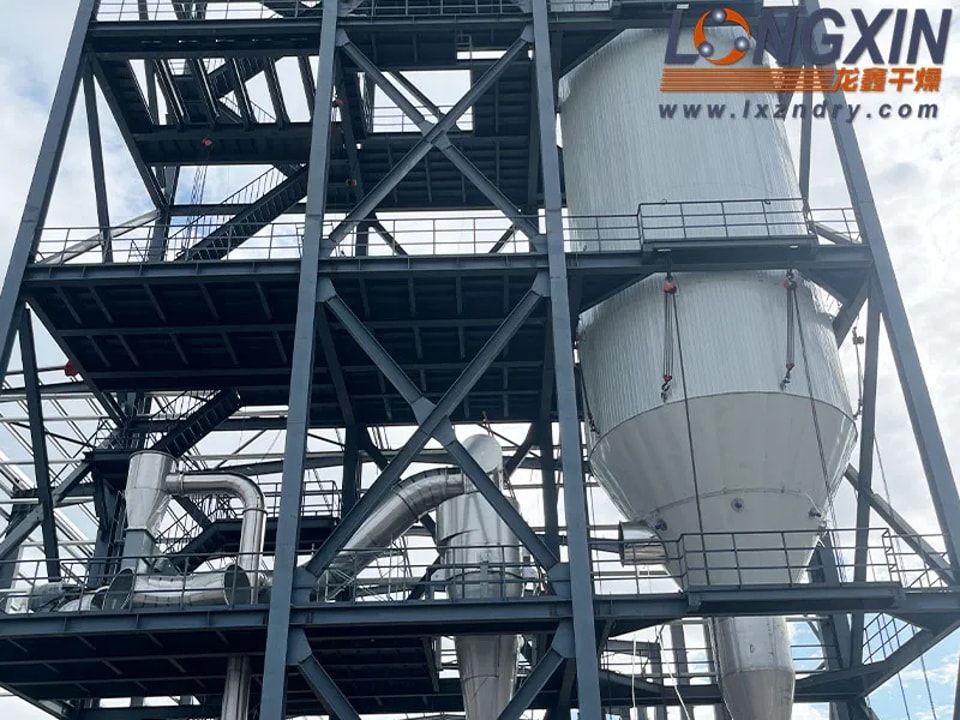 Bid Farewell to Drawbacks of Traditional Water-soluble Fertilizer Granulation & Drying Potassium Humate Spray Drying Tower Ushers in a New Production TrendBrief Analysis on the Feasibility of Superheated Steam Pneumatic Dryer
Most conventional spray granulation dryers for sodium humate adopt air as the drying medium. They suffer from prominent drawbacks including low drying rate and poor thermal efficiency. The sensible heat and latent heat contained in exhaust gas are difficult and costly to recover, involving high technical barriers. For this reason, exhaust gas is directly discharged by most such dryers currently. Industry statistics show that traditional drying processes generally have low thermal efficiency and longer drying cycles, which not only lowers productivity but also causes massive energy waste.
By contrast, the convection dryer using superheated steam as the drying medium can eliminate the above problems. It also features low net energy consumption, high heat and mass transfer efficiency, superior product quality and environmental friendliness. With high specific heat capacity and thermal conductivity, superheated steam delivers a higher heat transfer coefficient than hot air, accelerating the drying process and enabling cyclic heat reuse to improve overall thermal efficiency.
In addition, the steam atmosphere is oxygen-free, which prevents oxidative deterioration of materials. It is particularly applicable to heat-sensitive humic acid substances and keeps the product activity and color stable. The exhaust gas is treated via condensation and recovery, and the recycled water can be reused. The system achieves true zero emission with remarkable environmental benefits.
Quality Upgrade of Potassium Humate Drives Iteration of Drying Technology
(1) With the expanding application of potassium humate in agriculture, pharmaceuticals, environmental protection and other fields, the market has set higher standards for product purity, particle size uniformity and flowability. In agriculture, advanced compound fertilizers and water-soluble fertilizers impose increasingly strict requirements on the sphericity and particle size deviation of potassium humate granules, with higher standards for particle size uniformity and consistent tapped density. In the pharmaceutical sector, the retention rate of active ingredients must be kept stable to prevent performance loss caused by high-temperature oxidation. From an environmental perspective, rising costs for environmental compliance push enterprises to adopt green processes with low emissions and low energy consumption.
(2) Traditional spray dryers are prone to particle agglomeration and uneven particle size distribution, along with high energy consumption and complicated maintenance, which have become technical bottlenecks restricting industrial development. Conventional equipment fails to achieve precise temperature control during production, resulting in severe loss of active ingredients of potassium humate. This not only impairs product quality but also increases production costs. To tackle these challenges, Longxin Dressing has launched a new-generation superheated steam spray granulation and drying system based on market demands and technical expertise. Through process optimization and intelligent control, the system achieves dual improvement in product quality and production efficiency.
Technological Innovations of Longxin Drying: Superheated Steam Spray Granulation & Drying Technology for Potassium Humate
(1) Closed-loop Circulation Thermal Energy Management System for High Efficiency & Energy Saving
Longxin Drying innovatively develops a multi-stage vapor compression heat pump. The secondary steam generated during drying is compressed and reheated for recycling, which improves thermal efficiency. Combined with an intelligent waste heat recovery module, the system automatically adjusts the heat recovery ratio according to actual operating conditions, cutting energy consumption per ton of product compared with traditional processes and reducing annual operating costs substantially.
In addition, the equipment adopts a fully sealed nitrogen/steam circulation system to avoid heat dissipation and prevent external impurities from contaminating materials. This design complies with relevant safety standards and provides solid technical support for low-carbon production.
(2) Dynamic Coupling Temperature Control Technology to Guarantee Product Quality
A four-section temperature gradient control strategy is applied. By real-time adjustment of steam flow and atomization pressure, materials undergo precise treatment in three phases inside the drying tower: rapid dehydration, gradient solidification and surface activation.
In the pre-drying section, proper temperature and humidity are set for preliminary dehydration to lay a foundation for subsequent processes.
In the constant-rate drying section, temperature and airflow velocity are precisely regulated to achieve uniform drying.
In the falling-rate drying section, temperature is gradually lowered to avoid oxidative deterioration caused by overheating.
In the cooling and solidification section, dried granules are rapidly cooled to maintain stable properties.
Actual tests prove that this technology delivers stable and lower product moisture content, concentrated particle size distribution, higher sphericity and smaller particle size deviation, as well as improved flowability. It fully meets the stringent requirements of high-quality compound fertilizers and water-soluble fertilizers.
(3) Enhanced Granulation with Built-in Fluidized Bed to Solve Industrial Pain Points
Longxin Drying creatively integrates spray drying and fluidized bed technologies, with a dynamic fluidized bed installed at the bottom of the drying tower. Atomized wet materials directly enter the fluidization zone, where gas-solid two-phase turbulence realizes surface coating and densification of particles. This innovative design increases product bulk density and flowability index, and effectively solves the problem of moisture absorption and caking of potassium humate.
Before adopting our equipment, severe moisture absorption and caking troubled products, adversely affecting storage and transportation and leading to a high complaint rate. After application, the moisture absorption rate is reduced and caking is basically eliminated, greatly improving customer satisfaction.
(4) Full-process Intelligent Monitoring System for Higher Production Stability
Equipped with an Industrial Internet of Things (IIoT) platform, the system integrates multiple sensors to collect key parameters such as temperature, pressure and flow rate in real time. Digital twin models predict process deviations and perform automatic correction. Multiple safety interlock devices are configured to respond quickly to abnormal operating conditions, ensuring continuous production and personnel safety.
The Intelligent Cloud Control System builds digital twin models for the drying process to dynamically optimize spray pressure, hot air temperature and feed rate, and improve batch-to-batch consistency of finished products. Operators can monitor equipment status and remotely adjust process parameters via an intuitive interface, which greatly reduces labor costs and boosts productivity.
(5) Upgraded Safety Protection System to Ensure Operational Safety
Targeting the production characteristics of highly active substances like potassium humate, the equipment is fitted with multi-stage explosion-proof devices and an inert gas protection system. Dynamic oxygen concentration monitoring and automatic inerting technology are adopted to control the oxygen content inside the system and satisfy safety production regulations.
This solution has been successfully applied at a major domestic humic acid manufacturer, enabling long-term continuous operation with zero safety incidents and delivering reliable safeguards for safe production.
Application Cases and Industrial Value of Longxin Drying Technology
(1) After adopting Longxin drying equipment, enterprises have achieved simultaneous improvement in production efficiency and product quality. The capacity of a single unit is greatly increased compared with the original equipment, and the rate of high-grade products is elevated. The annual consumption of standard coal and carbon dioxide emissions are reduced significantly. The dust concentration in the production environment stays at a low level, fully complying with safety standards.
(2) At present, Longxin's superheated steam spray granulation equipment has been widely applied in major humic acid producing areas including Xinjiang and Inner Mongolia, serving numerous manufacturers and generating remarkable cumulative economic benefits.
(3) Driven by annual market growth, the demand for high-quality potassium humate products remains robust. Leveraging its first-mover advantages in superheated steam technology, Longxin Drying has entered strategic cooperation with multiple multinational enterprises, helping China's drying equipment technology expand into the global market.
Longxin Drying: Leading the Industry's Green Development via Technological Innovation
As a Specialized, Refined, Differential and Innovative (SRDI) "Little Giant" Enterprise, Longxin Drying owns a modern manufacturing base and a full range of precision processing equipment, and has obtained certifications for multiple management systems. Our R&D team invests a portion of annual revenue in technological innovation each year. The company has been granted numerous patents and participated in formulating a number of industrial standards.
Looking ahead, we will further promote the application of superheated steam technology in the humic acid industry. Focusing on intelligence, low carbon and customization, we deliver full life-cycle solutions covering process design, equipment manufacturing as well as operation and maintenance services, helping customers achieve the dual goals of cost reduction, efficiency improvement and green transformation.
At this critical stage when the humic acid industry is transforming toward refinement and advanced development, Longxin Drying takes superheated steam technology as a breakthrough to reshape the technical standards for potassium humate drying, and provides integrated solutions featuring high efficiency, energy conservation and environmental protection for the whole industry. Choosing Longxin Drying means choosing leading technology and reliable quality. We sincerely look forward to cooperating with more industry partners to create a promising future for the humic acid sector.Read More
Bid Farewell to Drawbacks of Traditional Water-soluble Fertilizer Granulation & Drying Potassium Humate Spray Drying Tower Ushers in a New Production TrendBrief Analysis on the Feasibility of Superheated Steam Pneumatic Dryer
Most conventional spray granulation dryers for sodium humate adopt air as the drying medium. They suffer from prominent drawbacks including low drying rate and poor thermal efficiency. The sensible heat and latent heat contained in exhaust gas are difficult and costly to recover, involving high technical barriers. For this reason, exhaust gas is directly discharged by most such dryers currently. Industry statistics show that traditional drying processes generally have low thermal efficiency and longer drying cycles, which not only lowers productivity but also causes massive energy waste.
By contrast, the convection dryer using superheated steam as the drying medium can eliminate the above problems. It also features low net energy consumption, high heat and mass transfer efficiency, superior product quality and environmental friendliness. With high specific heat capacity and thermal conductivity, superheated steam delivers a higher heat transfer coefficient than hot air, accelerating the drying process and enabling cyclic heat reuse to improve overall thermal efficiency.
In addition, the steam atmosphere is oxygen-free, which prevents oxidative deterioration of materials. It is particularly applicable to heat-sensitive humic acid substances and keeps the product activity and color stable. The exhaust gas is treated via condensation and recovery, and the recycled water can be reused. The system achieves true zero emission with remarkable environmental benefits.
Quality Upgrade of Potassium Humate Drives Iteration of Drying Technology
(1) With the expanding application of potassium humate in agriculture, pharmaceuticals, environmental protection and other fields, the market has set higher standards for product purity, particle size uniformity and flowability. In agriculture, advanced compound fertilizers and water-soluble fertilizers impose increasingly strict requirements on the sphericity and particle size deviation of potassium humate granules, with higher standards for particle size uniformity and consistent tapped density. In the pharmaceutical sector, the retention rate of active ingredients must be kept stable to prevent performance loss caused by high-temperature oxidation. From an environmental perspective, rising costs for environmental compliance push enterprises to adopt green processes with low emissions and low energy consumption.
(2) Traditional spray dryers are prone to particle agglomeration and uneven particle size distribution, along with high energy consumption and complicated maintenance, which have become technical bottlenecks restricting industrial development. Conventional equipment fails to achieve precise temperature control during production, resulting in severe loss of active ingredients of potassium humate. This not only impairs product quality but also increases production costs. To tackle these challenges, Longxin Dressing has launched a new-generation superheated steam spray granulation and drying system based on market demands and technical expertise. Through process optimization and intelligent control, the system achieves dual improvement in product quality and production efficiency.
Technological Innovations of Longxin Drying: Superheated Steam Spray Granulation & Drying Technology for Potassium Humate
(1) Closed-loop Circulation Thermal Energy Management System for High Efficiency & Energy Saving
Longxin Drying innovatively develops a multi-stage vapor compression heat pump. The secondary steam generated during drying is compressed and reheated for recycling, which improves thermal efficiency. Combined with an intelligent waste heat recovery module, the system automatically adjusts the heat recovery ratio according to actual operating conditions, cutting energy consumption per ton of product compared with traditional processes and reducing annual operating costs substantially.
In addition, the equipment adopts a fully sealed nitrogen/steam circulation system to avoid heat dissipation and prevent external impurities from contaminating materials. This design complies with relevant safety standards and provides solid technical support for low-carbon production.
(2) Dynamic Coupling Temperature Control Technology to Guarantee Product Quality
A four-section temperature gradient control strategy is applied. By real-time adjustment of steam flow and atomization pressure, materials undergo precise treatment in three phases inside the drying tower: rapid dehydration, gradient solidification and surface activation.
In the pre-drying section, proper temperature and humidity are set for preliminary dehydration to lay a foundation for subsequent processes.
In the constant-rate drying section, temperature and airflow velocity are precisely regulated to achieve uniform drying.
In the falling-rate drying section, temperature is gradually lowered to avoid oxidative deterioration caused by overheating.
In the cooling and solidification section, dried granules are rapidly cooled to maintain stable properties.
Actual tests prove that this technology delivers stable and lower product moisture content, concentrated particle size distribution, higher sphericity and smaller particle size deviation, as well as improved flowability. It fully meets the stringent requirements of high-quality compound fertilizers and water-soluble fertilizers.
(3) Enhanced Granulation with Built-in Fluidized Bed to Solve Industrial Pain Points
Longxin Drying creatively integrates spray drying and fluidized bed technologies, with a dynamic fluidized bed installed at the bottom of the drying tower. Atomized wet materials directly enter the fluidization zone, where gas-solid two-phase turbulence realizes surface coating and densification of particles. This innovative design increases product bulk density and flowability index, and effectively solves the problem of moisture absorption and caking of potassium humate.
Before adopting our equipment, severe moisture absorption and caking troubled products, adversely affecting storage and transportation and leading to a high complaint rate. After application, the moisture absorption rate is reduced and caking is basically eliminated, greatly improving customer satisfaction.
(4) Full-process Intelligent Monitoring System for Higher Production Stability
Equipped with an Industrial Internet of Things (IIoT) platform, the system integrates multiple sensors to collect key parameters such as temperature, pressure and flow rate in real time. Digital twin models predict process deviations and perform automatic correction. Multiple safety interlock devices are configured to respond quickly to abnormal operating conditions, ensuring continuous production and personnel safety.
The Intelligent Cloud Control System builds digital twin models for the drying process to dynamically optimize spray pressure, hot air temperature and feed rate, and improve batch-to-batch consistency of finished products. Operators can monitor equipment status and remotely adjust process parameters via an intuitive interface, which greatly reduces labor costs and boosts productivity.
(5) Upgraded Safety Protection System to Ensure Operational Safety
Targeting the production characteristics of highly active substances like potassium humate, the equipment is fitted with multi-stage explosion-proof devices and an inert gas protection system. Dynamic oxygen concentration monitoring and automatic inerting technology are adopted to control the oxygen content inside the system and satisfy safety production regulations.
This solution has been successfully applied at a major domestic humic acid manufacturer, enabling long-term continuous operation with zero safety incidents and delivering reliable safeguards for safe production.
Application Cases and Industrial Value of Longxin Drying Technology
(1) After adopting Longxin drying equipment, enterprises have achieved simultaneous improvement in production efficiency and product quality. The capacity of a single unit is greatly increased compared with the original equipment, and the rate of high-grade products is elevated. The annual consumption of standard coal and carbon dioxide emissions are reduced significantly. The dust concentration in the production environment stays at a low level, fully complying with safety standards.
(2) At present, Longxin's superheated steam spray granulation equipment has been widely applied in major humic acid producing areas including Xinjiang and Inner Mongolia, serving numerous manufacturers and generating remarkable cumulative economic benefits.
(3) Driven by annual market growth, the demand for high-quality potassium humate products remains robust. Leveraging its first-mover advantages in superheated steam technology, Longxin Drying has entered strategic cooperation with multiple multinational enterprises, helping China's drying equipment technology expand into the global market.
Longxin Drying: Leading the Industry's Green Development via Technological Innovation
As a Specialized, Refined, Differential and Innovative (SRDI) "Little Giant" Enterprise, Longxin Drying owns a modern manufacturing base and a full range of precision processing equipment, and has obtained certifications for multiple management systems. Our R&D team invests a portion of annual revenue in technological innovation each year. The company has been granted numerous patents and participated in formulating a number of industrial standards.
Looking ahead, we will further promote the application of superheated steam technology in the humic acid industry. Focusing on intelligence, low carbon and customization, we deliver full life-cycle solutions covering process design, equipment manufacturing as well as operation and maintenance services, helping customers achieve the dual goals of cost reduction, efficiency improvement and green transformation.
At this critical stage when the humic acid industry is transforming toward refinement and advanced development, Longxin Drying takes superheated steam technology as a breakthrough to reshape the technical standards for potassium humate drying, and provides integrated solutions featuring high efficiency, energy conservation and environmental protection for the whole industry. Choosing Longxin Drying means choosing leading technology and reliable quality. We sincerely look forward to cooperating with more industry partners to create a promising future for the humic acid sector.Read More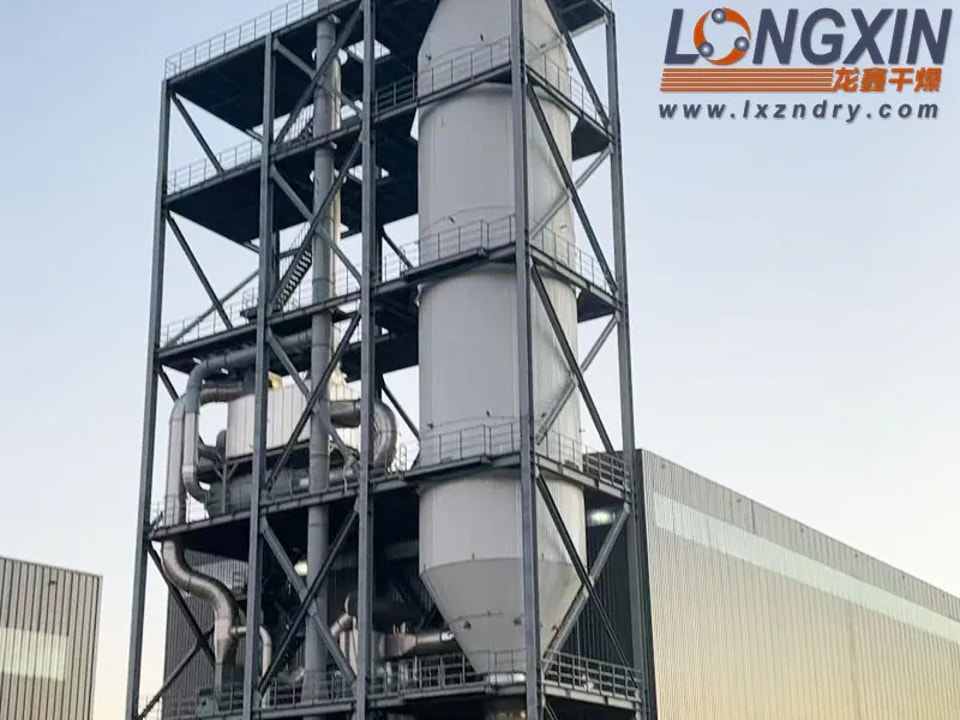 New Superheated Steam Spray Granulation & Drying System: Innovation for Potassium Humate ProductionThe humic acid market has been expanding year by year, with particularly strong demand for high-quality potassium humate products. As agricultural, environmental protection and other sectors impose increasingly stringent quality requirements on potassium humate, traditional drying equipment can no longer keep pace with market demands. The industry is witnessing three major upgrading trends: first, higher requirements for uniform particle size call for more precise atomization and temperature control technologies; second, drying temperature must be accurately regulated to prevent performance loss caused by high-temperature oxidation; third, rising costs for environmental compliance drive enterprises to adopt green processes featuring low emissions and low energy consumption.
To address these challenges, Longxin Drying has leveraged R&D platforms including the National Engineering Research Center for Special Ultrafine Powder Technology and the Comprehensive Drying Experiment Center. Working alongside leading enterprises in the humic acid industry, our team has conducted intensive technical research and development. We have successfully launched a new-generation superheated steam spray granulation and drying system, achieving an integrated technological innovation featuring high efficiency, intelligence and environmental friendliness.
In the conventional production of humic acid products such as sodium humate and potassium humate, air is commonly used as the drying medium for spray granulation and drying. Nevertheless, this process has prominent drawbacks. Low drying rate extends the production cycle, while poor thermal efficiency leads to energy waste. A large amount of sensible heat and latent heat contained in exhaust gas is difficult and costly to recover. Most enterprises have to discharge the exhaust directly, which increases energy consumption and aggravates environmental pollution.
The innovative application of superheated steam as the drying medium brings a revolutionary breakthrough to the humic acid industry. According to the technical team of Longxin Drying, superheated steam drying boasts multiple advantages. Firstly, its high thermal conductivity and low latent heat of phase change greatly improve heat and mass transfer efficiency, delivering a remarkable increase in output. Secondly, the steam circulation system realizes closed-loop utilization of thermal energy, cutting net energy consumption and drastically reducing exhaust emissions, thus solving the environmental challenges of traditional processes. Furthermore, the superheated steam environment effectively inhibits oxidative degradation of materials, ensuring product stability and production safety. It is especially suitable for the refined production of high-value-added potassium humate.
Core Technological Breakthroughs of Longxin Drying
(1) Closed-loop Circulation Thermal Energy Management System
The innovatively designed multi-stage waste heat reuse system recycles most exhaust gas generated during drying to improve thermal efficiency. Combined with an intelligent waste heat recovery module, the energy consumption per ton of finished products is greatly reduced compared with traditional processes.
(2) Dynamic Coupling Temperature Control Technology
It adopts a multi-section temperature gradient control strategy. AI algorithms adjust steam flow and atomization pressure in real time, enabling materials to undergo precise treatment in three stages inside the drying tower: rapid dehydration, gradient solidification and surface activation. Actual tests prove that the product maintains stable moisture content and uniform particle size distribution.
(3) Enhanced Granulation with Built-in Fluidized Bed
This design creatively integrates spray drying and fluidized bed technologies. A dynamic fluidized bed is installed at the bottom of the drying tower. Atomized wet materials directly enter the fluidization zone. Turbulence of gas and solid phases realizes surface coating and densification of particles, which increases bulk density and flowability of products, and effectively solves the problem of moisture absorption and caking of potassium humate.
(4) Full-process Intelligent Monitoring System
Equipped with an industrial IoT platform, the system integrates more than 50 sensors to collect key parameters such as temperature, pressure and flow rate in real time. Digital twin models predict process deviations and perform automatic correction. Multiple safety interlock devices are configured to respond rapidly to abnormal operating conditions, ensuring continuous production and personnel safety.
Longxin Drying: Empowering Industrial Upgrading with Technology
As the humic acid industry shifts toward refined and large-scale production, technological innovation in drying equipment has become the core of enterprise competitiveness. Drawing on years of expertise in drying engineering, Longxin Drying takes superheated steam technology as a breakthrough to reshape the process standards for potassium humate drying, and delivers integrated solutions featuring high efficiency, energy conservation and environmental protection for the industry. Choose Longxin, and you choose technological innovation and reliable quality. We look forward to cooperating with you to explore a brand-new future for the humic acid industry.
Going forward, Longxin Drying will further expand the application of superheated steam technology in the humic acid sector. Focusing on intelligence, low carbon and customization, we provide full-life-cycle solutions covering process design, equipment manufacturing and operation & maintenance services, helping customers achieve dual goals of cost reduction, efficiency improvement and green transformation.
As agricultural and environmental protection industries set higher quality standards for potassium humate, traditional drying processes are in urgent need of innovation due to low efficiency, high energy consumption and severe pollution. Leveraging superheated steam technology, Longxin Drying delivers integrated solutions that feature high efficiency, intelligence and environmental friendliness for the humic acid industry, driving the industry toward refined and large-scale development. Going forward, we will focus on intelligence, low carbon and customization, further expand technological applications and provide full life-cycle services, helping customers achieve the dual goals of cost reduction, efficiency improvement and green transformation.Read More
New Superheated Steam Spray Granulation & Drying System: Innovation for Potassium Humate ProductionThe humic acid market has been expanding year by year, with particularly strong demand for high-quality potassium humate products. As agricultural, environmental protection and other sectors impose increasingly stringent quality requirements on potassium humate, traditional drying equipment can no longer keep pace with market demands. The industry is witnessing three major upgrading trends: first, higher requirements for uniform particle size call for more precise atomization and temperature control technologies; second, drying temperature must be accurately regulated to prevent performance loss caused by high-temperature oxidation; third, rising costs for environmental compliance drive enterprises to adopt green processes featuring low emissions and low energy consumption.
To address these challenges, Longxin Drying has leveraged R&D platforms including the National Engineering Research Center for Special Ultrafine Powder Technology and the Comprehensive Drying Experiment Center. Working alongside leading enterprises in the humic acid industry, our team has conducted intensive technical research and development. We have successfully launched a new-generation superheated steam spray granulation and drying system, achieving an integrated technological innovation featuring high efficiency, intelligence and environmental friendliness.
In the conventional production of humic acid products such as sodium humate and potassium humate, air is commonly used as the drying medium for spray granulation and drying. Nevertheless, this process has prominent drawbacks. Low drying rate extends the production cycle, while poor thermal efficiency leads to energy waste. A large amount of sensible heat and latent heat contained in exhaust gas is difficult and costly to recover. Most enterprises have to discharge the exhaust directly, which increases energy consumption and aggravates environmental pollution.
The innovative application of superheated steam as the drying medium brings a revolutionary breakthrough to the humic acid industry. According to the technical team of Longxin Drying, superheated steam drying boasts multiple advantages. Firstly, its high thermal conductivity and low latent heat of phase change greatly improve heat and mass transfer efficiency, delivering a remarkable increase in output. Secondly, the steam circulation system realizes closed-loop utilization of thermal energy, cutting net energy consumption and drastically reducing exhaust emissions, thus solving the environmental challenges of traditional processes. Furthermore, the superheated steam environment effectively inhibits oxidative degradation of materials, ensuring product stability and production safety. It is especially suitable for the refined production of high-value-added potassium humate.
Core Technological Breakthroughs of Longxin Drying
(1) Closed-loop Circulation Thermal Energy Management System
The innovatively designed multi-stage waste heat reuse system recycles most exhaust gas generated during drying to improve thermal efficiency. Combined with an intelligent waste heat recovery module, the energy consumption per ton of finished products is greatly reduced compared with traditional processes.
(2) Dynamic Coupling Temperature Control Technology
It adopts a multi-section temperature gradient control strategy. AI algorithms adjust steam flow and atomization pressure in real time, enabling materials to undergo precise treatment in three stages inside the drying tower: rapid dehydration, gradient solidification and surface activation. Actual tests prove that the product maintains stable moisture content and uniform particle size distribution.
(3) Enhanced Granulation with Built-in Fluidized Bed
This design creatively integrates spray drying and fluidized bed technologies. A dynamic fluidized bed is installed at the bottom of the drying tower. Atomized wet materials directly enter the fluidization zone. Turbulence of gas and solid phases realizes surface coating and densification of particles, which increases bulk density and flowability of products, and effectively solves the problem of moisture absorption and caking of potassium humate.
(4) Full-process Intelligent Monitoring System
Equipped with an industrial IoT platform, the system integrates more than 50 sensors to collect key parameters such as temperature, pressure and flow rate in real time. Digital twin models predict process deviations and perform automatic correction. Multiple safety interlock devices are configured to respond rapidly to abnormal operating conditions, ensuring continuous production and personnel safety.
Longxin Drying: Empowering Industrial Upgrading with Technology
As the humic acid industry shifts toward refined and large-scale production, technological innovation in drying equipment has become the core of enterprise competitiveness. Drawing on years of expertise in drying engineering, Longxin Drying takes superheated steam technology as a breakthrough to reshape the process standards for potassium humate drying, and delivers integrated solutions featuring high efficiency, energy conservation and environmental protection for the industry. Choose Longxin, and you choose technological innovation and reliable quality. We look forward to cooperating with you to explore a brand-new future for the humic acid industry.
Going forward, Longxin Drying will further expand the application of superheated steam technology in the humic acid sector. Focusing on intelligence, low carbon and customization, we provide full-life-cycle solutions covering process design, equipment manufacturing and operation & maintenance services, helping customers achieve dual goals of cost reduction, efficiency improvement and green transformation.
As agricultural and environmental protection industries set higher quality standards for potassium humate, traditional drying processes are in urgent need of innovation due to low efficiency, high energy consumption and severe pollution. Leveraging superheated steam technology, Longxin Drying delivers integrated solutions that feature high efficiency, intelligence and environmental friendliness for the humic acid industry, driving the industry toward refined and large-scale development. Going forward, we will focus on intelligence, low carbon and customization, further expand technological applications and provide full life-cycle services, helping customers achieve the dual goals of cost reduction, efficiency improvement and green transformation.Read More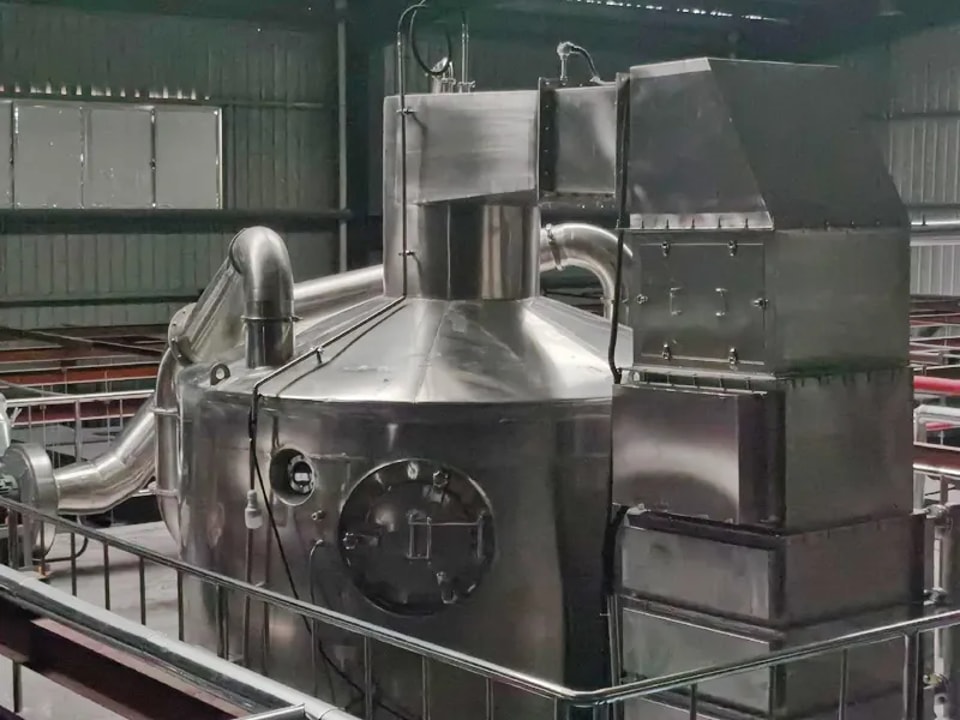 Multi-stage Fluidized Granulation Spray Dryer: Unlock the Secrets to Efficient Production of Instant Granules of Enzymatically Hydrolyzed Protein PeptidesInstant Granules of Enzymatically Hydrolyzed Protein Peptides adopt advanced enzymatic hydrolysis technology to efficiently break down proteins into small molecular peptides and amino acids, which are further processed into granular products.
Compared with intact proteins, these small molecular peptides and amino acids feature high bioavailability. They can quickly enter the blood circulation and deliver nutritional effects in a short period. Rich in essential amino acids — the building blocks of human proteins — the product actively participates in key physiological processes including metabolism, immune regulation and muscle repair. It also contains biologically active peptide fragments with antioxidant, anti-fatigue and hypotensive properties, which exert targeted physiological regulatory effects in the human body.
In the health product sector, the granules containing specific peptide fragments help middle-aged and elderly people regulate blood pressure and blood lipids, and assist in the prevention of cardiovascular diseases. For people with low immunity, they can remarkably boost immune function and the body's disease resistance.
In the pharmaceutical industry, thanks to its excellent solubility and biocompatibility, the product serves as a drug carrier to encapsulate drug molecules, greatly enhancing drug stability and bioavailability.
As public health awareness continues to rise, the demand for nutritional supplements and health foods keeps growing. As an easily absorbable protein source, instant granules of enzymatically hydrolyzed protein peptides fully meet the demands of sports nutrition, daily health care and other diverse fields, showing a strong upward market trend in food, beverage and health product industries. Its promising market prospects have attracted extensive attention from numerous enterprises. Traditional food and health product manufacturers as well as emerging biotechnology companies have increased investment in R&D, production and marketing in this sector, leading to increasingly fierce market competition. Against this backdrop, improving product quality has become the core factor for enterprises to stand out from the competition.
Process Flow of Multi-stage Fluidized Granulation Spray Dryer
(1) Raw Material Pretreatment
The enzymatically hydrolyzed protein peptide solution undergoes precision filtration, high-efficiency concentration and other pretreatment processes to adjust its concentration, viscosity and other parameters to the optimal standards for spray drying. The treated material is then accurately delivered to the feeding system of the dryer via pipelines.
(2) Hot Air Generation
Ambient air is heated by high-efficiency heaters to form hot air at a specified temperature. The hot air is delivered to the top of the drying tower and the bottom of the fluidized bed respectively, passing through distribution plates to make full contact with materials and fluidize them. It creates the required thermal and airflow conditions for subsequent drying and granulation.
(3) Slurry Atomization
The liquid material in the feeding system is pumped into the drying tower at a precisely controlled pressure by diaphragm pumps and other equipment. Pressure energy is efficiently converted into kinetic energy. The slurry is ejected upward at high speed from the nozzles to form a high-velocity liquid film, which quickly breaks into fine droplets. The droplet size is inversely proportional to the operating pressure, while the production capacity of the nozzle is proportional to the square of the pressure.
(4) Drying and Spheroidization of Droplets
Atomized droplets and hot air work in an optimized mixed flow inside the drying tower. Hot air evenly enters the tower through the top air distributor and forms a stable downward laminar airflow, while droplets are sprayed upward against the hot air stream. Thanks to the large specific surface area of droplets, internal moisture evaporates rapidly under the action of hot air. Driven by surface tension, droplets shrink into spherical shapes and finally solidify into dry spherical particles. The particles gradually settle in the tower and separate efficiently from hot air.
(5) Fluidized Granulation
Fine powder lifted upward by hot airflow inside the fluidized bed collides with falling wet fine particles in the specially designed atomization and granulation zone. Particles grow gradually through physical effects such as coating and adhesion. Mother liquor or binder is accurately conveyed to atomizing nozzles by pressure pumps. After atomization, it evenly coats the surface of fluidized particles or bonds particles together. Through continuous fluidization, coating and drying, particles keep growing until reaching the target particle size.
(6) Discharge and Collection of Particles
Particles reaching the preset particle size are smoothly discharged from the fluidized bed outlet and sent to high-precision finished product collection devices. Fine particles, together with drying air, are extracted by exhaust fans connected to the funnel-shaped upper section and delivered to the professional dust removal system.
(7) Dust Removal and Exhaust Gas Treatment
The dust removal system consists of core equipment including high-efficiency cyclone separators and centrifugal fans. The exhaust fan delivers air containing fine particles into the cyclone separator for efficient separation. Collected fine particles fall to the bottom of the separator and are accurately returned to the atomization zone of the tower via rotary valves for recycling as seed crystals. The remaining waste gas containing trace ultrafine particles is further purified by water film dust collectors to achieve harmless treatment. The treated gas that meets emission standards is finally discharged through the chimney in compliance with regulations.
(8) System Monitoring and Control
The advanced electrical system is composed of an electric control cabinet and high-precision on-site temperature sensors installed at air inlets and material outlets. It conducts real-time monitoring and precise control over key links and core parameters of the entire dryer, including temperature, pressure, air velocity and material flow rate, so as to ensure stable equipment operation and consistent product quality.
Performance Advantages of Multi-stage Fluidized Granulation Spray Dryer for Instant Granules of Enzymatically Hydrolyzed Protein Peptides
(1) Excellent Product Quality
Superior particle performance
The equipment produces granules with highly uniform particle size. The finished products feature outstanding flowability, solubility and dispersibility. During processing and application of enzymatically hydrolyzed protein peptides, the granules can mix efficiently, dissolve rapidly and exert full efficacy, greatly improving user experience.
High product purity
Drying is completed instantly with rapid moisture evaporation throughout the low-temperature process, which effectively prevents thermal deterioration of materials. The final products boast remarkably high purity and stable quality, fully complying with the stringent quality requirements for enzymatically hydrolyzed protein peptides.
Complete retention of active ingredients
The ultra-fast drying process greatly shortens the exposure time of heat-sensitive substances such as enzymatically hydrolyzed protein peptides to high temperature. It minimizes material deterioration and decomposition, and fully retains active components and nutrients, which is essential for maintaining the product’s functional and nutritional values.
(2) High Production Efficiency
Fast drying speed
The feed liquid is atomized into a large number of fine droplets with a sharply increased specific surface area. Moisture evaporates in an extremely short time upon contact with hot air, and drying is finished within ten to dozens of seconds. It greatly improves production efficiency and perfectly adapts to large-scale industrial production.
Continuous production
The equipment operates stably and reliably and supports automated continuous mass production. Precise adjustment of relevant parameters enables accurate control over production procedures and product quality to guarantee consistency. It effectively cuts labor costs and workload, and significantly boosts production efficiency and economic benefits.
(3) Streamlined Production Process
One-step granulation
It innovatively integrates drying and granulation into one single process, directly converting liquid materials into granular products. Complicated follow-up procedures such as crushing and sieving are eliminated, which simplifies the workflow and reduces floor space and equipment investment. Meanwhile, it avoids dust pollution and material loss caused by crushing and screening, and improves production safety and environmental performance.
(4) High Energy Efficiency & Environmental Protection
High energy utilization rate
The drying process runs at a low exhaust air temperature. Compared with other drying technologies, it reduces heat loss effectively, raises energy utilization efficiency and lowers energy consumption and production costs.
Low dust content in exhaust gas
Equipped with high-efficiency dust removal systems including cyclone separators and bag filters, the equipment efficiently separates and collects dust in exhaust gas. The exhaust gas has extremely low dust content and meets strict emission standards, reducing environmental pollution and realizing clean production.
(5) Easy Operation & Maintenance
Simple operation
The equipment is easy to operate and learn. Supported by advanced interfaces such as large color LCD touch screens, it flexibly combines automatic and manual control for personalized adjustment according to production demands. The operating status can be monitored and adjusted in real time via professional instruments to ensure stable production.
Convenient maintenance
The equipment adopts a scientific and rational structural design. Major components are easy to disassemble and clean for routine maintenance. It effectively reduces maintenance costs and downtime, and extends the service life of the equipment.
Technical Upgrades of Multi-stage Fluidized Granulation Spray Dryer for Instant Granules of Enzymatically Hydrolyzed Protein Peptides
(1) Upgrades to Atomization System
Optimized nozzle design
Adopting new-type atomizing nozzles such as two-fluid atomizing nozzles and pressure atomizing nozzles, the equipment atomizes feed liquid into fine droplets more evenly, greatly enlarging the contact area with hot air and improving drying efficiency. Precise adjustment of nozzle angle, aperture, shape and other key parameters further optimizes atomization effect and reduces wall sticking. The upgraded nozzle structure for centrifugal spray dryers almost completely eliminates wall sticking.
Precise feed rate control
High-precision metering pumps and flow control systems are installed to accurately regulate the feeding speed and flow rate of feed liquid in accordance with technical requirements. It ensures stable atomization and avoids uneven drying and unstable product quality caused by abnormal feed volume.
(2) Upgrades to Drying System
Improved hot air distribution uniformity
Optimizing the structure and design of hot air distributors enables more even distribution of hot air inside the drying chamber. Every droplet can be fully exposed to hot air to enhance drying uniformity and efficiency, and prevent quality defects such as irregular particle shape and uneven moisture content caused by local overheating or underheating.
Application of multi-stage drying technology
Additional multi-stage drying processes are added to the original workflow. An integrated fluidized bed at the tower bottom is used for secondary low-temperature fluidized drying and cooling. This further reduces residual moisture, improves product stability and solubility, and achieves precise control over particle size distribution and morphology to produce more uniform and regular granules.
(3) Upgrades to Granulation System
Enhanced agglomeration granulation performance
Optimized airflow and temperature fields inside the drying chamber promote agglomeration and fusion of droplets to form larger and more uniform particles. In addition, fine powder collected by cyclone separators is conveyed back by air for re-agglomeration with droplets, which increases particle size and strength, reduces fine powder generation and raises product yield.
Controlled particle size distribution
Advanced particle size analyzers and control systems are introduced to monitor and feed back particle size distribution in real time. The system automatically adjusts operating parameters including feed rate, atomization pressure and hot air temperature according to the preset target particle size range. It realizes precise control over particle size distribution and produces instant granules of enzymatically hydrolyzed protein peptides for diverse application requirements.
(4) Upgrades to Control System
Intelligent control
Advanced automatic control systems such as PLC and touch screen interfaces are adopted to realize precise control and real-time monitoring of all operating sections of the dryer. Based on preset process parameters and control programs, the equipment automatically adjusts feed rate, atomizer speed, hot air temperature, air volume and other parameters to ensure stable drying processes and consistent product quality.
Remote monitoring and diagnosis
Connected with a remote monitoring center via Internet of Things (IoT) technology, the dryer allows operators to remotely check equipment operating status anytime and anywhere through mobile phones, computers and other terminals, including real-time data of temperature, pressure, flow rate, rotational speed and equipment fault alarms. Remote fault diagnosis and maintenance guidance are also available. Technical personnel can quickly and accurately identify fault causes based on remotely acquired data and provide effective solutions for on-site maintenance, improving maintenance efficiency and equipment operational reliability.
(5) Energy-saving & Environmental Protection Upgrades
High-efficiency heat recovery system
Heat recovery units are added to recycle waste heat from exhaust gas. The recovered heat is used to preheat incoming cold air or feed liquid, which improves energy utilization efficiency, cuts energy consumption and production costs, and reduces environmental thermal pollution.
Optimized exhaust gas treatment
The exhaust gas treatment system is further upgraded with high-efficiency cyclone separators, bag filters and other new dust removal equipment to improve dust collection efficiency. The dust content of exhaust gas is further reduced to meet stricter environmental emission standards. Harmful gases in exhaust are also treated to mitigate air pollution.
Read More
Multi-stage Fluidized Granulation Spray Dryer: Unlock the Secrets to Efficient Production of Instant Granules of Enzymatically Hydrolyzed Protein PeptidesInstant Granules of Enzymatically Hydrolyzed Protein Peptides adopt advanced enzymatic hydrolysis technology to efficiently break down proteins into small molecular peptides and amino acids, which are further processed into granular products.
Compared with intact proteins, these small molecular peptides and amino acids feature high bioavailability. They can quickly enter the blood circulation and deliver nutritional effects in a short period. Rich in essential amino acids — the building blocks of human proteins — the product actively participates in key physiological processes including metabolism, immune regulation and muscle repair. It also contains biologically active peptide fragments with antioxidant, anti-fatigue and hypotensive properties, which exert targeted physiological regulatory effects in the human body.
In the health product sector, the granules containing specific peptide fragments help middle-aged and elderly people regulate blood pressure and blood lipids, and assist in the prevention of cardiovascular diseases. For people with low immunity, they can remarkably boost immune function and the body's disease resistance.
In the pharmaceutical industry, thanks to its excellent solubility and biocompatibility, the product serves as a drug carrier to encapsulate drug molecules, greatly enhancing drug stability and bioavailability.
As public health awareness continues to rise, the demand for nutritional supplements and health foods keeps growing. As an easily absorbable protein source, instant granules of enzymatically hydrolyzed protein peptides fully meet the demands of sports nutrition, daily health care and other diverse fields, showing a strong upward market trend in food, beverage and health product industries. Its promising market prospects have attracted extensive attention from numerous enterprises. Traditional food and health product manufacturers as well as emerging biotechnology companies have increased investment in R&D, production and marketing in this sector, leading to increasingly fierce market competition. Against this backdrop, improving product quality has become the core factor for enterprises to stand out from the competition.
Process Flow of Multi-stage Fluidized Granulation Spray Dryer
(1) Raw Material Pretreatment
The enzymatically hydrolyzed protein peptide solution undergoes precision filtration, high-efficiency concentration and other pretreatment processes to adjust its concentration, viscosity and other parameters to the optimal standards for spray drying. The treated material is then accurately delivered to the feeding system of the dryer via pipelines.
(2) Hot Air Generation
Ambient air is heated by high-efficiency heaters to form hot air at a specified temperature. The hot air is delivered to the top of the drying tower and the bottom of the fluidized bed respectively, passing through distribution plates to make full contact with materials and fluidize them. It creates the required thermal and airflow conditions for subsequent drying and granulation.
(3) Slurry Atomization
The liquid material in the feeding system is pumped into the drying tower at a precisely controlled pressure by diaphragm pumps and other equipment. Pressure energy is efficiently converted into kinetic energy. The slurry is ejected upward at high speed from the nozzles to form a high-velocity liquid film, which quickly breaks into fine droplets. The droplet size is inversely proportional to the operating pressure, while the production capacity of the nozzle is proportional to the square of the pressure.
(4) Drying and Spheroidization of Droplets
Atomized droplets and hot air work in an optimized mixed flow inside the drying tower. Hot air evenly enters the tower through the top air distributor and forms a stable downward laminar airflow, while droplets are sprayed upward against the hot air stream. Thanks to the large specific surface area of droplets, internal moisture evaporates rapidly under the action of hot air. Driven by surface tension, droplets shrink into spherical shapes and finally solidify into dry spherical particles. The particles gradually settle in the tower and separate efficiently from hot air.
(5) Fluidized Granulation
Fine powder lifted upward by hot airflow inside the fluidized bed collides with falling wet fine particles in the specially designed atomization and granulation zone. Particles grow gradually through physical effects such as coating and adhesion. Mother liquor or binder is accurately conveyed to atomizing nozzles by pressure pumps. After atomization, it evenly coats the surface of fluidized particles or bonds particles together. Through continuous fluidization, coating and drying, particles keep growing until reaching the target particle size.
(6) Discharge and Collection of Particles
Particles reaching the preset particle size are smoothly discharged from the fluidized bed outlet and sent to high-precision finished product collection devices. Fine particles, together with drying air, are extracted by exhaust fans connected to the funnel-shaped upper section and delivered to the professional dust removal system.
(7) Dust Removal and Exhaust Gas Treatment
The dust removal system consists of core equipment including high-efficiency cyclone separators and centrifugal fans. The exhaust fan delivers air containing fine particles into the cyclone separator for efficient separation. Collected fine particles fall to the bottom of the separator and are accurately returned to the atomization zone of the tower via rotary valves for recycling as seed crystals. The remaining waste gas containing trace ultrafine particles is further purified by water film dust collectors to achieve harmless treatment. The treated gas that meets emission standards is finally discharged through the chimney in compliance with regulations.
(8) System Monitoring and Control
The advanced electrical system is composed of an electric control cabinet and high-precision on-site temperature sensors installed at air inlets and material outlets. It conducts real-time monitoring and precise control over key links and core parameters of the entire dryer, including temperature, pressure, air velocity and material flow rate, so as to ensure stable equipment operation and consistent product quality.
Performance Advantages of Multi-stage Fluidized Granulation Spray Dryer for Instant Granules of Enzymatically Hydrolyzed Protein Peptides
(1) Excellent Product Quality
Superior particle performance
The equipment produces granules with highly uniform particle size. The finished products feature outstanding flowability, solubility and dispersibility. During processing and application of enzymatically hydrolyzed protein peptides, the granules can mix efficiently, dissolve rapidly and exert full efficacy, greatly improving user experience.
High product purity
Drying is completed instantly with rapid moisture evaporation throughout the low-temperature process, which effectively prevents thermal deterioration of materials. The final products boast remarkably high purity and stable quality, fully complying with the stringent quality requirements for enzymatically hydrolyzed protein peptides.
Complete retention of active ingredients
The ultra-fast drying process greatly shortens the exposure time of heat-sensitive substances such as enzymatically hydrolyzed protein peptides to high temperature. It minimizes material deterioration and decomposition, and fully retains active components and nutrients, which is essential for maintaining the product’s functional and nutritional values.
(2) High Production Efficiency
Fast drying speed
The feed liquid is atomized into a large number of fine droplets with a sharply increased specific surface area. Moisture evaporates in an extremely short time upon contact with hot air, and drying is finished within ten to dozens of seconds. It greatly improves production efficiency and perfectly adapts to large-scale industrial production.
Continuous production
The equipment operates stably and reliably and supports automated continuous mass production. Precise adjustment of relevant parameters enables accurate control over production procedures and product quality to guarantee consistency. It effectively cuts labor costs and workload, and significantly boosts production efficiency and economic benefits.
(3) Streamlined Production Process
One-step granulation
It innovatively integrates drying and granulation into one single process, directly converting liquid materials into granular products. Complicated follow-up procedures such as crushing and sieving are eliminated, which simplifies the workflow and reduces floor space and equipment investment. Meanwhile, it avoids dust pollution and material loss caused by crushing and screening, and improves production safety and environmental performance.
(4) High Energy Efficiency & Environmental Protection
High energy utilization rate
The drying process runs at a low exhaust air temperature. Compared with other drying technologies, it reduces heat loss effectively, raises energy utilization efficiency and lowers energy consumption and production costs.
Low dust content in exhaust gas
Equipped with high-efficiency dust removal systems including cyclone separators and bag filters, the equipment efficiently separates and collects dust in exhaust gas. The exhaust gas has extremely low dust content and meets strict emission standards, reducing environmental pollution and realizing clean production.
(5) Easy Operation & Maintenance
Simple operation
The equipment is easy to operate and learn. Supported by advanced interfaces such as large color LCD touch screens, it flexibly combines automatic and manual control for personalized adjustment according to production demands. The operating status can be monitored and adjusted in real time via professional instruments to ensure stable production.
Convenient maintenance
The equipment adopts a scientific and rational structural design. Major components are easy to disassemble and clean for routine maintenance. It effectively reduces maintenance costs and downtime, and extends the service life of the equipment.
Technical Upgrades of Multi-stage Fluidized Granulation Spray Dryer for Instant Granules of Enzymatically Hydrolyzed Protein Peptides
(1) Upgrades to Atomization System
Optimized nozzle design
Adopting new-type atomizing nozzles such as two-fluid atomizing nozzles and pressure atomizing nozzles, the equipment atomizes feed liquid into fine droplets more evenly, greatly enlarging the contact area with hot air and improving drying efficiency. Precise adjustment of nozzle angle, aperture, shape and other key parameters further optimizes atomization effect and reduces wall sticking. The upgraded nozzle structure for centrifugal spray dryers almost completely eliminates wall sticking.
Precise feed rate control
High-precision metering pumps and flow control systems are installed to accurately regulate the feeding speed and flow rate of feed liquid in accordance with technical requirements. It ensures stable atomization and avoids uneven drying and unstable product quality caused by abnormal feed volume.
(2) Upgrades to Drying System
Improved hot air distribution uniformity
Optimizing the structure and design of hot air distributors enables more even distribution of hot air inside the drying chamber. Every droplet can be fully exposed to hot air to enhance drying uniformity and efficiency, and prevent quality defects such as irregular particle shape and uneven moisture content caused by local overheating or underheating.
Application of multi-stage drying technology
Additional multi-stage drying processes are added to the original workflow. An integrated fluidized bed at the tower bottom is used for secondary low-temperature fluidized drying and cooling. This further reduces residual moisture, improves product stability and solubility, and achieves precise control over particle size distribution and morphology to produce more uniform and regular granules.
(3) Upgrades to Granulation System
Enhanced agglomeration granulation performance
Optimized airflow and temperature fields inside the drying chamber promote agglomeration and fusion of droplets to form larger and more uniform particles. In addition, fine powder collected by cyclone separators is conveyed back by air for re-agglomeration with droplets, which increases particle size and strength, reduces fine powder generation and raises product yield.
Controlled particle size distribution
Advanced particle size analyzers and control systems are introduced to monitor and feed back particle size distribution in real time. The system automatically adjusts operating parameters including feed rate, atomization pressure and hot air temperature according to the preset target particle size range. It realizes precise control over particle size distribution and produces instant granules of enzymatically hydrolyzed protein peptides for diverse application requirements.
(4) Upgrades to Control System
Intelligent control
Advanced automatic control systems such as PLC and touch screen interfaces are adopted to realize precise control and real-time monitoring of all operating sections of the dryer. Based on preset process parameters and control programs, the equipment automatically adjusts feed rate, atomizer speed, hot air temperature, air volume and other parameters to ensure stable drying processes and consistent product quality.
Remote monitoring and diagnosis
Connected with a remote monitoring center via Internet of Things (IoT) technology, the dryer allows operators to remotely check equipment operating status anytime and anywhere through mobile phones, computers and other terminals, including real-time data of temperature, pressure, flow rate, rotational speed and equipment fault alarms. Remote fault diagnosis and maintenance guidance are also available. Technical personnel can quickly and accurately identify fault causes based on remotely acquired data and provide effective solutions for on-site maintenance, improving maintenance efficiency and equipment operational reliability.
(5) Energy-saving & Environmental Protection Upgrades
High-efficiency heat recovery system
Heat recovery units are added to recycle waste heat from exhaust gas. The recovered heat is used to preheat incoming cold air or feed liquid, which improves energy utilization efficiency, cuts energy consumption and production costs, and reduces environmental thermal pollution.
Optimized exhaust gas treatment
The exhaust gas treatment system is further upgraded with high-efficiency cyclone separators, bag filters and other new dust removal equipment to improve dust collection efficiency. The dust content of exhaust gas is further reduced to meet stricter environmental emission standards. Harmful gases in exhaust are also treated to mitigate air pollution.
Read More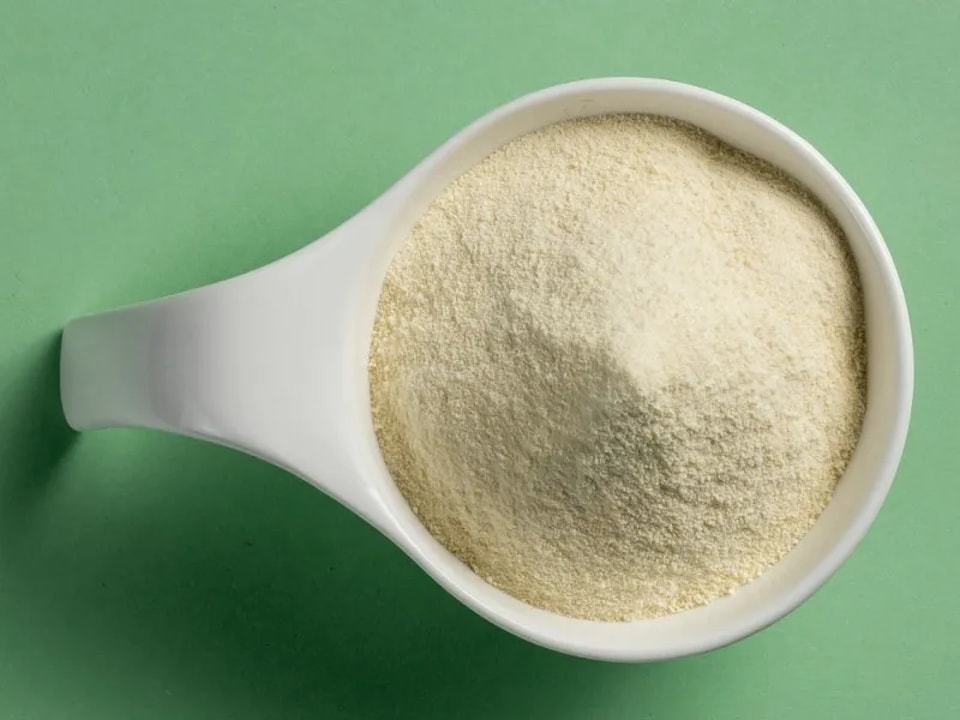 Instant Granules of Enzymatically Hydrolyzed Protein PeptidesInstant Granules of Enzymatically Hydrolyzed Protein Peptides are granular products manufactured by breaking down proteins into small molecular peptides and amino acids via enzymatic hydrolysis, followed by a series of processing procedures.
Compared with intact proteins, these small molecular peptides and amino acids are easier for the human body to absorb and utilize, and can deliver nutritional effects in a shorter time.This product contains a variety of essential amino acids. As the basic building blocks of human proteins, these amino acids participate in many physiological processes such as muscle repair. It also includes biologically active peptide fragments with functions like antioxidation, which exert specific effects in the human body.In the pharmaceutical industry, thanks to its excellent solubility and biocompatibility, the product can serve as a drug carrier to encapsulate drug molecules, so as to enhance drug stability and bioavailability.
As people's health awareness continues to rise, the demand for nutritional supplements and health foods keeps growing. As an easily absorbable protein source, instant granules of enzymatically hydrolyzed protein peptides can meet demands for sports nutrition, daily health care and other scenarios, driving a steady expansion of market demand in food, beverage and health product sectors.
The promising market prospects will attract more enterprises to enter this track, leading to increasingly fierce competition. Traditional food and health product manufacturers, as well as emerging biotech companies, will ramp up investment in R&D, production and marketing of this product to compete for market share.
Amid intense market competition, improving product quality has become the core of corporate competition. Jiangsu Longxin has independently developed a multi-stage fluidized granulation spray dryer. This equipment enables more precise control over physical properties including particle size distribution, bulk density and flowability of the granules, making the products better suited for diverse application scenarios.
It also optimizes the drying process and equipment structure, reducing denaturation and degradation of enzymatically hydrolyzed protein peptides during drying, and enhancing product stability and biological activity. This is critical to preserving the nutritional value and functional properties of the peptides, especially in pharmaceutical and health product industries that impose stringent quality standards.
Process Flow of Multi-stage Fluidized Granulation Spray Dryer for Instant Granules of Enzymatically Hydrolyzed Protein Peptides
(1) Raw Material Pretreatment
The enzymatically hydrolyzed protein peptide solution is filtered, concentrated and otherwise pretreated to meet the concentration, viscosity and other requirements for spray drying. The treated material is then delivered via pipelines to the feeding system of the dryer.
(2) Hot Air Generation
Ambient air is heated by heaters to form hot air at a set temperature. The hot air is fed into the top of the drying tower and the bottom of the fluidized bed, passing through distribution plates to come into contact with materials and fluidize them. It provides sufficient heat and airflow conditions for subsequent drying and granulation.
(3) Slurry Atomization
The liquid material in the feeding system is pumped into the drying tower through nozzles at a preset pressure by diaphragm pumps and other devices. Pressure energy is converted into kinetic energy, ejecting the slurry upward from the nozzles to form a high-speed liquid film, which is instantly broken into fine droplets. The size of atomized droplets is inversely proportional to the operating pressure, while the output capacity of the nozzle is proportional to the square of the pressure.
(4) Drying and Spheroidization of Droplets
Atomized droplets interact with hot air in a mixed flow inside the drying tower. Hot air enters the tower through the top air distributor to form a downward laminar airflow, while droplets are sprayed upward into the hot air stream. Thanks to the large specific surface area of droplets, moisture evaporates rapidly under the effect of hot air. Driven by surface tension, droplets turn spherical and eventually shrink into dry spherical particulate materials. The finished spherical particles settle gradually in the tower and separate from hot air.
(5) Fluidized Granulation
Fine powder lifted upward by hot airflow in the fluidized bed collides with falling wet fine particles in the atomization and granulation zone. Particles grow gradually through coating and adhesion. Mother liquor or binder can also be delivered to atomizing nozzles by pressure pumps. After atomization, the liquid coats the surface of fluidized particles or bonds particles together. Through continuous fluidization, coating and drying, particles keep growing until reaching the target particle size.
(6) Discharge and Collection of Particles
Particles meeting the required particle size are discharged from the outlet of the fluidized bed and transferred to the finished product collection unit. Fine particles, together with drying air, are extracted by exhaust fans connected to the funnel-shaped upper section and sent to the dust removal system.
(7) Dust Removal and Exhaust Gas Treatment
The dust removal system consists of high-efficiency cyclone separators, centrifugal fans and other components. The exhaust fan delivers air mixed with fine particles into the cyclone separator for separation. Collected fine particles fall to the bottom of the separator and are returned to the atomization zone of the tower via rotary valves to serve as seed crystals. The residual exhaust gas containing trace ultrafine particles is further treated by a water film dust collector for harmless disposal, and finally discharged through the chimney.
(8) System Monitoring and Control
The electrical system, including the electric control cabinet and on-site temperature sensors installed at air inlets and material outlets, monitors and controls all key operating links of the dryer. It regulates parameters such as temperature, pressure, air velocity and material flow rate to ensure stable equipment operation and consistent product quality.
Performance Advantages of Multi-stage Fluidized Granulation Spray Dryer for Instant Granules of Enzymatically Hydrolyzed Protein Peptides
(1) Superior Product Quality
Excellent particle properties
It produces granules with uniform particle size, featuring outstanding flowability, solubility and dispersibility. During processing and application of enzymatically hydrolyzed protein peptides, the granules blend and dissolve readily to deliver optimal efficacy and user experience.
High product purity
Moisture in materials evaporates instantly thanks to rapid drying. The entire process is conducted at low temperatures, preventing thermal deterioration of raw materials. The finished products therefore maintain high purity, stable quality and fully meet the high-standard requirements for enzymatically hydrolyzed protein peptides.
Effective retention of active ingredients
The fast drying process minimizes the exposure time of heat-sensitive substances such as enzymatically hydrolyzed protein peptides to heat. This greatly inhibits deterioration and decomposition, well preserving active substances and nutrients, which is essential for maintaining the product’s functional and nutritional values.
(2) High Production Efficiency
Fast drying speed
The feed liquid is atomized into numerous fine droplets with vastly enlarged specific surface area. Moisture evaporates rapidly upon contact with hot air, and the drying process is completed within merely ten to dozens of seconds. It is well suited for large-scale industrial production.
Continuous production
The equipment runs stably and supports automated operation for continuous mass production. Relevant parameters can be adjusted to precisely control production and product quality, ensuring consistent finished products. It cuts labor costs and workload, and improves overall productivity and economic benefits.
(3) Streamlined Production Process
One-step granulation
Drying and granulation are integrated into a single process, which directly converts liquid materials into granular products. Subsequent procedures like crushing and sieving are eliminated. This simplifies the production workflow, reduces floor space and equipment investment. Meanwhile, it avoids dust pollution and material loss caused by crushing and screening, improving production safety and environmental performance.
(4) High Energy Efficiency & Environmental Friendliness
High energy utilization rate
The process operates with low exhaust air temperature. Compared with other drying technologies, it effectively reduces heat loss, boosts energy efficiency and lowers energy consumption and production costs.
Low dust emission in exhaust gas
Equipped with efficient dust removal systems including cyclone separators and bag filters, the device thoroughly captures dust from exhaust gas. The dust content of discharged gas complies with emission standards, mitigating environmental pollution and realizing clean production.
(5) Easy Operation & Maintenance
User-friendly operation
The equipment is easy to operate and master. It adopts a large color LCD touch screen, supporting combined automatic and manual control for flexible parameter adjustment according to production demands. Operating status can be monitored and adjusted in real time via gauges to guarantee stable production.
Convenient maintenance
With a rational structural design, key components are easy to disassemble and clean for routine upkeep. It reduces maintenance costs and downtime, and extends the service life of the equipment.
Technical Upgrades of Multi-stage Fluidized Granulation Spray Dryer for Instant Granules of Enzymatically Hydrolyzed Protein Peptides
(1) Upgrades to Atomization System
Optimized nozzle design
New-type atomizing nozzles such as two-fluid nozzles and pressure nozzles are adopted. They atomize feed liquid into fine droplets more evenly and expand the contact area with hot air to boost drying efficiency. Adjustments to nozzle angle, aperture and shape further improve atomization and mitigate wall sticking. The optimized nozzle structure for centrifugal spray dryers nearly eliminates this issue completely.
Precise feed rate control
High-precision metering pumps and flow control systems are installed to accurately regulate the feeding speed and flow rate in line with process requirements. This maintains stable atomization and prevents uneven drying and inconsistent product quality caused by excessive or insufficient feed volume.
(2) Upgrades to Drying System
Improved hot air distribution uniformity
The structure and design of the hot air distributor are optimized to deliver evenly distributed hot air inside the drying chamber. Every droplet can make full contact with hot air, enhancing drying uniformity and efficiency. It also avoids quality defects including irregular particle shape and uneven moisture content resulting from local overheating or underheating.
Application of multi-stage drying technology
Additional multi-stage drying processes are integrated into the original workflow. For instance, an integrated fluidized bed at the tower bottom performs secondary low-temperature fluidized drying and cooling. This further reduces residual moisture, improves product stability and solubility, and regulates particle size distribution and morphology to produce uniform and well-shaped granules.
(3) Upgrades to Granulation System
Enhanced agglomeration granulation performance
Optimized airflow and temperature fields inside the drying chamber facilitate the agglomeration and fusion of droplets to form larger and more uniform particles. Fine powder collected by the cyclone separator is conveyed back via air delivery for re-agglomeration with droplets. This increases particle size and strength, reduces fine powder generation and raises product yield.
Controlled particle size distribution
Advanced particle size analyzers and control systems are deployed to monitor and feedback particle size distribution in real time. The system automatically adjusts operating parameters such as feed rate, atomization pressure and hot air temperature according to preset target ranges. It realizes precise control over particle size distribution and produces qualified instant granules for diverse application scenarios.
(4) Upgrades to Control System
Intelligent control
Advanced automatic control systems including PLC and touch screen interfaces are applied to achieve precise control and real-time monitoring of all operational sections. Based on preset process parameters and control programs, the equipment automatically adjusts feed rate, atomizer speed, hot air temperature and air volume, ensuring stable drying processes and consistent product quality.
Remote monitoring and diagnosis
Supported by Internet of Things (IoT) technology, the dryer is connected to a remote monitoring center. Operators can check real-time operational data such as temperature, pressure, flow rate and rotational speed, as well as fault alerts anytime via mobile phones, computers and other terminals. Remote fault diagnosis and maintenance guidance are also available. Technical staff can quickly identify faults based on transmitted data and provide targeted solutions for on-site maintenance, improving maintenance efficiency and equipment operational reliability.
(5) Energy-saving and Environmental Protection Upgrades
High-efficiency heat recovery system
Heat recovery units are added to recycle heat from exhaust gas. The recovered heat is used to preheat incoming cold air or feed liquid, which improves energy utilization, cuts energy consumption and production costs, and reduces thermal pollution.
Optimized exhaust gas treatment
The exhaust gas treatment system is upgraded with high-efficiency cyclone separators, bag filters and other new dust removal devices to enhance dust collection capacity. The dust content of exhaust gas is further lowered to meet stricter environmental emission standards. Harmful gases in exhaust are also treated to reduce atmospheric pollution.
Read More
Instant Granules of Enzymatically Hydrolyzed Protein PeptidesInstant Granules of Enzymatically Hydrolyzed Protein Peptides are granular products manufactured by breaking down proteins into small molecular peptides and amino acids via enzymatic hydrolysis, followed by a series of processing procedures.
Compared with intact proteins, these small molecular peptides and amino acids are easier for the human body to absorb and utilize, and can deliver nutritional effects in a shorter time.This product contains a variety of essential amino acids. As the basic building blocks of human proteins, these amino acids participate in many physiological processes such as muscle repair. It also includes biologically active peptide fragments with functions like antioxidation, which exert specific effects in the human body.In the pharmaceutical industry, thanks to its excellent solubility and biocompatibility, the product can serve as a drug carrier to encapsulate drug molecules, so as to enhance drug stability and bioavailability.
As people's health awareness continues to rise, the demand for nutritional supplements and health foods keeps growing. As an easily absorbable protein source, instant granules of enzymatically hydrolyzed protein peptides can meet demands for sports nutrition, daily health care and other scenarios, driving a steady expansion of market demand in food, beverage and health product sectors.
The promising market prospects will attract more enterprises to enter this track, leading to increasingly fierce competition. Traditional food and health product manufacturers, as well as emerging biotech companies, will ramp up investment in R&D, production and marketing of this product to compete for market share.
Amid intense market competition, improving product quality has become the core of corporate competition. Jiangsu Longxin has independently developed a multi-stage fluidized granulation spray dryer. This equipment enables more precise control over physical properties including particle size distribution, bulk density and flowability of the granules, making the products better suited for diverse application scenarios.
It also optimizes the drying process and equipment structure, reducing denaturation and degradation of enzymatically hydrolyzed protein peptides during drying, and enhancing product stability and biological activity. This is critical to preserving the nutritional value and functional properties of the peptides, especially in pharmaceutical and health product industries that impose stringent quality standards.
Process Flow of Multi-stage Fluidized Granulation Spray Dryer for Instant Granules of Enzymatically Hydrolyzed Protein Peptides
(1) Raw Material Pretreatment
The enzymatically hydrolyzed protein peptide solution is filtered, concentrated and otherwise pretreated to meet the concentration, viscosity and other requirements for spray drying. The treated material is then delivered via pipelines to the feeding system of the dryer.
(2) Hot Air Generation
Ambient air is heated by heaters to form hot air at a set temperature. The hot air is fed into the top of the drying tower and the bottom of the fluidized bed, passing through distribution plates to come into contact with materials and fluidize them. It provides sufficient heat and airflow conditions for subsequent drying and granulation.
(3) Slurry Atomization
The liquid material in the feeding system is pumped into the drying tower through nozzles at a preset pressure by diaphragm pumps and other devices. Pressure energy is converted into kinetic energy, ejecting the slurry upward from the nozzles to form a high-speed liquid film, which is instantly broken into fine droplets. The size of atomized droplets is inversely proportional to the operating pressure, while the output capacity of the nozzle is proportional to the square of the pressure.
(4) Drying and Spheroidization of Droplets
Atomized droplets interact with hot air in a mixed flow inside the drying tower. Hot air enters the tower through the top air distributor to form a downward laminar airflow, while droplets are sprayed upward into the hot air stream. Thanks to the large specific surface area of droplets, moisture evaporates rapidly under the effect of hot air. Driven by surface tension, droplets turn spherical and eventually shrink into dry spherical particulate materials. The finished spherical particles settle gradually in the tower and separate from hot air.
(5) Fluidized Granulation
Fine powder lifted upward by hot airflow in the fluidized bed collides with falling wet fine particles in the atomization and granulation zone. Particles grow gradually through coating and adhesion. Mother liquor or binder can also be delivered to atomizing nozzles by pressure pumps. After atomization, the liquid coats the surface of fluidized particles or bonds particles together. Through continuous fluidization, coating and drying, particles keep growing until reaching the target particle size.
(6) Discharge and Collection of Particles
Particles meeting the required particle size are discharged from the outlet of the fluidized bed and transferred to the finished product collection unit. Fine particles, together with drying air, are extracted by exhaust fans connected to the funnel-shaped upper section and sent to the dust removal system.
(7) Dust Removal and Exhaust Gas Treatment
The dust removal system consists of high-efficiency cyclone separators, centrifugal fans and other components. The exhaust fan delivers air mixed with fine particles into the cyclone separator for separation. Collected fine particles fall to the bottom of the separator and are returned to the atomization zone of the tower via rotary valves to serve as seed crystals. The residual exhaust gas containing trace ultrafine particles is further treated by a water film dust collector for harmless disposal, and finally discharged through the chimney.
(8) System Monitoring and Control
The electrical system, including the electric control cabinet and on-site temperature sensors installed at air inlets and material outlets, monitors and controls all key operating links of the dryer. It regulates parameters such as temperature, pressure, air velocity and material flow rate to ensure stable equipment operation and consistent product quality.
Performance Advantages of Multi-stage Fluidized Granulation Spray Dryer for Instant Granules of Enzymatically Hydrolyzed Protein Peptides
(1) Superior Product Quality
Excellent particle properties
It produces granules with uniform particle size, featuring outstanding flowability, solubility and dispersibility. During processing and application of enzymatically hydrolyzed protein peptides, the granules blend and dissolve readily to deliver optimal efficacy and user experience.
High product purity
Moisture in materials evaporates instantly thanks to rapid drying. The entire process is conducted at low temperatures, preventing thermal deterioration of raw materials. The finished products therefore maintain high purity, stable quality and fully meet the high-standard requirements for enzymatically hydrolyzed protein peptides.
Effective retention of active ingredients
The fast drying process minimizes the exposure time of heat-sensitive substances such as enzymatically hydrolyzed protein peptides to heat. This greatly inhibits deterioration and decomposition, well preserving active substances and nutrients, which is essential for maintaining the product’s functional and nutritional values.
(2) High Production Efficiency
Fast drying speed
The feed liquid is atomized into numerous fine droplets with vastly enlarged specific surface area. Moisture evaporates rapidly upon contact with hot air, and the drying process is completed within merely ten to dozens of seconds. It is well suited for large-scale industrial production.
Continuous production
The equipment runs stably and supports automated operation for continuous mass production. Relevant parameters can be adjusted to precisely control production and product quality, ensuring consistent finished products. It cuts labor costs and workload, and improves overall productivity and economic benefits.
(3) Streamlined Production Process
One-step granulation
Drying and granulation are integrated into a single process, which directly converts liquid materials into granular products. Subsequent procedures like crushing and sieving are eliminated. This simplifies the production workflow, reduces floor space and equipment investment. Meanwhile, it avoids dust pollution and material loss caused by crushing and screening, improving production safety and environmental performance.
(4) High Energy Efficiency & Environmental Friendliness
High energy utilization rate
The process operates with low exhaust air temperature. Compared with other drying technologies, it effectively reduces heat loss, boosts energy efficiency and lowers energy consumption and production costs.
Low dust emission in exhaust gas
Equipped with efficient dust removal systems including cyclone separators and bag filters, the device thoroughly captures dust from exhaust gas. The dust content of discharged gas complies with emission standards, mitigating environmental pollution and realizing clean production.
(5) Easy Operation & Maintenance
User-friendly operation
The equipment is easy to operate and master. It adopts a large color LCD touch screen, supporting combined automatic and manual control for flexible parameter adjustment according to production demands. Operating status can be monitored and adjusted in real time via gauges to guarantee stable production.
Convenient maintenance
With a rational structural design, key components are easy to disassemble and clean for routine upkeep. It reduces maintenance costs and downtime, and extends the service life of the equipment.
Technical Upgrades of Multi-stage Fluidized Granulation Spray Dryer for Instant Granules of Enzymatically Hydrolyzed Protein Peptides
(1) Upgrades to Atomization System
Optimized nozzle design
New-type atomizing nozzles such as two-fluid nozzles and pressure nozzles are adopted. They atomize feed liquid into fine droplets more evenly and expand the contact area with hot air to boost drying efficiency. Adjustments to nozzle angle, aperture and shape further improve atomization and mitigate wall sticking. The optimized nozzle structure for centrifugal spray dryers nearly eliminates this issue completely.
Precise feed rate control
High-precision metering pumps and flow control systems are installed to accurately regulate the feeding speed and flow rate in line with process requirements. This maintains stable atomization and prevents uneven drying and inconsistent product quality caused by excessive or insufficient feed volume.
(2) Upgrades to Drying System
Improved hot air distribution uniformity
The structure and design of the hot air distributor are optimized to deliver evenly distributed hot air inside the drying chamber. Every droplet can make full contact with hot air, enhancing drying uniformity and efficiency. It also avoids quality defects including irregular particle shape and uneven moisture content resulting from local overheating or underheating.
Application of multi-stage drying technology
Additional multi-stage drying processes are integrated into the original workflow. For instance, an integrated fluidized bed at the tower bottom performs secondary low-temperature fluidized drying and cooling. This further reduces residual moisture, improves product stability and solubility, and regulates particle size distribution and morphology to produce uniform and well-shaped granules.
(3) Upgrades to Granulation System
Enhanced agglomeration granulation performance
Optimized airflow and temperature fields inside the drying chamber facilitate the agglomeration and fusion of droplets to form larger and more uniform particles. Fine powder collected by the cyclone separator is conveyed back via air delivery for re-agglomeration with droplets. This increases particle size and strength, reduces fine powder generation and raises product yield.
Controlled particle size distribution
Advanced particle size analyzers and control systems are deployed to monitor and feedback particle size distribution in real time. The system automatically adjusts operating parameters such as feed rate, atomization pressure and hot air temperature according to preset target ranges. It realizes precise control over particle size distribution and produces qualified instant granules for diverse application scenarios.
(4) Upgrades to Control System
Intelligent control
Advanced automatic control systems including PLC and touch screen interfaces are applied to achieve precise control and real-time monitoring of all operational sections. Based on preset process parameters and control programs, the equipment automatically adjusts feed rate, atomizer speed, hot air temperature and air volume, ensuring stable drying processes and consistent product quality.
Remote monitoring and diagnosis
Supported by Internet of Things (IoT) technology, the dryer is connected to a remote monitoring center. Operators can check real-time operational data such as temperature, pressure, flow rate and rotational speed, as well as fault alerts anytime via mobile phones, computers and other terminals. Remote fault diagnosis and maintenance guidance are also available. Technical staff can quickly identify faults based on transmitted data and provide targeted solutions for on-site maintenance, improving maintenance efficiency and equipment operational reliability.
(5) Energy-saving and Environmental Protection Upgrades
High-efficiency heat recovery system
Heat recovery units are added to recycle heat from exhaust gas. The recovered heat is used to preheat incoming cold air or feed liquid, which improves energy utilization, cuts energy consumption and production costs, and reduces thermal pollution.
Optimized exhaust gas treatment
The exhaust gas treatment system is upgraded with high-efficiency cyclone separators, bag filters and other new dust removal devices to enhance dust collection capacity. The dust content of exhaust gas is further lowered to meet stricter environmental emission standards. Harmful gases in exhaust are also treated to reduce atmospheric pollution.
Read More Longxin Presents Innovative Solutions at CAC2026Supporting Green and Sustainable Development in the Agrochemical Industry
As the agricultural green transition and agrochemical industry upgrade continue to evolve, Longxin will showcase its cutting-edge products and solutions at the upcoming CAC2026 International Agrochemical and Crop Protection Exhibition. As a key event in the global agrochemical industry, Longxin will focus on presenting its high-efficiency, eco-friendly equipment, helping industry partners optimize production processes and improve production efficiency.
Our Collaborating Partners:
Longxin is dedicated to providing tailored solutions for clients in the following sectors:
Manufacturers of herbicides, insecticides, fungicides, antibiotics, and fertilizers.
Companies specializing in the research and production of new formulations such as water dispersible granules (WDG), dry flowable (DF), dispersible oil suspension (OD), suspension concentrates (SC), and seed treatment agents (FS).
Product Highlights:
Spray Drying TowersDesigned for agrochemical products with heat-sensitive materials, these drying towers feature closed-loop cycling technology. They effectively prevent solvent evaporation and material oxidation while preserving the active ingredients of agrochemicals. This technology achieves near-zero emissions, meeting high-quality and environmental standards.
High-Flow Intelligent Grinding EquipmentLongxin's intelligent grinding equipment is specifically designed for agrochemical slurries with high solid content, viscosity, and heat sensitivity. It offers precision grinding from micron to nanometer levels, significantly improving grinding efficiency and addressing issues such as low capacity and uneven particle sizes common in traditional equipment.
Filtration, Washing, and Drying Integrated EquipmentThis all-in-one equipment integrates filtration, washing, and drying functions, greatly reducing material loss and contamination during the transfer process. It is designed with environmental safety in mind, meeting international standards.
Closed-Circuit Fluidized Bed DryersUtilizing closed-loop fluidized bed drying technology, this dryer provides high heat efficiency and fast drying speed for agrochemical granules. It is suitable for drying highly flammable, explosive, and oxidative materials, enhancing production safety and stability.
Dry Flowable (DF) Grinding and Drying Integrated Production LineSpecifically designed for the industrial production of dry flowable (DF) formulations, this integrated production line combines high-flow disc mills with specialized spray drying equipment to create a closed-loop process. This ensures high product quality and stability.
On-Site Interaction and Services:
At CAC2026, Longxin will offer personalized process diagnostics and equipment selection consultations for all attendees. Our technical experts will work with you to explore customized solutions to meet your production needs, helping you enhance product quality and improve production efficiency.
Exhibition Information:
Exhibition Dates: March 17-19, 2026
Exhibition Location: National Exhibition and Convention Center (Shanghai)
Booth Number: 82D13
Visit Contact:+86 13611616575(Phone/Whatsapp/Wechat)
Email: aimee.wang@longxinglobal.com.cn
We invite you to visit our booth to discuss innovative solutions for the green transformation of the agrochemical industry and share new opportunities for sustainable development!Read More
Longxin Presents Innovative Solutions at CAC2026Supporting Green and Sustainable Development in the Agrochemical Industry
As the agricultural green transition and agrochemical industry upgrade continue to evolve, Longxin will showcase its cutting-edge products and solutions at the upcoming CAC2026 International Agrochemical and Crop Protection Exhibition. As a key event in the global agrochemical industry, Longxin will focus on presenting its high-efficiency, eco-friendly equipment, helping industry partners optimize production processes and improve production efficiency.
Our Collaborating Partners:
Longxin is dedicated to providing tailored solutions for clients in the following sectors:
Manufacturers of herbicides, insecticides, fungicides, antibiotics, and fertilizers.
Companies specializing in the research and production of new formulations such as water dispersible granules (WDG), dry flowable (DF), dispersible oil suspension (OD), suspension concentrates (SC), and seed treatment agents (FS).
Product Highlights:
Spray Drying TowersDesigned for agrochemical products with heat-sensitive materials, these drying towers feature closed-loop cycling technology. They effectively prevent solvent evaporation and material oxidation while preserving the active ingredients of agrochemicals. This technology achieves near-zero emissions, meeting high-quality and environmental standards.
High-Flow Intelligent Grinding EquipmentLongxin's intelligent grinding equipment is specifically designed for agrochemical slurries with high solid content, viscosity, and heat sensitivity. It offers precision grinding from micron to nanometer levels, significantly improving grinding efficiency and addressing issues such as low capacity and uneven particle sizes common in traditional equipment.
Filtration, Washing, and Drying Integrated EquipmentThis all-in-one equipment integrates filtration, washing, and drying functions, greatly reducing material loss and contamination during the transfer process. It is designed with environmental safety in mind, meeting international standards.
Closed-Circuit Fluidized Bed DryersUtilizing closed-loop fluidized bed drying technology, this dryer provides high heat efficiency and fast drying speed for agrochemical granules. It is suitable for drying highly flammable, explosive, and oxidative materials, enhancing production safety and stability.
Dry Flowable (DF) Grinding and Drying Integrated Production LineSpecifically designed for the industrial production of dry flowable (DF) formulations, this integrated production line combines high-flow disc mills with specialized spray drying equipment to create a closed-loop process. This ensures high product quality and stability.
On-Site Interaction and Services:
At CAC2026, Longxin will offer personalized process diagnostics and equipment selection consultations for all attendees. Our technical experts will work with you to explore customized solutions to meet your production needs, helping you enhance product quality and improve production efficiency.
Exhibition Information:
Exhibition Dates: March 17-19, 2026
Exhibition Location: National Exhibition and Convention Center (Shanghai)
Booth Number: 82D13
Visit Contact:+86 13611616575(Phone/Whatsapp/Wechat)
Email: aimee.wang@longxinglobal.com.cn
We invite you to visit our booth to discuss innovative solutions for the green transformation of the agrochemical industry and share new opportunities for sustainable development!Read More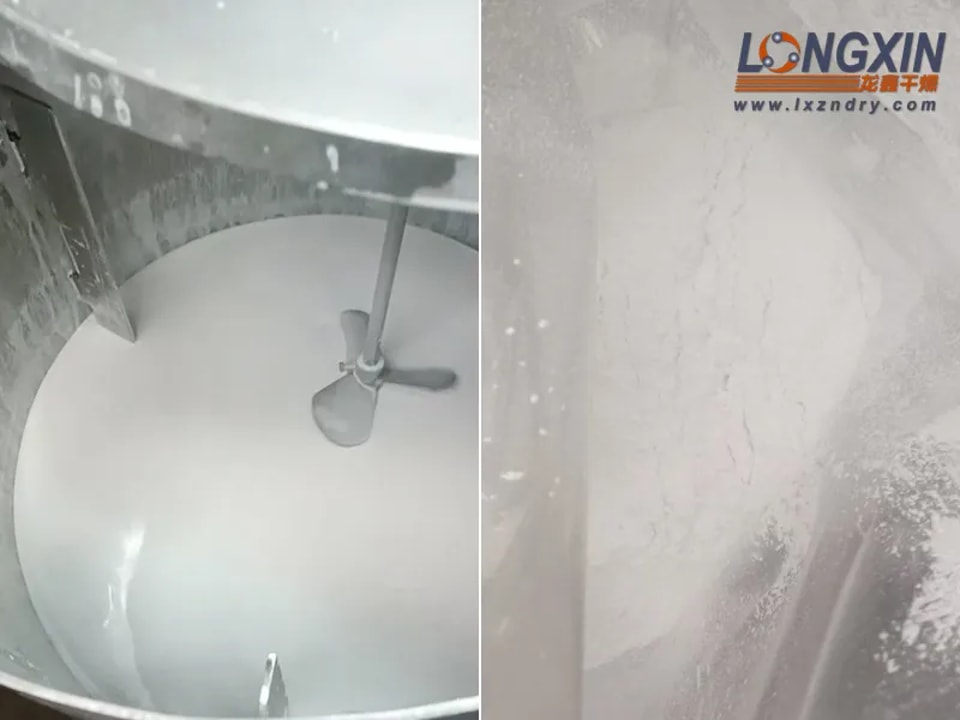 Empowering High-Quality Alumina Ceramic Components with Longxin's Precision Spray Drying SolutionsIn the field of high-precision ceramics, the quality of the powder directly determines the performance of the components. Longxin Drying, with its self-developed spray drying technology, precisely empowers the production of alumina ceramic powders, providing excellent solutions for the global high-end ceramics market.
Market Demand & Trends: The Rise of High-End Demand
Alumina ceramics, known for their outstanding properties, are widely used in advanced applications such as semiconductors, 5G communications, and new energy vehicles. With the miniaturization of electronic devices, the increase in high-frequency requirements, and the emergence of extreme environmental applications, the market demand for high-purity, high-performance alumina ceramics is growing explosively.
The market is showing clear signs of polarization: On the one hand, traditional industries still require cost-effective ceramics, while on the other hand, there is a rapid growth in demand for alumina powders with purity above 99.9%, nano-alumina, and specific morphological spherical alumina.
In the future, alumina ceramic powders that meet the requirements of high purity, narrow particle size distribution, high sphericity, and low impurity content will become the key factor determining the upper limit of the performance of structural components.
Core Foundation: The Critical Role of Powder Quality in Component Performance
"Powder determines the outcome" — this is the consensus in the ceramics industry. The density, mechanical strength, dielectric performance, and surface finish of alumina ceramic components are directly determined by the micro characteristics of the raw powder:
Particle Size Distribution: A wide distribution will cause uneven shrinkage during sintering, resulting in internal stress or cracking. Narrow distribution, with ultra-fine powder, promotes densification and improves strength.
Powder Morphology: Spherical alumina powders have excellent flowability, ensuring smooth high-precision processes such as dry pressing and injection molding.
Purity and Impurity Control: Trace impurities, such as sodium, potassium, and iron, can significantly degrade insulation properties and thermal stability, affecting the reliability of high-end applications.
Granulation Powder Performance: High-quality granulated powders possess proper bulk density, good flowability, and sufficient particle strength to ensure uniform and consistent filling during mold formation.
Without high-quality precursor powders, it is impossible to manufacture high-performance alumina ceramic components.
Addressing Pain Points: Bottlenecks and Challenges of Traditional Drying Processes
In the preparation process of alumina ceramic powders, drying and granulation are key stages. However, traditional drying methods are increasingly showing limitations in meeting the rigorous requirements of high-end applications:
Uncontrolled Particle Size Distribution: Traditional atomizer designs are often rough, leading to uneven droplet sizes and broad particle size distribution after drying, making it difficult to meet the uniformity required for high-end sintering.
Thermal Sensitivity Damage: Uneven hot air distribution or local overheating can cause over-baking, agglomeration, or phase transformation, compromising the powder's activity and purity.
Impurity Introduction: The wear of equipment materials or outdated cleaning systems can introduce metal impurities, severely affecting the quality of high-purity alumina.
Low Recovery Rate: For ultra-fine hydrates, boehmite, and nano-alumina, traditional dust removal systems are inefficient, leading to significant raw material loss.
Insufficient Flexibility: General-purpose equipment struggles to provide precise adjustments for different material properties, making it difficult to achieve "one solution for one product."
Longxin’s Solution: Customized Spray Drying Machines Powering Industrial Upgrades
In response to the urgent demand for high-purity, high-performance alumina products, Longxin Drying focuses on customer needs, deeply engaging in the precision ceramic powder sector. We understand that different application areas require various particle sizes, crystal shapes, and purities. Therefore, Longxin has moved away from a one-size-fits-all manufacturing model, offering customized, precision solutions for each product type to ensure high purity and stability from the source.
Whether it is spherical alumina for thermal fillers, ultra-fine alumina for polishing, or boehmite and high-purity alumina for electronic substrates, Longxin can tailor its spray drying processes based on the specific material properties, supporting breakthroughs in industries such as semiconductors and new energy.
Technological Edge: Five Key Advantages of Longxin’s Precision Ceramic Powder Granulation Spray Dryers
Longxin’s latest precision ceramic powder granulation spray dryers integrate multiple core technologies developed in-house, setting a new industry standard:
CFD-Simulated Hot Air Distribution System: By using computational fluid dynamics (CFD) for comprehensive simulation, we optimize the airflow distribution within the tower, eliminate dead zones and vortices, and ensure every droplet is dried in the optimal temperature zone, preventing overheating and ensuring uniform particle size and color.
Self-Developed Ultra-High-Speed Centrifugal Atomizer: With complete control over the atomizer core technology, our ultra-high-speed atomizer provides reliable performance with precise rotational speed control, producing powders with a narrow particle size distribution and perfect sphericity.
Intelligent Temperature Control and Dual Cooling System: The newly designed oil and air cooling composite system, combined with real-time intelligent monitoring modules, ensures stable operation of the atomizer even under high-temperature, high-load conditions, eliminating risks of overheating and downtime.
Customized "One Solution for One Product" Atomizing Discs: Longxin provides tailored atomizing discs for different materials, such as high-viscosity nano-alumina and thixotropic boehmite, allowing precise control over particle size and morphology by adjusting the disc angle, groove structure, and rotational speed.
New Offline Cleaning Filter Bag Dust Removal System: The optimized dust removal system, with specially designed high-temperature resistant filter bags and cold-air protection, significantly extends filter bag life while improving the recovery rate of ultra-fine powders, meeting environmental emission requirements.
All-Out Efforts for Excellence: Creating a New Future for Precision Ceramics
Longxin Drying focuses on high-performance precision ceramic powder production, treating advanced drying processes as the technological foundation. Through fully automated production and strict quality control, we ensure that each batch of products is traceable and verifiable, safeguarding the quality of customer deliveries.
With a wide range of spray drying towers, Longxin can precisely meet the differentiated demands of various sectors, including ceramic components, refractory materials, thermal fillers, and polishing abrasives. Moving forward, Longxin will continue to refine its technology and innovate in collaboration with customers to expand high-end application scenarios. We strive to become the trusted provider of high-performance, high-purity alumina intelligent equipment, empowering the ceramic industry with cutting-edge technology and advancing the development of high-quality alumina ceramic components for broader applications.
Choose Longxin, Choose Quality and the Future. Let's work together to create a new era of precision ceramics!
Read More
Empowering High-Quality Alumina Ceramic Components with Longxin's Precision Spray Drying SolutionsIn the field of high-precision ceramics, the quality of the powder directly determines the performance of the components. Longxin Drying, with its self-developed spray drying technology, precisely empowers the production of alumina ceramic powders, providing excellent solutions for the global high-end ceramics market.
Market Demand & Trends: The Rise of High-End Demand
Alumina ceramics, known for their outstanding properties, are widely used in advanced applications such as semiconductors, 5G communications, and new energy vehicles. With the miniaturization of electronic devices, the increase in high-frequency requirements, and the emergence of extreme environmental applications, the market demand for high-purity, high-performance alumina ceramics is growing explosively.
The market is showing clear signs of polarization: On the one hand, traditional industries still require cost-effective ceramics, while on the other hand, there is a rapid growth in demand for alumina powders with purity above 99.9%, nano-alumina, and specific morphological spherical alumina.
In the future, alumina ceramic powders that meet the requirements of high purity, narrow particle size distribution, high sphericity, and low impurity content will become the key factor determining the upper limit of the performance of structural components.
Core Foundation: The Critical Role of Powder Quality in Component Performance
"Powder determines the outcome" — this is the consensus in the ceramics industry. The density, mechanical strength, dielectric performance, and surface finish of alumina ceramic components are directly determined by the micro characteristics of the raw powder:
Particle Size Distribution: A wide distribution will cause uneven shrinkage during sintering, resulting in internal stress or cracking. Narrow distribution, with ultra-fine powder, promotes densification and improves strength.
Powder Morphology: Spherical alumina powders have excellent flowability, ensuring smooth high-precision processes such as dry pressing and injection molding.
Purity and Impurity Control: Trace impurities, such as sodium, potassium, and iron, can significantly degrade insulation properties and thermal stability, affecting the reliability of high-end applications.
Granulation Powder Performance: High-quality granulated powders possess proper bulk density, good flowability, and sufficient particle strength to ensure uniform and consistent filling during mold formation.
Without high-quality precursor powders, it is impossible to manufacture high-performance alumina ceramic components.
Addressing Pain Points: Bottlenecks and Challenges of Traditional Drying Processes
In the preparation process of alumina ceramic powders, drying and granulation are key stages. However, traditional drying methods are increasingly showing limitations in meeting the rigorous requirements of high-end applications:
Uncontrolled Particle Size Distribution: Traditional atomizer designs are often rough, leading to uneven droplet sizes and broad particle size distribution after drying, making it difficult to meet the uniformity required for high-end sintering.
Thermal Sensitivity Damage: Uneven hot air distribution or local overheating can cause over-baking, agglomeration, or phase transformation, compromising the powder's activity and purity.
Impurity Introduction: The wear of equipment materials or outdated cleaning systems can introduce metal impurities, severely affecting the quality of high-purity alumina.
Low Recovery Rate: For ultra-fine hydrates, boehmite, and nano-alumina, traditional dust removal systems are inefficient, leading to significant raw material loss.
Insufficient Flexibility: General-purpose equipment struggles to provide precise adjustments for different material properties, making it difficult to achieve "one solution for one product."
Longxin’s Solution: Customized Spray Drying Machines Powering Industrial Upgrades
In response to the urgent demand for high-purity, high-performance alumina products, Longxin Drying focuses on customer needs, deeply engaging in the precision ceramic powder sector. We understand that different application areas require various particle sizes, crystal shapes, and purities. Therefore, Longxin has moved away from a one-size-fits-all manufacturing model, offering customized, precision solutions for each product type to ensure high purity and stability from the source.
Whether it is spherical alumina for thermal fillers, ultra-fine alumina for polishing, or boehmite and high-purity alumina for electronic substrates, Longxin can tailor its spray drying processes based on the specific material properties, supporting breakthroughs in industries such as semiconductors and new energy.
Technological Edge: Five Key Advantages of Longxin’s Precision Ceramic Powder Granulation Spray Dryers
Longxin’s latest precision ceramic powder granulation spray dryers integrate multiple core technologies developed in-house, setting a new industry standard:
CFD-Simulated Hot Air Distribution System: By using computational fluid dynamics (CFD) for comprehensive simulation, we optimize the airflow distribution within the tower, eliminate dead zones and vortices, and ensure every droplet is dried in the optimal temperature zone, preventing overheating and ensuring uniform particle size and color.
Self-Developed Ultra-High-Speed Centrifugal Atomizer: With complete control over the atomizer core technology, our ultra-high-speed atomizer provides reliable performance with precise rotational speed control, producing powders with a narrow particle size distribution and perfect sphericity.
Intelligent Temperature Control and Dual Cooling System: The newly designed oil and air cooling composite system, combined with real-time intelligent monitoring modules, ensures stable operation of the atomizer even under high-temperature, high-load conditions, eliminating risks of overheating and downtime.
Customized "One Solution for One Product" Atomizing Discs: Longxin provides tailored atomizing discs for different materials, such as high-viscosity nano-alumina and thixotropic boehmite, allowing precise control over particle size and morphology by adjusting the disc angle, groove structure, and rotational speed.
New Offline Cleaning Filter Bag Dust Removal System: The optimized dust removal system, with specially designed high-temperature resistant filter bags and cold-air protection, significantly extends filter bag life while improving the recovery rate of ultra-fine powders, meeting environmental emission requirements.
All-Out Efforts for Excellence: Creating a New Future for Precision Ceramics
Longxin Drying focuses on high-performance precision ceramic powder production, treating advanced drying processes as the technological foundation. Through fully automated production and strict quality control, we ensure that each batch of products is traceable and verifiable, safeguarding the quality of customer deliveries.
With a wide range of spray drying towers, Longxin can precisely meet the differentiated demands of various sectors, including ceramic components, refractory materials, thermal fillers, and polishing abrasives. Moving forward, Longxin will continue to refine its technology and innovate in collaboration with customers to expand high-end application scenarios. We strive to become the trusted provider of high-performance, high-purity alumina intelligent equipment, empowering the ceramic industry with cutting-edge technology and advancing the development of high-quality alumina ceramic components for broader applications.
Choose Longxin, Choose Quality and the Future. Let's work together to create a new era of precision ceramics!
Read More Understanding the Process of Concentrating Fermented Yoghurt: From 12% to 90% Dry MatterUnderstanding the Process of Concentrating Fermented Yoghurt: From 12% to 90% Dry MatterWhen it comes to concentrating fermented yoghurt, the goal is to start with a product that contains around 12% dry matter and transform it into a powdered form with 90% dry matter. This process is crucial in order to achieve key requirements such as ensuring the viability of probiotic bacteria at a rate of ≥10⁸ CFU/g, high sphericity, good solubility, and a shelf life of at least 12 months at room temperature.At Longxin, we have unique features and safeguards in place to ensure the success of this process. Our methods include using low temperature and active protection to avoid heat stress on the materials. By utilizing a "upward air flow and exhaust" mixed flow design, we are able to keep the actual material temperature below 75°C. Additionally, our vacuum freeze-drying machines can be equipped with in-situ pre-freezing plates and integrated cold traps to minimize contamination during handling.We also incorporate microencapsulation and additive systems to enhance the final product. By adding 2-4% maltodextrin or skim milk powder online, we are able to increase the glass transition temperature and reduce wall sticking. Our spray nozzle pressure ranges from 5-10 MPa, with droplet size D50 adjustable between 10-50 μm, resulting in a final product sphericity of ≥0.85.Our approach also emphasizes modularization and intelligent control. With quick-change CIP/SIP systems, batch switches can be completed in under 30 minutes. Our AI predictive maintenance system increases Overall Equipment Effectiveness by 15% and reduces downtime due to malfunctions by 40%.Longxin is committed to environmental sustainability and energy efficiency. We achieve a solvent recycling rate of ≥95% through closed-loop systems and maintain tail gas dust levels below 50 mg/m³. By implementing waste heat recovery modules, the comprehensive energy consumption per ton of dry powder is reduced by 20%.The implementation process involves the following steps: fermentation of yoghurt, vacuum membrane concentration (40-48% solids), low-temperature drying (spray/freeze/fluidized bed granulation), online cooling, nitrogen filling and packaging, and final product distribution.For future collaborations, please provide information on the planned processing volume (t/d), target bacterial activity indicators, steam/electricity conditions on-site, and whether organic or GMP certification is required.We welcome samples for testing and offer free trials along with comprehensive process reports. For inquiries, please contact us at +8613611616575 or email aimee.wang@longxinglobal.com.cn.Read MoreExploring Drying Solutions for High-Moisture Organic WasteDrying solutions for high-moisture organic waste are crucial for the processing of agricultural products such as tea, coffee, turmeric, and ginger. With initial water content ranging from 70-85%, these byproducts require efficient drying methods to reduce moisture levels to below 10% for further utilization in fuel production, fertilizer manufacturing, or animal feed. Leveraging 25 years of engineering experience, Longxin Drying has successfully delivered a range of specialized drying machines to meet these needs.Recommended Models and Advantages1. LXZG Series Single-Shaft Rotary Steam Dryer (Longxin patented)- Indirect conduction + low-speed stirring, operating at temperatures of 100-160°C to preserve effective components.- Continuous feeding and discharging, with a single machine processing capacity of 0.5-6 t/h (wet material) for 24-hour continuous production.- Steam consumption ≤ 1.1 kg steam/kg water evaporation, saving 25-30% more energy compared to traditional rotary dryers.- Internal self-cleaning structure prevents clogging and material backflow, making it especially suitable for high-viscosity tea residue and ginger residue.2. LZVF Series Vertical Vibrating Fluidized Bed Dryer- Rapid dehydration of granular or sliced materials (such as dried ginger slices or crushed black tea) with batch capacities ranging from 200-800 kg.- Modular design, compact footprint, easy to clean, suitable for small-scale or seasonal production.3. LZPG Series Vacuum Rake Dryer- Vacuum drying at low temperatures of 40-90°C in an oxygen-free environment to protect the aroma compounds of coffee and turmeric oil.- Batch sizes ranging from 100-3000 L, meeting GMP/organic certification requirements.Typical ProcessHigh-moisture waste → Crushing/granulation → LXZG rotary drying → Cooling → Grinding → Packaging/granulation(Optional: Condensation recovery of essential oils from exhaust gas, with condensate meeting emission standards)Some Case Studies- A coffee factory in Yunnan, China: Processing 2 t/h of coffee residue with 82% moisture content reduced to 10%, saving 1.05 kg of steam per kg of water and cutting annual steam costs by 1.2 million yuan.- A tea enterprise in Huangshan, Anhui, China: Drying 1 t/h of black tea residue with a calorific value of 4200 kcal/kg for direct boiler use as a coal substitute.- A biotechnology company in Shandong, China: Processing 3 t/h of turmeric residue for drying and pelletizing into organic fertilizer, meeting Japan's JAS organic standards for export.Next Steps for CollaborationTo proceed with our services, kindly provide the following information so we can issue a formal URS and detailed quotation within 24 hours:- Type of material, initial moisture content, target moisture content- Planned processing capacity (t/d or t/h)- On-site steam/electricity/gas conditions and pressure levels- Requirement for explosion-proofing, GMP, organic, or CE certification.Read More
Contact US
×Support order samples, customization, wholesale direct, and complete payment. If the product you look for does not have corresponding customized content, pls fill out the form below to contact us, and we will reply ASAP.

- Hengshanqiao Town, Changzhou, Jiangsu Province-213119, China
- No. 2600, Zhencheng Road, Jiangyin City, Jiangsu Province, 214441, China
- 503a, 5th Floor, No.2582 Gudai Road, Minhang District, Shanghai, 201101
- techservice@longxinglobal.com.cn
 13611616575
- +86 13611616575
 +86 13611616575