
AI Fuels MLCC Market Growth; Breakthroughs in Barium Titanate Powder Spray Dryers Boost Rapid Domestic Substitution
AI Fuels MLCC Market Growth; Breakthroughs in Barium Titanate Powder Spray Dryers Boost Rapid Domestic Substitution
2026-06-17
Market Opportunities and Challenges of Barium Titanate Powder Amid the AI Boom
As AI technology penetrates 5G communications, IoT, automotive electronics and other sectors, demand for MLCCs, known as the "industrial staple", has exploded. Statistics show that premium 5G smartphones consume more MLCCs than their 4G counterparts, while new energy vehicles use five times as many MLCCs as conventional fuel cars in power systems, ranging from 2,000 to 2,500 pieces. The global MLCC market size is expected to exceed 149 billion RMB by 2025. As the world’s largest consumer market accounting for 45% of global demand, China boasts huge potential for domestic substitution.
As the core dielectric raw material of MLCCs, barium titanate (BaTiO₃) directly determines the dielectric constant, reliability and miniaturization potential of MLCCs. High-purity nano-sized barium titanate powder has become the mainstream market product. After sintering, it forms dense sintered bodies that enhance ceramic toughness and strength while lowering sintering temperatures. Nevertheless, the global high-end barium titanate powder market has long been monopolized by enterprises including Japan’s Sakai Chemical and U.S.-based Ferro. Domestic leading firm Sinocera holds merely 10% market share, making domestic substitution of high-performance powder an urgent priority.
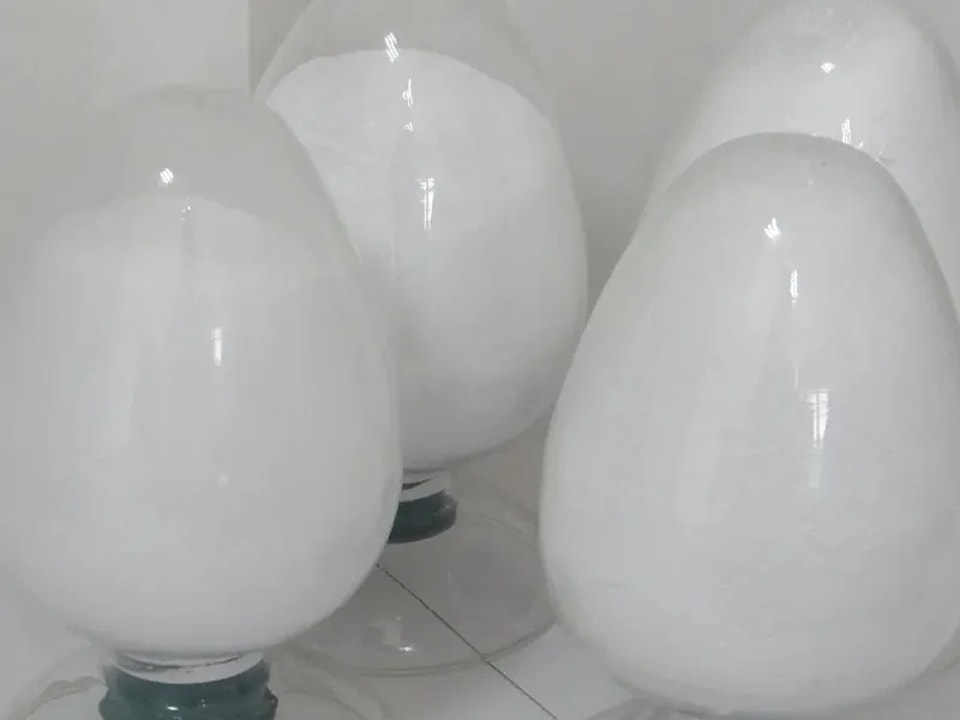
Core Bottlenecks Restricting Domestic Production of Barium Titanate MLCC Powder
Liquid-phase methods (hydrothermal synthesis, sol-gel method, etc.) dominate the preparation of barium titanate MLCC powder. Grinding and drying are core processes governing powder quality, yet they are plagued by four major technical bottlenecks:
(1) Pain Points in the Grinding Stage
- Severe particle agglomeration: Nano barium titanate has a large specific surface area, and van der Waals forces readily trigger hard agglomeration during grinding, worsening powder flowability and increasing porosity of sintered ceramics.
- Uneven particle size distribution: Fluctuations in the rotational speed and media ratio of traditional sand mills widen the particle size span factor (ideal value < 1.2), resulting in inconsistent dielectric performance of MLCCs.
- Risk of impurity contamination: Wear of grinding media and equipment surfaces easily introduces metallic impurities. Excess Fe²⁺, for instance, will degrade the insulation performance of MLCCs.
- Conflict between energy consumption and efficiency: Conventional equipment requires over 8 hours of grinding to reach D50 = 100 nm, consuming massive energy and risking crystal phase transformation of barium titanate, which reduces its dielectric constant.
(2) Challenges in the Drying Stage
- Thermal susceptibility defects: Barium titanate tends to undergo crystal transformation when drying temperature exceeds 200 °C, leading to higher dielectric loss.
- Poor particle size control: Standard spray dryers feature a wide droplet size distribution (±10%), resulting in uneven powder particle sizes after drying and impairing uniformity during MLCC lamination molding.
- Wall adhesion and contamination: Wet powder sticks to tower walls and forms secondary agglomerates. If the equipment is made of ordinary stainless steel, the leaching rate of Fe and Ni ions can reach 0.05%, lowering powder purity.
- Insufficient sphericity: Traditional processes fail to achieve high spherical granulation (sphericity < 70%), leading to sintered MLCC compactness below 95% and unstable electrical performance.
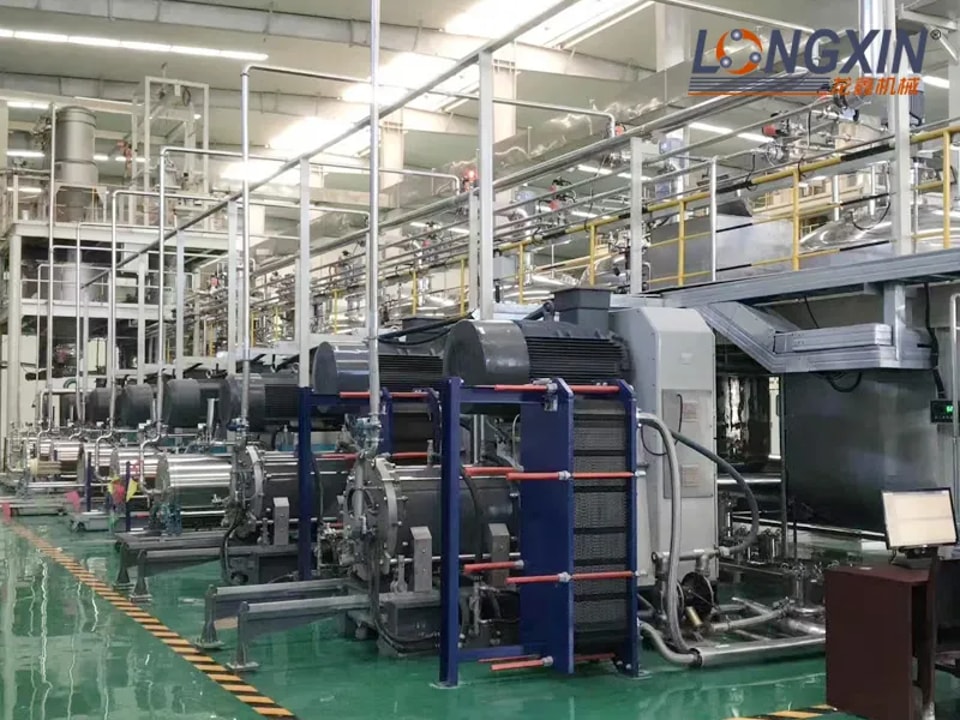
Longxin Intelligent Full-Chain Solution: Disruptive Innovation Covering Grinding to Drying
To address the above pain points, Longxin Intelligent launches an integrated solution combining turbine pin-type nano dual-power sand mill and centrifugal airflow multi-purpose spray dryer, enabling precise full-process control.
Turbine Pin-Type Nano Dual-Power Sand Mill: Revolutionary Breakthrough in Grinding Technology
- Dual-Power Feeding & Silicon Carbide Grinding Chamber A combined screw pump and peristaltic pump feeding system delivers precise flow control from 50 to 1000 L/h, compatible with slurries of various solid contents. The grinding chamber lined with silicon carbide features over 10 times higher wear resistance and superior thermal conductivity compared with conventional stainless steel. It stabilizes chamber temperature within a narrow range and eliminates crystal phase transformation of barium titanate caused by overheating. The hybrid turbine-pin disperser generates 3D turbulent flow. Raw powder with D50 = 5 μm can be refined to a smaller D50 with a low particle size span factor after treatment.
- Screenless Centrifugal Separation Technology The self-developed screenless centrifugal separator is equipped with an independent drive motor adjustable from 5,000 to 12,000 rpm. During operation, centrifugal force from the disperser pushes 99% of zirconia grinding beads toward the chamber periphery to flow alongside materials and reduce collision wear. The high-speed rotating separator generates centrifugal force exceeding pump pressure to retain zirconia beads inside the chamber, while materials flow out through the separator center. Separation efficiency hits 99.9% with minimal bead wear, completely solving screen clogging issues.
- Intelligent Control System Integrated PLC algorithms monitor multiple parameters in real time and automatically optimize grinding strategies. Variable frequency drive technology cuts energy consumption and boosts grinding efficiency, shortening processing cycles compared with traditional equipment.
Centrifugal Airflow Multi-Purpose Spray Dryer: Precision Control for Drying and Granulation
- Dual-Mode Atomization System
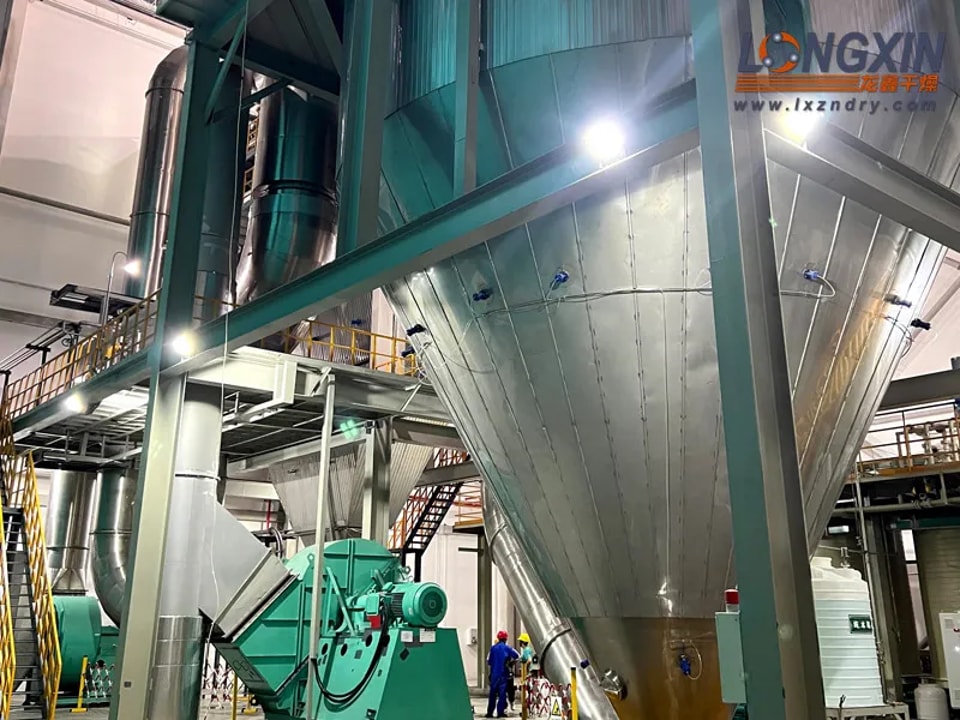
- Centrifugal atomization unit: The high-speed gear-boosted atomizer achieves a disc linear velocity of 220 m/s with adjustable rotational speed for accurate droplet size control. The patented vortex liquid distribution plate (Patent No. ZL 2021 2 2093525.2) prevents nozzle blockage and delivers high-sphericity spherical granulation.
- Airflow atomization unit: Two-fluid atomizing nozzles paired with compressed air can atomize high-viscosity slurries. Multiple spray guns can be installed to expand production capacity when a single nozzle cannot meet output demands, catering to micro-nano powder manufacturing. Switching between the two modes can be completed within 30 minutes to satisfy diverse process requirements for MLCC formulation powder.
- High-Purity & Uniformity Assurance Technology All material contact components adopt mirror-polished 316L stainless steel (low Ra value) and zirconia ceramics. An annular air curtain inside the drying tower avoids wall adhesion and secondary agglomeration, delivering powder purity above 99%. A multi-stage hot air distributor paired with a PID temperature control system maintains precise temperature gradients inside the tower. Optimized mixing modes of hot air and liquid droplets accommodate the thermal sensitivity of barium titanate precursors.
- Automation & Intelligent Upgrades An AI model built on thousands of experimental datasets automatically recommends optimal drying parameters (inlet air temperature: 150–300 °C, outlet air temperature: 80–120 °C) and dynamically adjusts settings in real time. Built-in IoT modules support remote equipment monitoring, shorten fault early warning response time and improve maintenance efficiency.
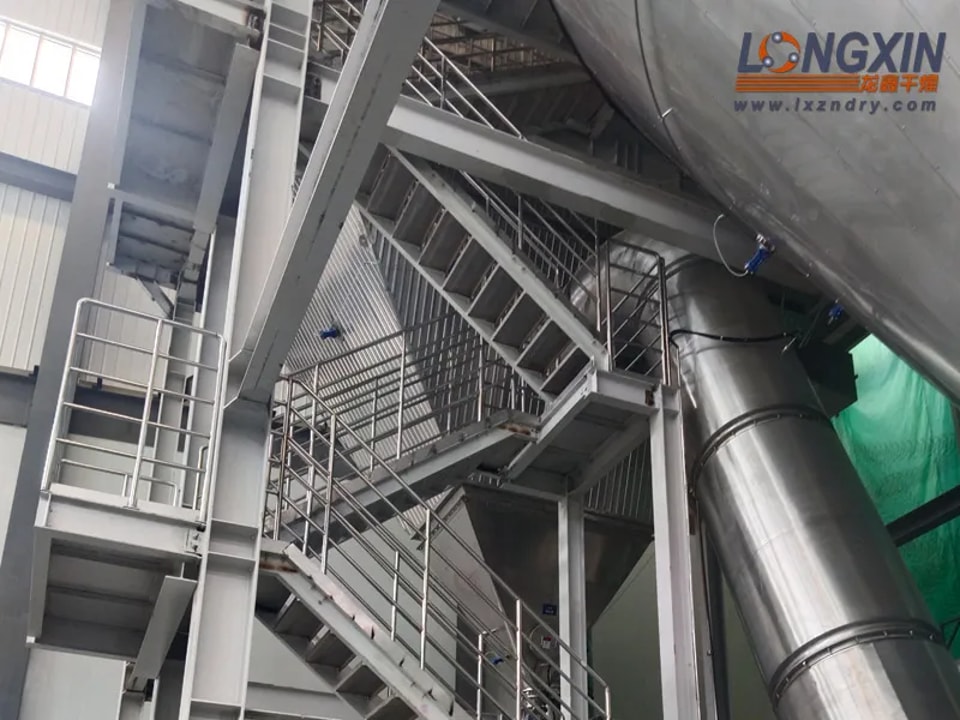
Value of Technological Innovation: Core Engine for Domestic Substitution
- Superior performance indicators: Uniform particle size, high sphericity, high dielectric constant and low dielectric loss, reaching the top-tier level of equivalent products worldwide.
- Distinct cost advantages: Reduced overall energy consumption, lower production cost per ton of powder and higher MLCC manufacturing yield.
- Expanded production capacity: A single intelligent production line delivers high annual output, double the capacity of traditional lines, helping electronic ceramic material manufacturers gain access to major supply chains.
Driven by the AI trend toward miniaturization and high performance of electronic components, Longxin Intelligent delivers core equipment support branded "Longxin Intelligent Manufacturing" for MLCC domestic substitution through full-chain technological breakthroughs in grinding and drying. The company accelerates the localization rate of barium titanate powder and reshapes the industrial landscape of electronic ceramic materials.
Contact US
×Support order samples, customization, wholesale direct, and complete payment. If the product you look for does not have corresponding customized content, pls fill out the form below to contact us, and we will reply ASAP.

- Hengshanqiao Town, Changzhou, Jiangsu Province-213119, China
- No. 2600, Zhencheng Road, Jiangyin City, Jiangsu Province, 214441, China
- 503a, 5th Floor, No.2582 Gudai Road, Minhang District, Shanghai, 201101
- techservice@longxinglobal.com.cn
 13611616575
- +86 13611616575
 +86 13611616575