
Multi-stage Fluidized Granulation Spray Dryer: Unlock the Secrets to Efficient Production of Instant Granules of Enzymatically Hydrolyzed Protein Peptides
Multi-stage Fluidized Granulation Spray Dryer: Unlock the Secrets to Efficient Production of Instant Granules of Enzymatically Hydrolyzed Protein Peptides
2026-06-15
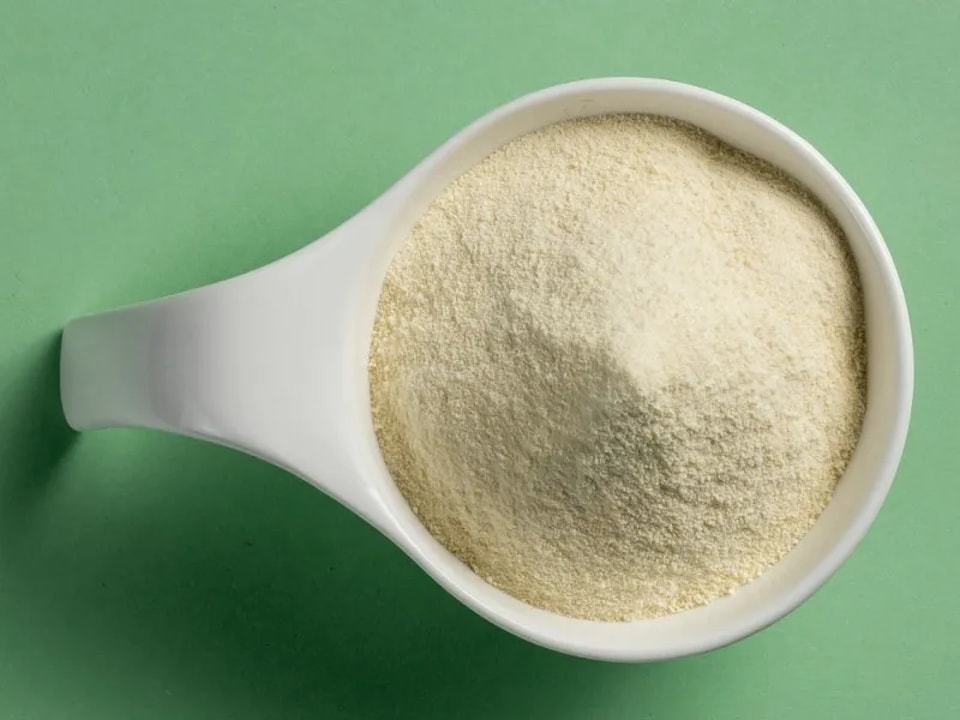
Instant Granules of Enzymatically Hydrolyzed Protein Peptides adopt advanced enzymatic hydrolysis technology to efficiently break down proteins into small molecular peptides and amino acids, which are further processed into granular products.
Compared with intact proteins, these small molecular peptides and amino acids feature high bioavailability. They can quickly enter the blood circulation and deliver nutritional effects in a short period. Rich in essential amino acids — the building blocks of human proteins — the product actively participates in key physiological processes including metabolism, immune regulation and muscle repair. It also contains biologically active peptide fragments with antioxidant, anti-fatigue and hypotensive properties, which exert targeted physiological regulatory effects in the human body.
In the health product sector, the granules containing specific peptide fragments help middle-aged and elderly people regulate blood pressure and blood lipids, and assist in the prevention of cardiovascular diseases. For people with low immunity, they can remarkably boost immune function and the body's disease resistance.
In the pharmaceutical industry, thanks to its excellent solubility and biocompatibility, the product serves as a drug carrier to encapsulate drug molecules, greatly enhancing drug stability and bioavailability.
As public health awareness continues to rise, the demand for nutritional supplements and health foods keeps growing. As an easily absorbable protein source, instant granules of enzymatically hydrolyzed protein peptides fully meet the demands of sports nutrition, daily health care and other diverse fields, showing a strong upward market trend in food, beverage and health product industries. Its promising market prospects have attracted extensive attention from numerous enterprises. Traditional food and health product manufacturers as well as emerging biotechnology companies have increased investment in R&D, production and marketing in this sector, leading to increasingly fierce market competition. Against this backdrop, improving product quality has become the core factor for enterprises to stand out from the competition.
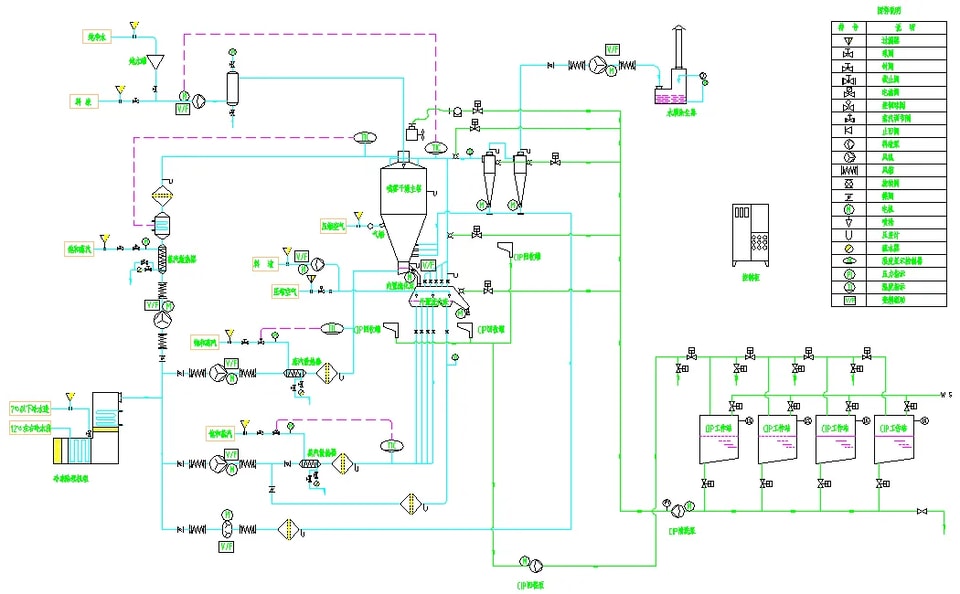
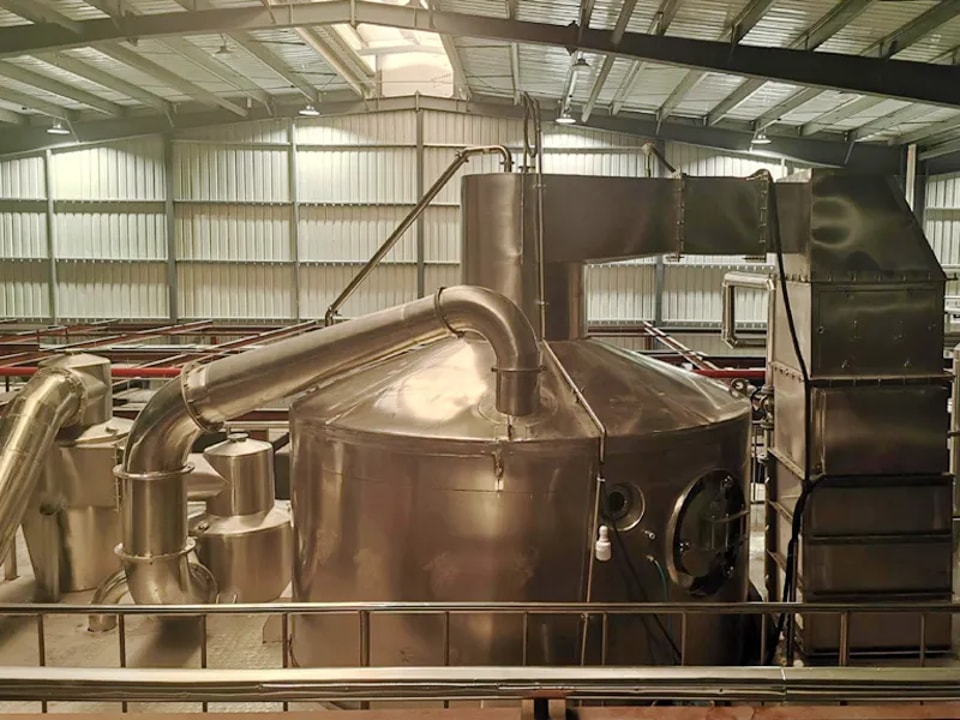
Process Flow of Multi-stage Fluidized Granulation Spray Dryer
(1) Raw Material Pretreatment
The enzymatically hydrolyzed protein peptide solution undergoes precision filtration, high-efficiency concentration and other pretreatment processes to adjust its concentration, viscosity and other parameters to the optimal standards for spray drying. The treated material is then accurately delivered to the feeding system of the dryer via pipelines.
(2) Hot Air Generation
Ambient air is heated by high-efficiency heaters to form hot air at a specified temperature. The hot air is delivered to the top of the drying tower and the bottom of the fluidized bed respectively, passing through distribution plates to make full contact with materials and fluidize them. It creates the required thermal and airflow conditions for subsequent drying and granulation.
(3) Slurry Atomization
The liquid material in the feeding system is pumped into the drying tower at a precisely controlled pressure by diaphragm pumps and other equipment. Pressure energy is efficiently converted into kinetic energy. The slurry is ejected upward at high speed from the nozzles to form a high-velocity liquid film, which quickly breaks into fine droplets. The droplet size is inversely proportional to the operating pressure, while the production capacity of the nozzle is proportional to the square of the pressure.
(4) Drying and Spheroidization of Droplets
Atomized droplets and hot air work in an optimized mixed flow inside the drying tower. Hot air evenly enters the tower through the top air distributor and forms a stable downward laminar airflow, while droplets are sprayed upward against the hot air stream. Thanks to the large specific surface area of droplets, internal moisture evaporates rapidly under the action of hot air. Driven by surface tension, droplets shrink into spherical shapes and finally solidify into dry spherical particles. The particles gradually settle in the tower and separate efficiently from hot air.
(5) Fluidized Granulation
Fine powder lifted upward by hot airflow inside the fluidized bed collides with falling wet fine particles in the specially designed atomization and granulation zone. Particles grow gradually through physical effects such as coating and adhesion. Mother liquor or binder is accurately conveyed to atomizing nozzles by pressure pumps. After atomization, it evenly coats the surface of fluidized particles or bonds particles together. Through continuous fluidization, coating and drying, particles keep growing until reaching the target particle size.
(6) Discharge and Collection of Particles
Particles reaching the preset particle size are smoothly discharged from the fluidized bed outlet and sent to high-precision finished product collection devices. Fine particles, together with drying air, are extracted by exhaust fans connected to the funnel-shaped upper section and delivered to the professional dust removal system.
(7) Dust Removal and Exhaust Gas Treatment
The dust removal system consists of core equipment including high-efficiency cyclone separators and centrifugal fans. The exhaust fan delivers air containing fine particles into the cyclone separator for efficient separation. Collected fine particles fall to the bottom of the separator and are accurately returned to the atomization zone of the tower via rotary valves for recycling as seed crystals. The remaining waste gas containing trace ultrafine particles is further purified by water film dust collectors to achieve harmless treatment. The treated gas that meets emission standards is finally discharged through the chimney in compliance with regulations.
(8) System Monitoring and Control
The advanced electrical system is composed of an electric control cabinet and high-precision on-site temperature sensors installed at air inlets and material outlets. It conducts real-time monitoring and precise control over key links and core parameters of the entire dryer, including temperature, pressure, air velocity and material flow rate, so as to ensure stable equipment operation and consistent product quality.
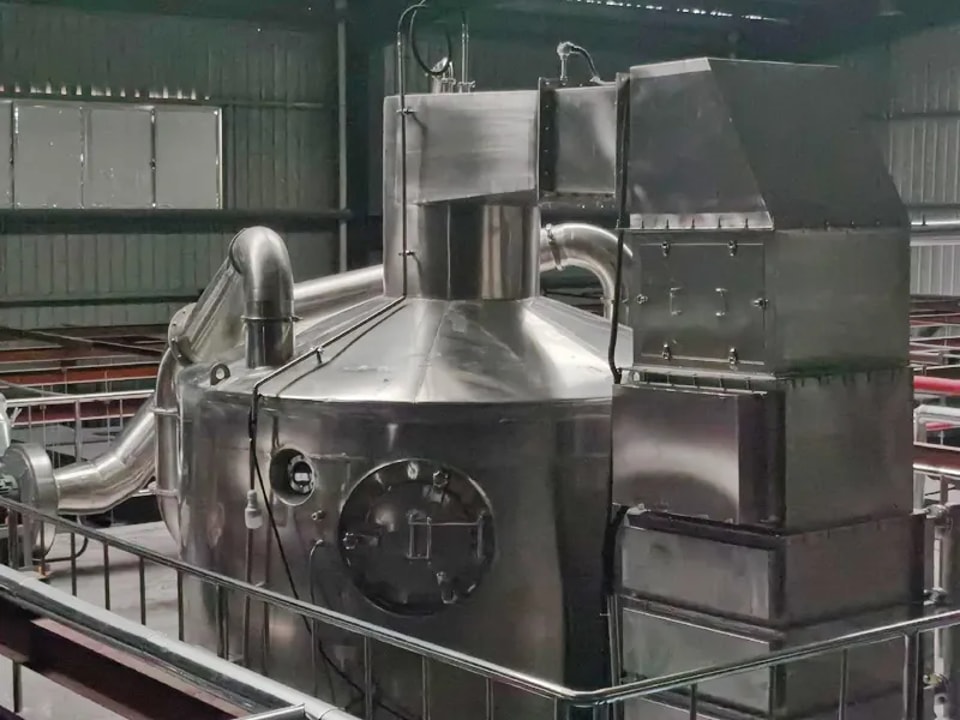
Performance Advantages of Multi-stage Fluidized Granulation Spray Dryer for Instant Granules of Enzymatically Hydrolyzed Protein Peptides
(1) Excellent Product Quality
- Superior particle performance The equipment produces granules with highly uniform particle size. The finished products feature outstanding flowability, solubility and dispersibility. During processing and application of enzymatically hydrolyzed protein peptides, the granules can mix efficiently, dissolve rapidly and exert full efficacy, greatly improving user experience.
- High product purity Drying is completed instantly with rapid moisture evaporation throughout the low-temperature process, which effectively prevents thermal deterioration of materials. The final products boast remarkably high purity and stable quality, fully complying with the stringent quality requirements for enzymatically hydrolyzed protein peptides.
- Complete retention of active ingredients The ultra-fast drying process greatly shortens the exposure time of heat-sensitive substances such as enzymatically hydrolyzed protein peptides to high temperature. It minimizes material deterioration and decomposition, and fully retains active components and nutrients, which is essential for maintaining the product’s functional and nutritional values.
(2) High Production Efficiency
- Fast drying speed The feed liquid is atomized into a large number of fine droplets with a sharply increased specific surface area. Moisture evaporates in an extremely short time upon contact with hot air, and drying is finished within ten to dozens of seconds. It greatly improves production efficiency and perfectly adapts to large-scale industrial production.
- Continuous production The equipment operates stably and reliably and supports automated continuous mass production. Precise adjustment of relevant parameters enables accurate control over production procedures and product quality to guarantee consistency. It effectively cuts labor costs and workload, and significantly boosts production efficiency and economic benefits.
(3) Streamlined Production Process
- One-step granulation It innovatively integrates drying and granulation into one single process, directly converting liquid materials into granular products. Complicated follow-up procedures such as crushing and sieving are eliminated, which simplifies the workflow and reduces floor space and equipment investment. Meanwhile, it avoids dust pollution and material loss caused by crushing and screening, and improves production safety and environmental performance.
(4) High Energy Efficiency & Environmental Protection
- High energy utilization rate The drying process runs at a low exhaust air temperature. Compared with other drying technologies, it reduces heat loss effectively, raises energy utilization efficiency and lowers energy consumption and production costs.
- Low dust content in exhaust gas Equipped with high-efficiency dust removal systems including cyclone separators and bag filters, the equipment efficiently separates and collects dust in exhaust gas. The exhaust gas has extremely low dust content and meets strict emission standards, reducing environmental pollution and realizing clean production.
(5) Easy Operation & Maintenance
- Simple operation The equipment is easy to operate and learn. Supported by advanced interfaces such as large color LCD touch screens, it flexibly combines automatic and manual control for personalized adjustment according to production demands. The operating status can be monitored and adjusted in real time via professional instruments to ensure stable production.
- Convenient maintenance The equipment adopts a scientific and rational structural design. Major components are easy to disassemble and clean for routine maintenance. It effectively reduces maintenance costs and downtime, and extends the service life of the equipment.
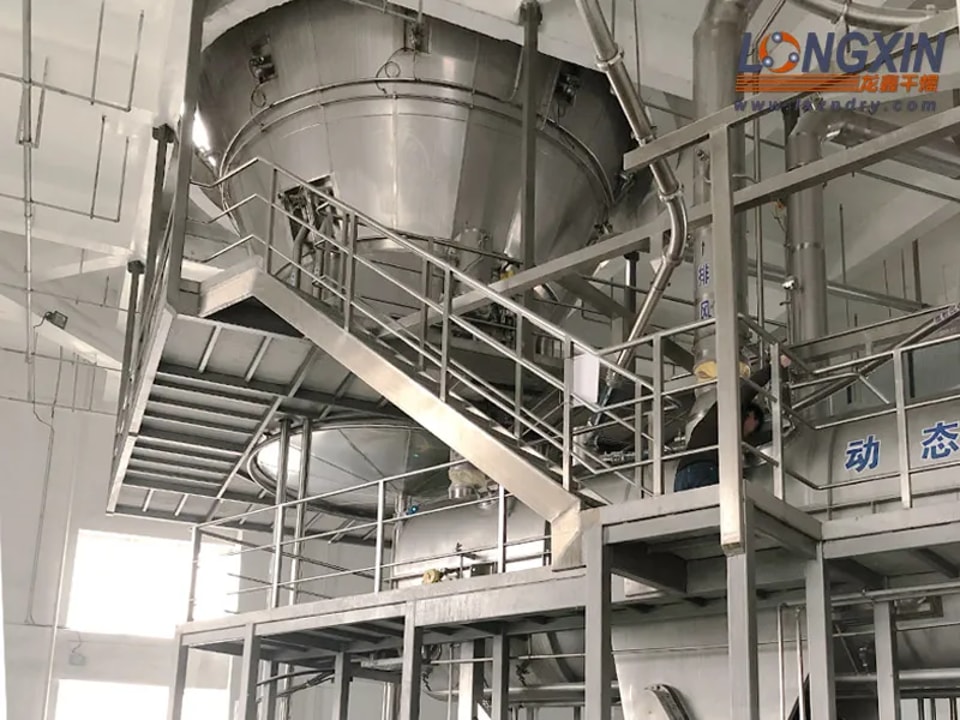
Technical Upgrades of Multi-stage Fluidized Granulation Spray Dryer for Instant Granules of Enzymatically Hydrolyzed Protein Peptides
(1) Upgrades to Atomization System
- Optimized nozzle design Adopting new-type atomizing nozzles such as two-fluid atomizing nozzles and pressure atomizing nozzles, the equipment atomizes feed liquid into fine droplets more evenly, greatly enlarging the contact area with hot air and improving drying efficiency. Precise adjustment of nozzle angle, aperture, shape and other key parameters further optimizes atomization effect and reduces wall sticking. The upgraded nozzle structure for centrifugal spray dryers almost completely eliminates wall sticking.
- Precise feed rate control High-precision metering pumps and flow control systems are installed to accurately regulate the feeding speed and flow rate of feed liquid in accordance with technical requirements. It ensures stable atomization and avoids uneven drying and unstable product quality caused by abnormal feed volume.
(2) Upgrades to Drying System
- Improved hot air distribution uniformity Optimizing the structure and design of hot air distributors enables more even distribution of hot air inside the drying chamber. Every droplet can be fully exposed to hot air to enhance drying uniformity and efficiency, and prevent quality defects such as irregular particle shape and uneven moisture content caused by local overheating or underheating.
- Application of multi-stage drying technology Additional multi-stage drying processes are added to the original workflow. An integrated fluidized bed at the tower bottom is used for secondary low-temperature fluidized drying and cooling. This further reduces residual moisture, improves product stability and solubility, and achieves precise control over particle size distribution and morphology to produce more uniform and regular granules.
(3) Upgrades to Granulation System
- Enhanced agglomeration granulation performance Optimized airflow and temperature fields inside the drying chamber promote agglomeration and fusion of droplets to form larger and more uniform particles. In addition, fine powder collected by cyclone separators is conveyed back by air for re-agglomeration with droplets, which increases particle size and strength, reduces fine powder generation and raises product yield.
- Controlled particle size distribution Advanced particle size analyzers and control systems are introduced to monitor and feed back particle size distribution in real time. The system automatically adjusts operating parameters including feed rate, atomization pressure and hot air temperature according to the preset target particle size range. It realizes precise control over particle size distribution and produces instant granules of enzymatically hydrolyzed protein peptides for diverse application requirements.
(4) Upgrades to Control System
- Intelligent control Advanced automatic control systems such as PLC and touch screen interfaces are adopted to realize precise control and real-time monitoring of all operating sections of the dryer. Based on preset process parameters and control programs, the equipment automatically adjusts feed rate, atomizer speed, hot air temperature, air volume and other parameters to ensure stable drying processes and consistent product quality.
- Remote monitoring and diagnosis Connected with a remote monitoring center via Internet of Things (IoT) technology, the dryer allows operators to remotely check equipment operating status anytime and anywhere through mobile phones, computers and other terminals, including real-time data of temperature, pressure, flow rate, rotational speed and equipment fault alarms. Remote fault diagnosis and maintenance guidance are also available. Technical personnel can quickly and accurately identify fault causes based on remotely acquired data and provide effective solutions for on-site maintenance, improving maintenance efficiency and equipment operational reliability.
(5) Energy-saving & Environmental Protection Upgrades
- High-efficiency heat recovery system Heat recovery units are added to recycle waste heat from exhaust gas. The recovered heat is used to preheat incoming cold air or feed liquid, which improves energy utilization efficiency, cuts energy consumption and production costs, and reduces environmental thermal pollution.
- Optimized exhaust gas treatment The exhaust gas treatment system is further upgraded with high-efficiency cyclone separators, bag filters and other new dust removal equipment to improve dust collection efficiency. The dust content of exhaust gas is further reduced to meet stricter environmental emission standards. Harmful gases in exhaust are also treated to mitigate air pollution.
Contact US
×Support order samples, customization, wholesale direct, and complete payment. If the product you look for does not have corresponding customized content, pls fill out the form below to contact us, and we will reply ASAP.

- Hengshanqiao Town, Changzhou, Jiangsu Province-213119, China
- No. 2600, Zhencheng Road, Jiangyin City, Jiangsu Province, 214441, China
- 503a, 5th Floor, No.2582 Gudai Road, Minhang District, Shanghai, 201101
- techservice@longxinglobal.com.cn
 13611616575
- +86 13611616575
 +86 13611616575