
New energy/new material industry
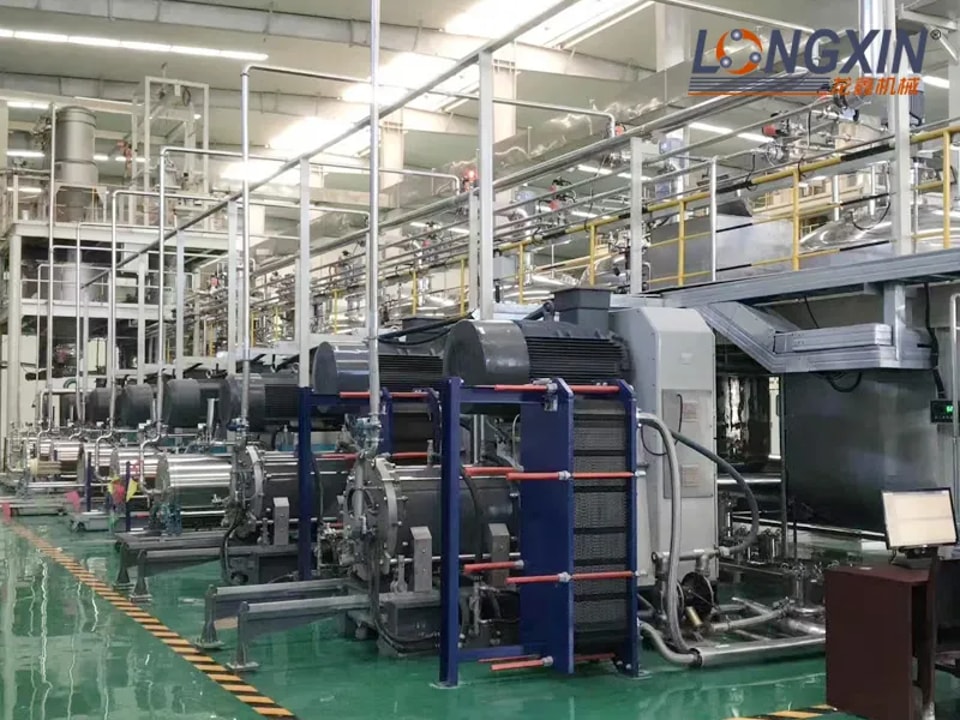 A New Journey for Fluorine Materials: Longxin Drying Boosts Efficiency in Fluoropolymer Post-TreatmentSpring brings flourishing nature and rewarding results from long-term accumulation. At Longxin Intelligent’s Pilot & Industrialization Base for Micro-Nano Material Preparation, a spray drying test for ultrafine PVDF powder used as lithium battery binders was successfully completed for a leading fluoropolymer client. From process R&D to full production line commissioning, Longxin delivers all-round drying and purification solutions for fluoropolymer post-treatment. This landmark breakthrough not only elevates Longxin’s technical prowess in high-end fluorine material equipment to new heights, but also ushers in a new era of domestic production and intelligent manufacturing for core post-treatment processes of China’s fluoropolymer industry.
Booming Market & Prominent Pain Points: Challenges Facing Fluoropolymer Post-Treatment
The rapid expansion of global new energy, semiconductor, 5G communication and aerospace industries has generated unprecedented demand for high-performance fluoropolymer materials. Fluoropolymers have become an indispensable cornerstone of strategic emerging industries, covering PVDF binders for lithium-ion batteries, perfluorosulfonic acid (PFSA) resins for proton exchange membranes at the core of hydrogen fuel cells, as well as corrosion-resistant and heat-resistant fluoroplastics including PTFE and PFA. As applications shift toward high-end scenarios, the market imposes increasingly stringent requirements on material purity, particle size distribution, flowability and batch consistency.
Despite bright market prospects, the post-treatment of fluoropolymers has long been plagued by severe bottlenecks. Traditional drying and purification processes are plagued by high energy consumption, low solvent recovery rates, severe material agglomeration and residual impurities. Especially when handling difficult materials such as PVDF slurry and suspended PTFE powder, conventional equipment cannot balance high output and superior product quality, often resulting in inconsistent material performance or even product scrapping due to cross-contamination. In addition, volatile organic solvents and wastewater generated during fluoromaterial production pose immense pressure on environmental compliance. Breaking through process bottlenecks to realize efficient, eco-friendly and intelligent post-treatment has become a critical constraint restricting high-quality development of the fluoropolymer sector.
Longxin’s Solutions: Innovative Drying Technologies Redefine Fluoropolymer Post-Treatment Standards
To address industry pain points, backed by profound technical reserves and continuous independent innovation, Longxin Drying has rolled out a full range of customized post-treatment solutions exclusively for fluoropolymers, covering the full lifecycle from laboratory R&D to large-scale industrial mass production.
1. PVDF Slurry Gas Flow Spray Dryer: An Innovative Upgrade for Battery-Grade Binders
Catering to the extreme requirements of lithium battery-grade PVDF binders for uniform particle size, low residual solvent and superior dispersibility, Longxin’s gas flow spray dryer for PVDF slurry overcomes historic process limitations and enables intelligent production lines.
Adopting exclusive gas atomization technology, the equipment precisely controls droplet size to produce powder with ideal sphericity and narrow particle size distribution after drying.
Built-in intelligent temperature control enhances the electrochemical performance and batch stability of finished products, providing solid material support for the manufacturing of high-end power batteries.
2. Gas Flow Drying System for Suspended PTFE: Resolving Contamination and Agglomeration Issues
Due to its unique suspended properties, PTFE powder is prone to agglomeration, wall adhesion and external contamination when processed with traditional drying equipment.
Longxin’s gas flow drying system for suspended PTFE features full-link optimization spanning feed pretreatment, drying, final cooling and packaging.
A specially designed gas-solid flow field maintains PTFE particles in a highly dispersed suspended state inside the drying pipeline, enabling instantaneous heat and mass exchange to eliminate caking caused by local overheating.
A fully enclosed clean design paired with an in-line filtration system completely blocks foreign impurity ingress, delivering ultra-high-purity PTFE powder that meets the demands of semiconductors and high-end anti-corrosion applications.
3. PVDF & ETFE Flash Dryers: Intelligent Upgrades Drive Cost Reduction & Productivity Growth
For fluororubbers and resins such as PVDF and ETFE, Longxin’s intelligent flash dryers integrate advanced PLC control systems and online monitoring sensors to enable real-time regulation and automatic fault diagnosis throughout the drying process.
Equipped with high-speed crushing units, the equipment leverages instant contact between fragmented wet materials and hot air to remove surface and internal moisture within a short timeframe, drastically boosting processing capacity.
Flexible parameter settings accommodate materials with varying moisture content and viscosity, cutting unit energy consumption and labor costs to help fluororubber manufacturers achieve genuine cost reduction and efficiency improvement.
4. Closed-Loop Spray Dryer for PFSA Resins: Accelerating Large-Scale Hydrogen Energy Production
As the "heart" of hydrogen fuel cells, perfluorosulfonic acid (PFSA) resins require extremely strict environmental cleanliness and solvent recovery rates during production.
Longxin’s closed-loop spray dryer for PFSA is purpose-built for scale-up production from laboratory trials to full industrialization.
Operating under an inert gas-protected closed circulation system, the equipment prevents oxidative degradation of materials while achieving near-zero organic solvent emissions and high solvent recovery efficiency.
This groundbreaking technology resolves safety and environmental challenges hindering large-scale PFSA manufacturing and speeds up the commercialization of domestically produced proton exchange membrane materials.
5. High-Purity PFA Integrated Filter-Wash-Dry Machine: A Breakthrough in Refining & Purification Processes
For high-performance fluoromaterials such as melt-processable PTFE (PFA), Longxin’s high-purity integrated filter-wash-dry machine consolidates multiple working procedures within a single vessel.
Custom stirring structures and heating modes ensure full material dispersion during washing and uniform heating during drying, effectively removing reaction byproducts and impurity ions.
The fully enclosed, dead-space-free design satisfies ultra-high purity standards for electronic-grade and medical-grade PFA resins, setting new benchmarks for fluoropolymer refining and purification processes.
Future Outlook: Customized EPC Solutions Lead Green Intelligent Manufacturing
With years of deep engagement in advanced material purification and drying, Longxin Drying has accumulated comprehensive process expertise covering all key production stages of various materials. We recognize that clients demand far more than standalone high-performance equipment—they require systematic solutions that resolve practical production challenges and strengthen overall competitiveness.
Accordingly, Longxin delivers one-stop services including process package design, core equipment fabrication, production line integration and full EPC general contracting. Our systematic solutions are fully customized to unique production tasks and client demands, guaranteeing exceptional efficiency and reliability across the entire manufacturing workflow. Whether for new factory planning or technical transformation of outdated production lines, Longxin can deliver optimal technical roadmaps.
More importantly, all Longxin solutions adhere to the philosophy of green sustainable development. Optimized thermal utilization systems and solvent recovery technology maximize raw material utilization while minimizing water and energy consumption. This not only generates substantial economic benefits for clients, but also contributes to China’s dual carbon goals and efficient utilization of environmental resources.
A Steady & Far-Reaching New Journey for Fluorine Materials
Driven by technological innovation and guided by customer demands, Longxin Drying will continue to collaborate with partners across the fluoropolymer industry to tackle persistent post-treatment challenges. We will advance China’s fluorochemical industry toward high-end, intelligent and eco-friendly development, and jointly forge a brilliant future for fluorine material innovation.Read MoreA New Journey for Fluorine Materials: Longxin Drying Boosts Efficiency in Fluoropolymer Post-TreatmentSpring brings flourishing nature and rewarding results from long-term accumulation. At Longxin Intelligent’s Pilot & Industrialization Base for Micro-Nano Material Preparation, a spray drying test for ultrafine PVDF powder used as lithium battery binders was successfully completed for a leading fluoropolymer client. From process R&D to full production line commissioning, Longxin delivers all-round drying and purification solutions for fluoropolymer post-treatment. This landmark breakthrough not only elevates Longxin’s technical prowess in high-end fluorine material equipment to new heights, but also ushers in a new era of domestic production and intelligent manufacturing for core post-treatment processes of China’s fluoropolymer industry.
Booming Market & Prominent Pain Points: Challenges Facing Fluoropolymer Post-Treatment
The rapid expansion of global new energy, semiconductor, 5G communication and aerospace industries has generated unprecedented demand for high-performance fluoropolymer materials. Fluoropolymers have become an indispensable cornerstone of strategic emerging industries, covering PVDF binders for lithium-ion batteries, perfluorosulfonic acid (PFSA) resins for proton exchange membranes at the core of hydrogen fuel cells, as well as corrosion-resistant and heat-resistant fluoroplastics including PTFE and PFA. As applications shift toward high-end scenarios, the market imposes increasingly stringent requirements on material purity, particle size distribution, flowability and batch consistency.
Despite bright market prospects, the post-treatment of fluoropolymers has long been plagued by severe bottlenecks. Traditional drying and purification processes are plagued by high energy consumption, low solvent recovery rates, severe material agglomeration and residual impurities. Especially when handling difficult materials such as PVDF slurry and suspended PTFE powder, conventional equipment cannot balance high output and superior product quality, often resulting in inconsistent material performance or even product scrapping due to cross-contamination. In addition, volatile organic solvents and wastewater generated during fluoromaterial production pose immense pressure on environmental compliance. Breaking through process bottlenecks to realize efficient, eco-friendly and intelligent post-treatment has become a critical constraint restricting high-quality development of the fluoropolymer sector.
Longxin’s Solutions: Innovative Drying Technologies Redefine Fluoropolymer Post-Treatment Standards
To address industry pain points, backed by profound technical reserves and continuous independent innovation, Longxin Drying has rolled out a full range of customized post-treatment solutions exclusively for fluoropolymers, covering the full lifecycle from laboratory R&D to large-scale industrial mass production.
1. PVDF Slurry Gas Flow Spray Dryer: An Innovative Upgrade for Battery-Grade Binders
Catering to the extreme requirements of lithium battery-grade PVDF binders for uniform particle size, low residual solvent and superior dispersibility, Longxin’s gas flow spray dryer for PVDF slurry overcomes historic process limitations and enables intelligent production lines.
Adopting exclusive gas atomization technology, the equipment precisely controls droplet size to produce powder with ideal sphericity and narrow particle size distribution after drying.
Built-in intelligent temperature control enhances the electrochemical performance and batch stability of finished products, providing solid material support for the manufacturing of high-end power batteries.
2. Gas Flow Drying System for Suspended PTFE: Resolving Contamination and Agglomeration Issues
Due to its unique suspended properties, PTFE powder is prone to agglomeration, wall adhesion and external contamination when processed with traditional drying equipment.
Longxin’s gas flow drying system for suspended PTFE features full-link optimization spanning feed pretreatment, drying, final cooling and packaging.
A specially designed gas-solid flow field maintains PTFE particles in a highly dispersed suspended state inside the drying pipeline, enabling instantaneous heat and mass exchange to eliminate caking caused by local overheating.
A fully enclosed clean design paired with an in-line filtration system completely blocks foreign impurity ingress, delivering ultra-high-purity PTFE powder that meets the demands of semiconductors and high-end anti-corrosion applications.
3. PVDF & ETFE Flash Dryers: Intelligent Upgrades Drive Cost Reduction & Productivity Growth
For fluororubbers and resins such as PVDF and ETFE, Longxin’s intelligent flash dryers integrate advanced PLC control systems and online monitoring sensors to enable real-time regulation and automatic fault diagnosis throughout the drying process.
Equipped with high-speed crushing units, the equipment leverages instant contact between fragmented wet materials and hot air to remove surface and internal moisture within a short timeframe, drastically boosting processing capacity.
Flexible parameter settings accommodate materials with varying moisture content and viscosity, cutting unit energy consumption and labor costs to help fluororubber manufacturers achieve genuine cost reduction and efficiency improvement.
4. Closed-Loop Spray Dryer for PFSA Resins: Accelerating Large-Scale Hydrogen Energy Production
As the "heart" of hydrogen fuel cells, perfluorosulfonic acid (PFSA) resins require extremely strict environmental cleanliness and solvent recovery rates during production.
Longxin’s closed-loop spray dryer for PFSA is purpose-built for scale-up production from laboratory trials to full industrialization.
Operating under an inert gas-protected closed circulation system, the equipment prevents oxidative degradation of materials while achieving near-zero organic solvent emissions and high solvent recovery efficiency.
This groundbreaking technology resolves safety and environmental challenges hindering large-scale PFSA manufacturing and speeds up the commercialization of domestically produced proton exchange membrane materials.
5. High-Purity PFA Integrated Filter-Wash-Dry Machine: A Breakthrough in Refining & Purification Processes
For high-performance fluoromaterials such as melt-processable PTFE (PFA), Longxin’s high-purity integrated filter-wash-dry machine consolidates multiple working procedures within a single vessel.
Custom stirring structures and heating modes ensure full material dispersion during washing and uniform heating during drying, effectively removing reaction byproducts and impurity ions.
The fully enclosed, dead-space-free design satisfies ultra-high purity standards for electronic-grade and medical-grade PFA resins, setting new benchmarks for fluoropolymer refining and purification processes.
Future Outlook: Customized EPC Solutions Lead Green Intelligent Manufacturing
With years of deep engagement in advanced material purification and drying, Longxin Drying has accumulated comprehensive process expertise covering all key production stages of various materials. We recognize that clients demand far more than standalone high-performance equipment—they require systematic solutions that resolve practical production challenges and strengthen overall competitiveness.
Accordingly, Longxin delivers one-stop services including process package design, core equipment fabrication, production line integration and full EPC general contracting. Our systematic solutions are fully customized to unique production tasks and client demands, guaranteeing exceptional efficiency and reliability across the entire manufacturing workflow. Whether for new factory planning or technical transformation of outdated production lines, Longxin can deliver optimal technical roadmaps.
More importantly, all Longxin solutions adhere to the philosophy of green sustainable development. Optimized thermal utilization systems and solvent recovery technology maximize raw material utilization while minimizing water and energy consumption. This not only generates substantial economic benefits for clients, but also contributes to China’s dual carbon goals and efficient utilization of environmental resources.
A Steady & Far-Reaching New Journey for Fluorine Materials
Driven by technological innovation and guided by customer demands, Longxin Drying will continue to collaborate with partners across the fluoropolymer industry to tackle persistent post-treatment challenges. We will advance China’s fluorochemical industry toward high-end, intelligent and eco-friendly development, and jointly forge a brilliant future for fluorine material innovation.Read More
A New Journey for Fluorine Materials: Longxin Drying Boosts Efficiency in Fluoropolymer Post-TreatmentSpring brings flourishing nature and rewarding results from long-term accumulation. At Longxin Intelligent’s Pilot & Industrialization Base for Micro-Nano Material Preparation, a spray drying test for ultrafine PVDF powder used as lithium battery binders was successfully completed for a leading fluoropolymer client. From process R&D to full production line commissioning, Longxin delivers all-round drying and purification solutions for fluoropolymer post-treatment. This landmark breakthrough not only elevates Longxin’s technical prowess in high-end fluorine material equipment to new heights, but also ushers in a new era of domestic production and intelligent manufacturing for core post-treatment processes of China’s fluoropolymer industry.
Booming Market & Prominent Pain Points: Challenges Facing Fluoropolymer Post-Treatment
The rapid expansion of global new energy, semiconductor, 5G communication and aerospace industries has generated unprecedented demand for high-performance fluoropolymer materials. Fluoropolymers have become an indispensable cornerstone of strategic emerging industries, covering PVDF binders for lithium-ion batteries, perfluorosulfonic acid (PFSA) resins for proton exchange membranes at the core of hydrogen fuel cells, as well as corrosion-resistant and heat-resistant fluoroplastics including PTFE and PFA. As applications shift toward high-end scenarios, the market imposes increasingly stringent requirements on material purity, particle size distribution, flowability and batch consistency.
Despite bright market prospects, the post-treatment of fluoropolymers has long been plagued by severe bottlenecks. Traditional drying and purification processes are plagued by high energy consumption, low solvent recovery rates, severe material agglomeration and residual impurities. Especially when handling difficult materials such as PVDF slurry and suspended PTFE powder, conventional equipment cannot balance high output and superior product quality, often resulting in inconsistent material performance or even product scrapping due to cross-contamination. In addition, volatile organic solvents and wastewater generated during fluoromaterial production pose immense pressure on environmental compliance. Breaking through process bottlenecks to realize efficient, eco-friendly and intelligent post-treatment has become a critical constraint restricting high-quality development of the fluoropolymer sector.
Longxin’s Solutions: Innovative Drying Technologies Redefine Fluoropolymer Post-Treatment Standards
To address industry pain points, backed by profound technical reserves and continuous independent innovation, Longxin Drying has rolled out a full range of customized post-treatment solutions exclusively for fluoropolymers, covering the full lifecycle from laboratory R&D to large-scale industrial mass production.
1. PVDF Slurry Gas Flow Spray Dryer: An Innovative Upgrade for Battery-Grade Binders
Catering to the extreme requirements of lithium battery-grade PVDF binders for uniform particle size, low residual solvent and superior dispersibility, Longxin’s gas flow spray dryer for PVDF slurry overcomes historic process limitations and enables intelligent production lines.
Adopting exclusive gas atomization technology, the equipment precisely controls droplet size to produce powder with ideal sphericity and narrow particle size distribution after drying.
Built-in intelligent temperature control enhances the electrochemical performance and batch stability of finished products, providing solid material support for the manufacturing of high-end power batteries.
2. Gas Flow Drying System for Suspended PTFE: Resolving Contamination and Agglomeration Issues
Due to its unique suspended properties, PTFE powder is prone to agglomeration, wall adhesion and external contamination when processed with traditional drying equipment.
Longxin’s gas flow drying system for suspended PTFE features full-link optimization spanning feed pretreatment, drying, final cooling and packaging.
A specially designed gas-solid flow field maintains PTFE particles in a highly dispersed suspended state inside the drying pipeline, enabling instantaneous heat and mass exchange to eliminate caking caused by local overheating.
A fully enclosed clean design paired with an in-line filtration system completely blocks foreign impurity ingress, delivering ultra-high-purity PTFE powder that meets the demands of semiconductors and high-end anti-corrosion applications.
3. PVDF & ETFE Flash Dryers: Intelligent Upgrades Drive Cost Reduction & Productivity Growth
For fluororubbers and resins such as PVDF and ETFE, Longxin’s intelligent flash dryers integrate advanced PLC control systems and online monitoring sensors to enable real-time regulation and automatic fault diagnosis throughout the drying process.
Equipped with high-speed crushing units, the equipment leverages instant contact between fragmented wet materials and hot air to remove surface and internal moisture within a short timeframe, drastically boosting processing capacity.
Flexible parameter settings accommodate materials with varying moisture content and viscosity, cutting unit energy consumption and labor costs to help fluororubber manufacturers achieve genuine cost reduction and efficiency improvement.
4. Closed-Loop Spray Dryer for PFSA Resins: Accelerating Large-Scale Hydrogen Energy Production
As the "heart" of hydrogen fuel cells, perfluorosulfonic acid (PFSA) resins require extremely strict environmental cleanliness and solvent recovery rates during production.
Longxin’s closed-loop spray dryer for PFSA is purpose-built for scale-up production from laboratory trials to full industrialization.
Operating under an inert gas-protected closed circulation system, the equipment prevents oxidative degradation of materials while achieving near-zero organic solvent emissions and high solvent recovery efficiency.
This groundbreaking technology resolves safety and environmental challenges hindering large-scale PFSA manufacturing and speeds up the commercialization of domestically produced proton exchange membrane materials.
5. High-Purity PFA Integrated Filter-Wash-Dry Machine: A Breakthrough in Refining & Purification Processes
For high-performance fluoromaterials such as melt-processable PTFE (PFA), Longxin’s high-purity integrated filter-wash-dry machine consolidates multiple working procedures within a single vessel.
Custom stirring structures and heating modes ensure full material dispersion during washing and uniform heating during drying, effectively removing reaction byproducts and impurity ions.
The fully enclosed, dead-space-free design satisfies ultra-high purity standards for electronic-grade and medical-grade PFA resins, setting new benchmarks for fluoropolymer refining and purification processes.
Future Outlook: Customized EPC Solutions Lead Green Intelligent Manufacturing
With years of deep engagement in advanced material purification and drying, Longxin Drying has accumulated comprehensive process expertise covering all key production stages of various materials. We recognize that clients demand far more than standalone high-performance equipment—they require systematic solutions that resolve practical production challenges and strengthen overall competitiveness.
Accordingly, Longxin delivers one-stop services including process package design, core equipment fabrication, production line integration and full EPC general contracting. Our systematic solutions are fully customized to unique production tasks and client demands, guaranteeing exceptional efficiency and reliability across the entire manufacturing workflow. Whether for new factory planning or technical transformation of outdated production lines, Longxin can deliver optimal technical roadmaps.
More importantly, all Longxin solutions adhere to the philosophy of green sustainable development. Optimized thermal utilization systems and solvent recovery technology maximize raw material utilization while minimizing water and energy consumption. This not only generates substantial economic benefits for clients, but also contributes to China’s dual carbon goals and efficient utilization of environmental resources.
A Steady & Far-Reaching New Journey for Fluorine Materials
Driven by technological innovation and guided by customer demands, Longxin Drying will continue to collaborate with partners across the fluoropolymer industry to tackle persistent post-treatment challenges. We will advance China’s fluorochemical industry toward high-end, intelligent and eco-friendly development, and jointly forge a brilliant future for fluorine material innovation.Read MoreA New Journey for Fluorine Materials: Longxin Drying Boosts Efficiency in Fluoropolymer Post-TreatmentSpring brings flourishing nature and rewarding results from long-term accumulation. At Longxin Intelligent’s Pilot & Industrialization Base for Micro-Nano Material Preparation, a spray drying test for ultrafine PVDF powder used as lithium battery binders was successfully completed for a leading fluoropolymer client. From process R&D to full production line commissioning, Longxin delivers all-round drying and purification solutions for fluoropolymer post-treatment. This landmark breakthrough not only elevates Longxin’s technical prowess in high-end fluorine material equipment to new heights, but also ushers in a new era of domestic production and intelligent manufacturing for core post-treatment processes of China’s fluoropolymer industry.
Booming Market & Prominent Pain Points: Challenges Facing Fluoropolymer Post-Treatment
The rapid expansion of global new energy, semiconductor, 5G communication and aerospace industries has generated unprecedented demand for high-performance fluoropolymer materials. Fluoropolymers have become an indispensable cornerstone of strategic emerging industries, covering PVDF binders for lithium-ion batteries, perfluorosulfonic acid (PFSA) resins for proton exchange membranes at the core of hydrogen fuel cells, as well as corrosion-resistant and heat-resistant fluoroplastics including PTFE and PFA. As applications shift toward high-end scenarios, the market imposes increasingly stringent requirements on material purity, particle size distribution, flowability and batch consistency.
Despite bright market prospects, the post-treatment of fluoropolymers has long been plagued by severe bottlenecks. Traditional drying and purification processes are plagued by high energy consumption, low solvent recovery rates, severe material agglomeration and residual impurities. Especially when handling difficult materials such as PVDF slurry and suspended PTFE powder, conventional equipment cannot balance high output and superior product quality, often resulting in inconsistent material performance or even product scrapping due to cross-contamination. In addition, volatile organic solvents and wastewater generated during fluoromaterial production pose immense pressure on environmental compliance. Breaking through process bottlenecks to realize efficient, eco-friendly and intelligent post-treatment has become a critical constraint restricting high-quality development of the fluoropolymer sector.
Longxin’s Solutions: Innovative Drying Technologies Redefine Fluoropolymer Post-Treatment Standards
To address industry pain points, backed by profound technical reserves and continuous independent innovation, Longxin Drying has rolled out a full range of customized post-treatment solutions exclusively for fluoropolymers, covering the full lifecycle from laboratory R&D to large-scale industrial mass production.
1. PVDF Slurry Gas Flow Spray Dryer: An Innovative Upgrade for Battery-Grade Binders
Catering to the extreme requirements of lithium battery-grade PVDF binders for uniform particle size, low residual solvent and superior dispersibility, Longxin’s gas flow spray dryer for PVDF slurry overcomes historic process limitations and enables intelligent production lines.
Adopting exclusive gas atomization technology, the equipment precisely controls droplet size to produce powder with ideal sphericity and narrow particle size distribution after drying.
Built-in intelligent temperature control enhances the electrochemical performance and batch stability of finished products, providing solid material support for the manufacturing of high-end power batteries.
2. Gas Flow Drying System for Suspended PTFE: Resolving Contamination and Agglomeration Issues
Due to its unique suspended properties, PTFE powder is prone to agglomeration, wall adhesion and external contamination when processed with traditional drying equipment.
Longxin’s gas flow drying system for suspended PTFE features full-link optimization spanning feed pretreatment, drying, final cooling and packaging.
A specially designed gas-solid flow field maintains PTFE particles in a highly dispersed suspended state inside the drying pipeline, enabling instantaneous heat and mass exchange to eliminate caking caused by local overheating.
A fully enclosed clean design paired with an in-line filtration system completely blocks foreign impurity ingress, delivering ultra-high-purity PTFE powder that meets the demands of semiconductors and high-end anti-corrosion applications.
3. PVDF & ETFE Flash Dryers: Intelligent Upgrades Drive Cost Reduction & Productivity Growth
For fluororubbers and resins such as PVDF and ETFE, Longxin’s intelligent flash dryers integrate advanced PLC control systems and online monitoring sensors to enable real-time regulation and automatic fault diagnosis throughout the drying process.
Equipped with high-speed crushing units, the equipment leverages instant contact between fragmented wet materials and hot air to remove surface and internal moisture within a short timeframe, drastically boosting processing capacity.
Flexible parameter settings accommodate materials with varying moisture content and viscosity, cutting unit energy consumption and labor costs to help fluororubber manufacturers achieve genuine cost reduction and efficiency improvement.
4. Closed-Loop Spray Dryer for PFSA Resins: Accelerating Large-Scale Hydrogen Energy Production
As the "heart" of hydrogen fuel cells, perfluorosulfonic acid (PFSA) resins require extremely strict environmental cleanliness and solvent recovery rates during production.
Longxin’s closed-loop spray dryer for PFSA is purpose-built for scale-up production from laboratory trials to full industrialization.
Operating under an inert gas-protected closed circulation system, the equipment prevents oxidative degradation of materials while achieving near-zero organic solvent emissions and high solvent recovery efficiency.
This groundbreaking technology resolves safety and environmental challenges hindering large-scale PFSA manufacturing and speeds up the commercialization of domestically produced proton exchange membrane materials.
5. High-Purity PFA Integrated Filter-Wash-Dry Machine: A Breakthrough in Refining & Purification Processes
For high-performance fluoromaterials such as melt-processable PTFE (PFA), Longxin’s high-purity integrated filter-wash-dry machine consolidates multiple working procedures within a single vessel.
Custom stirring structures and heating modes ensure full material dispersion during washing and uniform heating during drying, effectively removing reaction byproducts and impurity ions.
The fully enclosed, dead-space-free design satisfies ultra-high purity standards for electronic-grade and medical-grade PFA resins, setting new benchmarks for fluoropolymer refining and purification processes.
Future Outlook: Customized EPC Solutions Lead Green Intelligent Manufacturing
With years of deep engagement in advanced material purification and drying, Longxin Drying has accumulated comprehensive process expertise covering all key production stages of various materials. We recognize that clients demand far more than standalone high-performance equipment—they require systematic solutions that resolve practical production challenges and strengthen overall competitiveness.
Accordingly, Longxin delivers one-stop services including process package design, core equipment fabrication, production line integration and full EPC general contracting. Our systematic solutions are fully customized to unique production tasks and client demands, guaranteeing exceptional efficiency and reliability across the entire manufacturing workflow. Whether for new factory planning or technical transformation of outdated production lines, Longxin can deliver optimal technical roadmaps.
More importantly, all Longxin solutions adhere to the philosophy of green sustainable development. Optimized thermal utilization systems and solvent recovery technology maximize raw material utilization while minimizing water and energy consumption. This not only generates substantial economic benefits for clients, but also contributes to China’s dual carbon goals and efficient utilization of environmental resources.
A Steady & Far-Reaching New Journey for Fluorine Materials
Driven by technological innovation and guided by customer demands, Longxin Drying will continue to collaborate with partners across the fluoropolymer industry to tackle persistent post-treatment challenges. We will advance China’s fluorochemical industry toward high-end, intelligent and eco-friendly development, and jointly forge a brilliant future for fluorine material innovation.Read More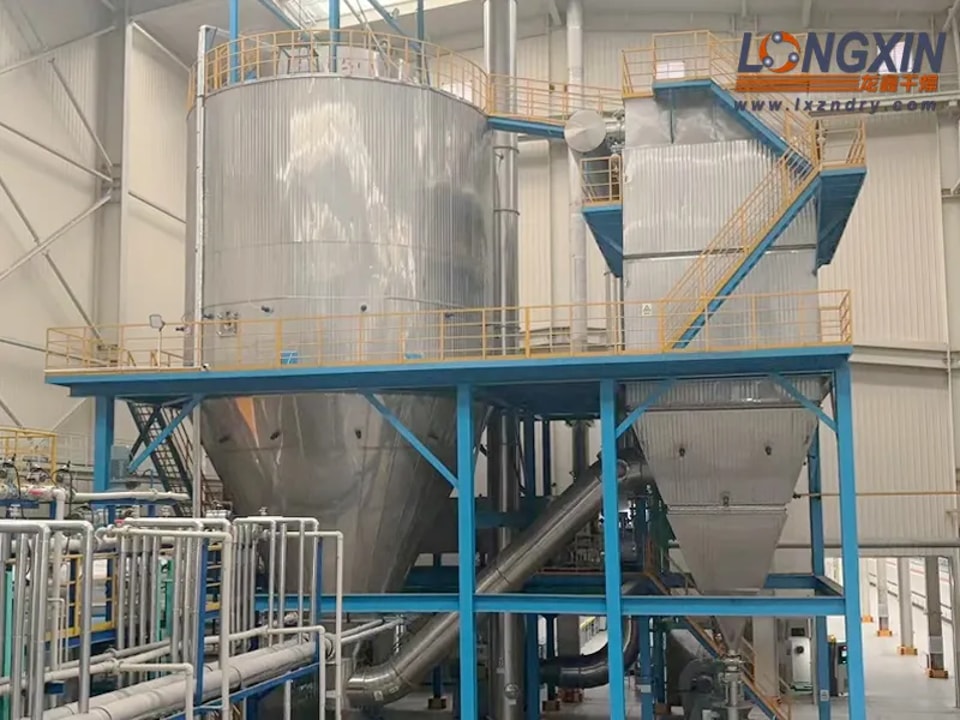 A New Journey for Fluorochemicals: Longxin Drying Elevates Post-Processing Efficiency of Fluoropolymer MaterialsSpring arrives with thriving foliage and warbling birds, a season where long-term accumulation culminates in remarkable breakthroughs. At Longxin Intelligent’s pilot base for the engineering and industrialized production of micro & nano materials, spray drying tests on ultra-fine PVDF lithium-ion battery binder powder for a leading fluoropolymer client achieved full success. From process R&D to full-line commissioning, Longxin delivers comprehensive drying and purification solutions for fluoropolymer post-processing. This landmark milestone not only marks a new leap in Longxin’s technical prowess in high-end fluoromaterial equipment, but also signals a new dawn of domestic and intelligent manufacturing for the critical post-processing links of China’s fluoropolymer industry.
Blue Ocean Market Paired with Persistent Pain Points: Challenges in Fluoropolymer Post-Processing
Currently, the rapid expansion of global new energy, semiconductor, 5G communication and aerospace industries has generated unprecedented demand for high-performance fluoropolymer materials. Ranging from PVDF binders in lithium-ion batteries, perfluorosulfonic acid resin (PFSA) proton exchange membranes — the core component of hydrogen fuel cells, to corrosion-resistant and heat-resistant fluoroplastics such as PTFE and PFA, fluoropolymer macromolecules have become an indispensable cornerstone of strategic emerging industries. As application scenarios advance toward high-end segments, the market imposes increasingly stringent standards for material purity, particle size distribution, flowability and batch consistency.
Despite broad market prospects, fluoropolymer post-processing has long been plagued by severe challenges. Conventional drying and purification processes suffer from high energy consumption, difficult solvent recovery, severe particle agglomeration and excessive residual impurities. Especially when handling difficult materials like PVDF slurry and suspended PTFE powder, existing equipment fails to balance high throughput and premium quality, often resulting in unstable product performance or even scrapped batches due to cross-contamination. In addition, volatile organic solvents and wastewater generated during fluoromaterial production impose heavy compliance burdens on environmental protection. Breaking through these process bottlenecks to realize efficient, eco-friendly and intelligent post-processing has become a critical pain point restricting the high-quality development of the fluoropolymer sector.
Longxin Custom Solutions: Innovative Drying Technology Redefines Fluoropolymer Post-Processing Standards
To address industry-wide pain points, backed by profound technical reserves and sustained independent innovation, Longxin Drying has rolled out a series of tailor-made post-processing solutions exclusively for fluoropolymers, covering the full lifecycle from laboratory R&D to large-scale industrial mass production.
1. PVDF Slurry Airflow Spray Dryer: A Revolutionary Upgrade for Battery-Grade Binders
Meeting the extreme requirements of lithium battery-grade PVDF binders for uniform particle size, low residual solvent and superior dispersibility, Longxin’s PVDF slurry airflow spray dryer transforms former process bottlenecks into intelligent production lines.
① Equipped with proprietary airflow atomization technology, it precisely controls droplet size to produce powders with ideal sphericity and narrow particle size distribution after drying.
② Built-in intelligent temperature regulation optimizes the product’s electrochemical performance and batch consistency, delivering reliable material support for high-end power battery manufacturing.
2. Suspended PTFE Airflow Drying System: Eliminating Contamination and Agglomeration Bottlenecks
Due to its unique suspended particle properties, PTFE powder is highly prone to agglomeration, wall adhesion and external contamination in traditional drying workflows.
① Longxin’s suspended PTFE airflow drying system implements full-process optimization from feed pretreatment to final cooling and packaging.
② Its specially engineered gas-solid flow field maintains PTFE particles in a highly dispersed suspended state inside the drying pipeline, enabling instant heat and mass exchange to eliminate caking caused by local overheating.
③ The fully enclosed clean design and inline filtration system completely block foreign impurity intrusion, yielding ultra-high-purity PTFE powder ideal for semiconductors and high-end anti-corrosion applications.
3. PVDF & ETFE Flash Dryer: Intelligent Upgrade for Cost Reduction & Productivity Growth
For fluororubber and resin materials including PVDF and ETFE, Longxin’s intelligent flash dryer integrates advanced PLC control systems and online monitoring sensors to enable real-time drying process adjustment and automatic fault diagnosis.
① High-speed crushing units work in tandem with instant hot air contact to rapidly remove surface and internal moisture from materials, drastically boosting processing capacity.
② Flexible parameter settings accommodate feedstock with varying moisture content and viscosity, cutting energy and labor costs per unit output and enabling genuine cost and efficiency gains for fluororubber manufacturers.
4. PFSA Closed-Circuit Spray Dryer for Perfluorosulfonic Acid Resin: Empowering Large-Scale Hydrogen Energy Production
As the "heart" of hydrogen fuel cells, the production of perfluorosulfonic acid resin (PFSA) demands near-perfect standards for environmental cleanliness and solvent recovery rates.
① Longxin’s PFSA closed-circuit spray dryer is engineered for production scaling from laboratory trials to full industrialization.
② Operating under an inert gas-protected closed circulation loop, the system prevents material oxidation and deterioration while achieving zero organic solvent emissions and ultra-high solvent recovery rates.
This groundbreaking technology resolves safety and environmental hurdles in large-scale PFSA manufacturing, accelerating the commercialization of domestically produced proton exchange membrane materials.
5. High-Purity PFA Filter-Wash-Dry All-in-One Unit: A Breakthrough for Refining & Purification Workflows
Developed for high-performance fluoromaterials such as melt-processable PTFE (PFA), Longxin’s high-purity integrated filter-wash-dry unit consolidates multiple sequential processes within a single piece of equipment.
① Its specialized stirring structure and heating design ensure full material dispersion during washing and uniform heating during drying, thoroughly removing reaction byproducts and impurity ions.
② The sealed, dead-space-free construction meets the ultra-high purity criteria for electronic-grade and medical-grade PFA resin, establishing a new benchmark for fluoropolymer refining and purification processes.
Looking to the Future: Custom EPC Solutions Lead Green Intelligent Manufacturing
With years of dedicated R&D in new material purification and drying, Longxin Drying has accumulated in-depth process expertise spanning every link of material production. We recognize that clients require far more than a single advanced machine — they demand systematic solutions that resolve practical production challenges and boost overall competitiveness.
Accordingly, Longxin delivers end-to-end services ranging from process package design and core equipment fabrication to production line integration and full EPC general contracting. Our system solutions are fully customized for specific manufacturing tasks, precisely matching unique client requirements to deliver maximum efficiency and reliability across the entire workflow. Whether planning new greenfield factories or technical retrofits for existing production lines, Longxin devises the optimal technical roadmap.
More importantly, all Longxin solutions adhere to the philosophy of green sustainable development. Optimized heat utilization systems and solvent recovery technology enable nearly complete raw material utilization while minimizing water and energy consumption. This not only delivers substantial economic benefits for clients, but also contributes to the national dual-carbon goals and efficient utilization of environmental resources.
Embark on a New Fluorochemical Journey, Forge Steady Progress for Long-Term Growth
Driven by technological innovation and guided by customer demands, Longxin Drying will continue to collaborate with partners across the fluoropolymer industry to jointly overcome post-processing challenges. We will advance China’s fluorochemical sector toward high-end, intelligent and eco-friendly manufacturing, co-creating a brilliant future for fluoromaterial development.
Translation Notes
Standard Industrial Terminology
PVDF = Polyvinylidene Fluoride; PTFE = Polytetrafluoroethylene; PFA = Perfluoroalkoxy; PFSA = Perfluorosulfonic Acid Resin; EPC = Engineering, Procurement & Construction
Slogan & Literary Adaptation
"氟启新程 行稳致远" translated as Embark on a New Fluorochemical Journey, Forge Steady Progress for Long-Term Growth to retain corporate thematic meaning for industrial marketing copy.
Typo Correction Handling
Original informal typos are converted to standard formal English without altering core technical information.
Tone Consistency
Maintained formal B2B industrial publicity style, consistent with prior powder metallurgy and fluoromaterial articles, fully retaining all technical logic and product highlights.
Industry Nomenclature Uniformity
Filter-Wash-Dry All-in-One Unit, Closed-Circuit Spray Dryer, Flash Dryer adopt globally recognized standard naming conventions for powder processing equipment.Read More
A New Journey for Fluorochemicals: Longxin Drying Elevates Post-Processing Efficiency of Fluoropolymer MaterialsSpring arrives with thriving foliage and warbling birds, a season where long-term accumulation culminates in remarkable breakthroughs. At Longxin Intelligent’s pilot base for the engineering and industrialized production of micro & nano materials, spray drying tests on ultra-fine PVDF lithium-ion battery binder powder for a leading fluoropolymer client achieved full success. From process R&D to full-line commissioning, Longxin delivers comprehensive drying and purification solutions for fluoropolymer post-processing. This landmark milestone not only marks a new leap in Longxin’s technical prowess in high-end fluoromaterial equipment, but also signals a new dawn of domestic and intelligent manufacturing for the critical post-processing links of China’s fluoropolymer industry.
Blue Ocean Market Paired with Persistent Pain Points: Challenges in Fluoropolymer Post-Processing
Currently, the rapid expansion of global new energy, semiconductor, 5G communication and aerospace industries has generated unprecedented demand for high-performance fluoropolymer materials. Ranging from PVDF binders in lithium-ion batteries, perfluorosulfonic acid resin (PFSA) proton exchange membranes — the core component of hydrogen fuel cells, to corrosion-resistant and heat-resistant fluoroplastics such as PTFE and PFA, fluoropolymer macromolecules have become an indispensable cornerstone of strategic emerging industries. As application scenarios advance toward high-end segments, the market imposes increasingly stringent standards for material purity, particle size distribution, flowability and batch consistency.
Despite broad market prospects, fluoropolymer post-processing has long been plagued by severe challenges. Conventional drying and purification processes suffer from high energy consumption, difficult solvent recovery, severe particle agglomeration and excessive residual impurities. Especially when handling difficult materials like PVDF slurry and suspended PTFE powder, existing equipment fails to balance high throughput and premium quality, often resulting in unstable product performance or even scrapped batches due to cross-contamination. In addition, volatile organic solvents and wastewater generated during fluoromaterial production impose heavy compliance burdens on environmental protection. Breaking through these process bottlenecks to realize efficient, eco-friendly and intelligent post-processing has become a critical pain point restricting the high-quality development of the fluoropolymer sector.
Longxin Custom Solutions: Innovative Drying Technology Redefines Fluoropolymer Post-Processing Standards
To address industry-wide pain points, backed by profound technical reserves and sustained independent innovation, Longxin Drying has rolled out a series of tailor-made post-processing solutions exclusively for fluoropolymers, covering the full lifecycle from laboratory R&D to large-scale industrial mass production.
1. PVDF Slurry Airflow Spray Dryer: A Revolutionary Upgrade for Battery-Grade Binders
Meeting the extreme requirements of lithium battery-grade PVDF binders for uniform particle size, low residual solvent and superior dispersibility, Longxin’s PVDF slurry airflow spray dryer transforms former process bottlenecks into intelligent production lines.
① Equipped with proprietary airflow atomization technology, it precisely controls droplet size to produce powders with ideal sphericity and narrow particle size distribution after drying.
② Built-in intelligent temperature regulation optimizes the product’s electrochemical performance and batch consistency, delivering reliable material support for high-end power battery manufacturing.
2. Suspended PTFE Airflow Drying System: Eliminating Contamination and Agglomeration Bottlenecks
Due to its unique suspended particle properties, PTFE powder is highly prone to agglomeration, wall adhesion and external contamination in traditional drying workflows.
① Longxin’s suspended PTFE airflow drying system implements full-process optimization from feed pretreatment to final cooling and packaging.
② Its specially engineered gas-solid flow field maintains PTFE particles in a highly dispersed suspended state inside the drying pipeline, enabling instant heat and mass exchange to eliminate caking caused by local overheating.
③ The fully enclosed clean design and inline filtration system completely block foreign impurity intrusion, yielding ultra-high-purity PTFE powder ideal for semiconductors and high-end anti-corrosion applications.
3. PVDF & ETFE Flash Dryer: Intelligent Upgrade for Cost Reduction & Productivity Growth
For fluororubber and resin materials including PVDF and ETFE, Longxin’s intelligent flash dryer integrates advanced PLC control systems and online monitoring sensors to enable real-time drying process adjustment and automatic fault diagnosis.
① High-speed crushing units work in tandem with instant hot air contact to rapidly remove surface and internal moisture from materials, drastically boosting processing capacity.
② Flexible parameter settings accommodate feedstock with varying moisture content and viscosity, cutting energy and labor costs per unit output and enabling genuine cost and efficiency gains for fluororubber manufacturers.
4. PFSA Closed-Circuit Spray Dryer for Perfluorosulfonic Acid Resin: Empowering Large-Scale Hydrogen Energy Production
As the "heart" of hydrogen fuel cells, the production of perfluorosulfonic acid resin (PFSA) demands near-perfect standards for environmental cleanliness and solvent recovery rates.
① Longxin’s PFSA closed-circuit spray dryer is engineered for production scaling from laboratory trials to full industrialization.
② Operating under an inert gas-protected closed circulation loop, the system prevents material oxidation and deterioration while achieving zero organic solvent emissions and ultra-high solvent recovery rates.
This groundbreaking technology resolves safety and environmental hurdles in large-scale PFSA manufacturing, accelerating the commercialization of domestically produced proton exchange membrane materials.
5. High-Purity PFA Filter-Wash-Dry All-in-One Unit: A Breakthrough for Refining & Purification Workflows
Developed for high-performance fluoromaterials such as melt-processable PTFE (PFA), Longxin’s high-purity integrated filter-wash-dry unit consolidates multiple sequential processes within a single piece of equipment.
① Its specialized stirring structure and heating design ensure full material dispersion during washing and uniform heating during drying, thoroughly removing reaction byproducts and impurity ions.
② The sealed, dead-space-free construction meets the ultra-high purity criteria for electronic-grade and medical-grade PFA resin, establishing a new benchmark for fluoropolymer refining and purification processes.
Looking to the Future: Custom EPC Solutions Lead Green Intelligent Manufacturing
With years of dedicated R&D in new material purification and drying, Longxin Drying has accumulated in-depth process expertise spanning every link of material production. We recognize that clients require far more than a single advanced machine — they demand systematic solutions that resolve practical production challenges and boost overall competitiveness.
Accordingly, Longxin delivers end-to-end services ranging from process package design and core equipment fabrication to production line integration and full EPC general contracting. Our system solutions are fully customized for specific manufacturing tasks, precisely matching unique client requirements to deliver maximum efficiency and reliability across the entire workflow. Whether planning new greenfield factories or technical retrofits for existing production lines, Longxin devises the optimal technical roadmap.
More importantly, all Longxin solutions adhere to the philosophy of green sustainable development. Optimized heat utilization systems and solvent recovery technology enable nearly complete raw material utilization while minimizing water and energy consumption. This not only delivers substantial economic benefits for clients, but also contributes to the national dual-carbon goals and efficient utilization of environmental resources.
Embark on a New Fluorochemical Journey, Forge Steady Progress for Long-Term Growth
Driven by technological innovation and guided by customer demands, Longxin Drying will continue to collaborate with partners across the fluoropolymer industry to jointly overcome post-processing challenges. We will advance China’s fluorochemical sector toward high-end, intelligent and eco-friendly manufacturing, co-creating a brilliant future for fluoromaterial development.
Translation Notes
Standard Industrial Terminology
PVDF = Polyvinylidene Fluoride; PTFE = Polytetrafluoroethylene; PFA = Perfluoroalkoxy; PFSA = Perfluorosulfonic Acid Resin; EPC = Engineering, Procurement & Construction
Slogan & Literary Adaptation
"氟启新程 行稳致远" translated as Embark on a New Fluorochemical Journey, Forge Steady Progress for Long-Term Growth to retain corporate thematic meaning for industrial marketing copy.
Typo Correction Handling
Original informal typos are converted to standard formal English without altering core technical information.
Tone Consistency
Maintained formal B2B industrial publicity style, consistent with prior powder metallurgy and fluoromaterial articles, fully retaining all technical logic and product highlights.
Industry Nomenclature Uniformity
Filter-Wash-Dry All-in-One Unit, Closed-Circuit Spray Dryer, Flash Dryer adopt globally recognized standard naming conventions for powder processing equipment.Read More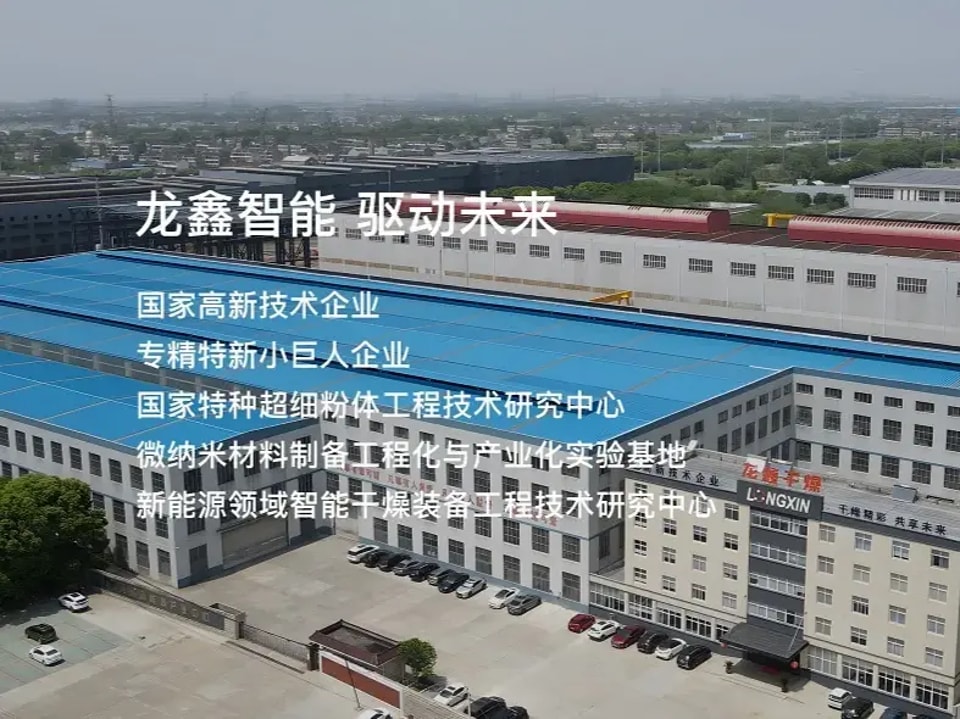 Longxin Intelligent Forges a New Future for Powder Metallurgy Materials with Customized SolutionsIn high-end manufacturing sectors including core component production for aerospace, precision structural forming for new energy vehicles, and innovative applications of 3D printing, powder alloy materials play an irreplaceable pivotal role. The performance of diversified products such as superalloys, spherical alloy powders, 3D printing alloys, thermal spray alloys and electrode alloys directly determines the reliability and cutting-edge performance of end equipment. With the in-depth application of additive manufacturing technology in aerospace, automotive, new energy and high-end manufacturing fields, 3D printing alloy powder materials are undergoing rapid iteration and groundbreaking breakthroughs. Constantly emerging materials featuring stronger performance, higher adaptability and superior forming efficiency enable the manufacturing of complex parts, lightweight structures and integrated functional components. As a leading intelligent drying solution provider in the industry, Longxin Drying devotes itself to the R&D of precision drying technology. It addresses industrial pain points through a customized equipment portfolio, injecting robust momentum into the high-quality development of the powder metallurgy sector.
Surging Market Demand & Development Trends: A New Wave of Quality Upgrade for Powder Alloys
Currently, the global powder metallurgy industry is in a phase of rapid expansion with multi-dimensional explosive market demand. In aerospace, engine turbine blades and spacecraft structural components impose extreme requirements on the high-temperature resistance and fatigue resistance of superalloys. The rise of the new energy vehicle industry drives the large-scale application of lightweight, high-strength powder metallurgy parts. The maturity of 3D printing additive manufacturing technology turns alloy powders with high sphericity, excellent flowability and uniform composition into scarce resources. Segments such as thermal spraying and electrode manufacturing also set stricter standards for powder indicators including particle size distribution, purity control and stability.
In terms of development trends, powder alloy materials are evolving toward four major directions: ultra-coarsening, low oxidation, high adaptability and eco-friendliness.
Ultra-coarse particle alloys boast both high toughness and wear resistance, leading to skyrocketing demand in mining tools and heavy-duty cutting fields.
Nano-scale powder materials, with outstanding physical and chemical properties, serve as core raw materials for high-end manufacturing.
Products with low oxygen content and high consistency are critical to guarantee the forming quality of downstream processing.
Tightening environmental regulations and enterprises’ pursuit of cost reduction and efficiency improvement have made green, energy-saving and eco-efficient production processes a universal consensus across the industry, which also points out the direction for technological innovation of drying equipment.
Prominent Bottlenecks of Traditional Drying Processes: The Industry Urgently Needs Breakthrough Solutions
As a core procedure in powder alloy preparation, drying directly affects key material properties including composition uniformity, oxygen content, particle morphology and flowability. Nevertheless, traditional drying processes expose numerous pain points when coping with complex requirements of diverse powder alloys, severely restricting the improvement of product quality.
Control of composition uniformity: Traditional open drying environments leave materials highly vulnerable to contamination by external impurities, resulting in severe product pollution and undermining the purity and consistency of mixed powders.
Insufficient wet grinding or slurry stratification in some processes easily causes uneven distribution of WC particles and Co binder phase, local Co agglomeration or abnormal coarsening of WC grains, which reduces alloy strength. Oxygen content control remains a prevalent industry challenge. Conventional processes cannot avoid direct contact between high-temperature materials and air, leading to excessive oxygen content in finished products, increased forming difficulty and shortened shelf life of mixed powders.
Optimization of particle morphology and flowability: Traditional equipment fails to precisely adjust drying parameters, yielding powders with uneven particle size, poor sphericity and insufficient flowability. This causes inconsistent green compact density, and defects such as cracks or uneven density after sintering.
For special powders that are heat-sensitive, highly viscous and prone to agglomeration, traditional drying equipment also suffers from issues including crystal form damage, material adhesion and low drying efficiency. In addition, traditional processes feature low automation, high energy consumption and cumbersome operation. They not only raise production costs but also struggle to stabilize product quality, failing to meet production demands for high-end powder alloys.
Precision Drying: Custom Design Precisely Matches Diverse Material Characteristics of Powder Alloys
Targeting the material properties and process requirements of various powder alloys, Longxin Drying has developed a full lineup of precision drying equipment. Six core products deliver full-scenario coverage ranging from ultra-coarse particles to nano-scale powders, and from ordinary alloys to precious metals, resolving industrial bottlenecks via customized design.
1. Closed-Circuit Pressure Spray Granulation Dryer: Precise Controller of Particle Size & Morphology
Custom-built for ultra-coarse cemented carbide mixtures, this equipment adopts a fully sealed nitrogen circulation system and precise process control to resolve prevalent industry pain points such as oxidation, contamination and excessive oxygen content during granulation and drying.
① Equipped with pressure atomization and gas-liquid mixed flow technology, optimized nozzle structure and adjustable atomization pressure, it achieves accurate particle size distribution and ideal spherical granules with enhanced flowability and uniform compact density.
② In terms of process control, it establishes a triple closed-loop control model covering solid-liquid ratio, temperature and pressure. An online viscosity monitor adjusts slurry solid content in real time; the tower inlet temperature (180~200℃) and outlet temperature (70~90℃) are intelligently regulated, and spray pressure automatically adapts to slurry viscosity fluctuations to ensure uniform atomization.
③ Integrated with an intelligent electrical control system and an integrated cooling-sieving anti-caking conveying device, it realizes digital management and safety assurance for the whole production process. The produced powders feature excellent pressing performance and crack resistance, fully complying with stringent standards for high-quality cemented carbide manufacturing.
2. Closed-Circuit Centrifugal Spray Dryer: High-Efficiency Equipment for High-Performance Spherical Alloy Powders
Focused on core demands for spherical alloy powders, its closed-circuit design isolates external air to effectively control oxygen content and guarantee product purity.
① Adopting high-efficiency centrifugal atomization technology, it atomizes slurry into tiny droplets that fully exchange heat with hot air to complete rapid drying.
② Its unique airflow distribution design ensures uniform force on particles during drying, generating smooth, highly spherical powders with stable apparent density and superior flowability, ideal for fields with stringent powder morphology requirements such as 3D printing additive manufacturing.
③ Flexible parameter adjustment enables precise control of key indicators including atomization speed, hot air temperature and feeding rate according to characteristics of different alloy powders, delivering raw materials with high adaptability for downstream processing.
3. Nano Sand Milling & Airflow Spray Drying Production Line: Customized Precision Solution for Multi-Component Oxide Powders
To meet process requirements of multi-component oxide alloy powders for uniform composition, adjustable content and accurate particle size, Longxin Drying integrates nano sand milling and airflow spray drying technologies to build an integrated production line.
① The front-end nano sand mill optimizes grinding media and processes to achieve ultra-fine dispersion and uniform mixing of all components. The back-end airflow spray dryer adopts high-efficiency airflow atomization to rapidly dry dispersed slurry and prevent particle agglomeration.
② This production line precisely controls powder particle size within the micron range with minimal composition uniformity error. Key components such as cobalt can be freely adjusted below 30%, and no ammonia nitrogen wastewater is generated, complying with green production standards.
③ Synergistic treatment with raw materials achieves molecular-level composite of tungsten-cobalt and other elements for stable powder performance, widely applicable to the production of various cemented carbides.
4. Sealed Explosion-Proof Flash Dryer: Stability Guarantor for Ultra-Fine Alloy Production
Designed exclusively for ultra-fine alloy powders, it features a sealed structure and explosion-proof design, suitable for drying flammable, explosive and easily oxidized ultra-fine powder materials.
① High-temperature high-speed airflow fully contacts materials to realize rapid drying, drastically shortening drying time and avoiding performance degradation caused by prolonged heat exposure.
② Precise control of temperature and airflow velocity ensures ultra-fine powders remain free of agglomeration and oxidation during drying with uniform particle size distribution, stabilizing product quality and consistency.
③ Its unique crushing unit effectively breaks slightly agglomerated particles to further improve powder flowability, providing reliable support for large-scale production of ultra-fine alloy materials.
5. Single-Cone Ribbon Vacuum Dryer: Specialist for Low-Temperature Drying Balancing Efficiency & Material Protection
For heat-sensitive alloy powders and products requiring resin coating, Longxin single-cone ribbon vacuum dryers adopt vacuum low-temperature drying technology to maximize material property protection while securing drying efficiency.
① Its drying efficiency is several times higher than double-cone rotary vacuum dryers of the same specification, with a large effective heat transfer area. Materials move in a spiral lifting and eddy descending dispersed pattern inside the vessel for full and even heating.
② Accurate drying temperature control preserves the organic passivation film on cemented carbide powder, retaining passivation effects and enabling long-term storage of finished products.
③ Fully sealed nitrogen-filled production prevents cross-contamination. The narrow gap between agitator and vessel wall avoids material adhesion. Dried powders are loose and ready for sieving without crushing, perfectly retaining the unique dendritic structure and outstanding pressing performance.
6. Integrated Filter-Wash-Dry All-in-One Unit: Quality-Upgrading Equipment for Post-Processing of Precious Metals
Developed for post-processing of precious metal powders, it integrates filtration, washing and drying functions to complete continuous full-process operations within a single vessel, eliminating material loss and contamination during transfer.
① Featuring a cylinder-cone structure and conical filter device, it uses high-pressure nitrogen to generate positive pressure for solid-liquid separation, delivering superior washing effect and thorough uniform drying.
② For precious metal powders such as coarse silver powder, this unit reduces moisture content, eliminates ammonia gas emission throughout silver precipitation procedures, improves production environments and lowers labor intensity.
③ Optimized structural design addresses pain points of traditional filter presses including poor tightness, high moisture content and prominent environmental issues, offering an efficient solution for high-quality post-processing of precious metal powders.
Multi-Scenario Adaptation: Longxin Spray Dryers Unlock Cutting-Edge Processes for Powder Alloy Preparation
Aerospace: Ultra-coarse cemented carbide mixtures produced by closed-circuit pressure spray granulation dryers supply high-toughness, wear-resistant raw materials for engine turbine blades and aerospace structural parts.
3D Printing Additive Manufacturing: High-sphericity, high-flowability alloy powders manufactured by closed-circuit centrifugal spray dryers guarantee forming precision and mechanical properties of complex components.
Thermal Spray Alloys: Multi-component oxide powders from the nano sand milling & airflow spray drying production line greatly enhance coating wear resistance and bonding strength thanks to uniform composition and precise particle size distribution.
New Energy Vehicle Manufacturing: Lightweight alloy powders processed by single-cone ribbon vacuum dryers support lightweight and high-strength upgrading of automotive parts.
Precious Metal Processing: Integrated filter-wash-dry all-in-one units efficiently resolve post-processing challenges for materials like coarse silver powder, balancing environmental protection and product quality.
Electrode Alloys: Sealed explosion-proof flash dryers secure the stability and consistency of ultra-fine electrode powders, boosting electrode conductivity and service life.
Endless Innovation: Forging a New Future for Powder Metallurgy Materials
As an innovator in powder metallurgy drying technology, Longxin Drying consistently takes technological innovation as its core driving force, creates value for customers through full-chain service capabilities, and facilitates the industry’s transformation toward green, efficient and high-quality development.
Full-process professional capabilities: Longxin delivers full-chain services covering process development, equipment configuration and supply, with professional expertise spanning all links from material grinding and purification to drying and coating. Whether optimization of upstream raw material pretreatment or performance adaptation of downstream finished products, the Longxin team provides professional technical support and customizes optimal solutions for clients.
Technology transformation capacity: Longxin combines process, application and engineering expertise with physical testing on pilot-scale equipment to rapidly interpret client demands. Through design, simulation and test verification, it converts client concepts into practical production schemes. The pilot platform accurately simulates industrial production scenarios to provide reliable data support for equipment parameter optimization and process improvement, stabilizing and boosting efficiency in mass production.
Green and sustainable development: Longxin focuses on developing energy-saving and consumption-reducing components and equipment. Technological innovations including fully sealed circulation systems, waste heat recovery and low-energy drive effectively cut consumption of energy, water and resources. The equipment operates with zero harmful gas emissions and minimal wastewater discharge, complying with national environmental standards, enabling green production for clients and supporting sustainable industrial development.
Outlook
As powder metallurgy materials continue to advance toward ultra-coarsening, low oxidation and intelligence, Longxin Drying will deepen technological R&D, center on customer demands, continuously refine its product portfolio and upgrade customized service capacity. With state-of-the-art precision drying technology, more efficient solutions and superior service experience, we will forge ahead alongside industry clients to break through technical bottlenecks and build a new landscape for powder metallurgy materials, laying solid support for the growth of high-end manufacturing.
Longxin Drying creates innovative value via precision drying and empowers industrial upgrading with customized solutions. We sincerely invite global partners in the powder alloy industry to seek common development and embrace a promising future together!Read More
Longxin Intelligent Forges a New Future for Powder Metallurgy Materials with Customized SolutionsIn high-end manufacturing sectors including core component production for aerospace, precision structural forming for new energy vehicles, and innovative applications of 3D printing, powder alloy materials play an irreplaceable pivotal role. The performance of diversified products such as superalloys, spherical alloy powders, 3D printing alloys, thermal spray alloys and electrode alloys directly determines the reliability and cutting-edge performance of end equipment. With the in-depth application of additive manufacturing technology in aerospace, automotive, new energy and high-end manufacturing fields, 3D printing alloy powder materials are undergoing rapid iteration and groundbreaking breakthroughs. Constantly emerging materials featuring stronger performance, higher adaptability and superior forming efficiency enable the manufacturing of complex parts, lightweight structures and integrated functional components. As a leading intelligent drying solution provider in the industry, Longxin Drying devotes itself to the R&D of precision drying technology. It addresses industrial pain points through a customized equipment portfolio, injecting robust momentum into the high-quality development of the powder metallurgy sector.
Surging Market Demand & Development Trends: A New Wave of Quality Upgrade for Powder Alloys
Currently, the global powder metallurgy industry is in a phase of rapid expansion with multi-dimensional explosive market demand. In aerospace, engine turbine blades and spacecraft structural components impose extreme requirements on the high-temperature resistance and fatigue resistance of superalloys. The rise of the new energy vehicle industry drives the large-scale application of lightweight, high-strength powder metallurgy parts. The maturity of 3D printing additive manufacturing technology turns alloy powders with high sphericity, excellent flowability and uniform composition into scarce resources. Segments such as thermal spraying and electrode manufacturing also set stricter standards for powder indicators including particle size distribution, purity control and stability.
In terms of development trends, powder alloy materials are evolving toward four major directions: ultra-coarsening, low oxidation, high adaptability and eco-friendliness.
Ultra-coarse particle alloys boast both high toughness and wear resistance, leading to skyrocketing demand in mining tools and heavy-duty cutting fields.
Nano-scale powder materials, with outstanding physical and chemical properties, serve as core raw materials for high-end manufacturing.
Products with low oxygen content and high consistency are critical to guarantee the forming quality of downstream processing.
Tightening environmental regulations and enterprises’ pursuit of cost reduction and efficiency improvement have made green, energy-saving and eco-efficient production processes a universal consensus across the industry, which also points out the direction for technological innovation of drying equipment.
Prominent Bottlenecks of Traditional Drying Processes: The Industry Urgently Needs Breakthrough Solutions
As a core procedure in powder alloy preparation, drying directly affects key material properties including composition uniformity, oxygen content, particle morphology and flowability. Nevertheless, traditional drying processes expose numerous pain points when coping with complex requirements of diverse powder alloys, severely restricting the improvement of product quality.
Control of composition uniformity: Traditional open drying environments leave materials highly vulnerable to contamination by external impurities, resulting in severe product pollution and undermining the purity and consistency of mixed powders.
Insufficient wet grinding or slurry stratification in some processes easily causes uneven distribution of WC particles and Co binder phase, local Co agglomeration or abnormal coarsening of WC grains, which reduces alloy strength. Oxygen content control remains a prevalent industry challenge. Conventional processes cannot avoid direct contact between high-temperature materials and air, leading to excessive oxygen content in finished products, increased forming difficulty and shortened shelf life of mixed powders.
Optimization of particle morphology and flowability: Traditional equipment fails to precisely adjust drying parameters, yielding powders with uneven particle size, poor sphericity and insufficient flowability. This causes inconsistent green compact density, and defects such as cracks or uneven density after sintering.
For special powders that are heat-sensitive, highly viscous and prone to agglomeration, traditional drying equipment also suffers from issues including crystal form damage, material adhesion and low drying efficiency. In addition, traditional processes feature low automation, high energy consumption and cumbersome operation. They not only raise production costs but also struggle to stabilize product quality, failing to meet production demands for high-end powder alloys.
Precision Drying: Custom Design Precisely Matches Diverse Material Characteristics of Powder Alloys
Targeting the material properties and process requirements of various powder alloys, Longxin Drying has developed a full lineup of precision drying equipment. Six core products deliver full-scenario coverage ranging from ultra-coarse particles to nano-scale powders, and from ordinary alloys to precious metals, resolving industrial bottlenecks via customized design.
1. Closed-Circuit Pressure Spray Granulation Dryer: Precise Controller of Particle Size & Morphology
Custom-built for ultra-coarse cemented carbide mixtures, this equipment adopts a fully sealed nitrogen circulation system and precise process control to resolve prevalent industry pain points such as oxidation, contamination and excessive oxygen content during granulation and drying.
① Equipped with pressure atomization and gas-liquid mixed flow technology, optimized nozzle structure and adjustable atomization pressure, it achieves accurate particle size distribution and ideal spherical granules with enhanced flowability and uniform compact density.
② In terms of process control, it establishes a triple closed-loop control model covering solid-liquid ratio, temperature and pressure. An online viscosity monitor adjusts slurry solid content in real time; the tower inlet temperature (180~200℃) and outlet temperature (70~90℃) are intelligently regulated, and spray pressure automatically adapts to slurry viscosity fluctuations to ensure uniform atomization.
③ Integrated with an intelligent electrical control system and an integrated cooling-sieving anti-caking conveying device, it realizes digital management and safety assurance for the whole production process. The produced powders feature excellent pressing performance and crack resistance, fully complying with stringent standards for high-quality cemented carbide manufacturing.
2. Closed-Circuit Centrifugal Spray Dryer: High-Efficiency Equipment for High-Performance Spherical Alloy Powders
Focused on core demands for spherical alloy powders, its closed-circuit design isolates external air to effectively control oxygen content and guarantee product purity.
① Adopting high-efficiency centrifugal atomization technology, it atomizes slurry into tiny droplets that fully exchange heat with hot air to complete rapid drying.
② Its unique airflow distribution design ensures uniform force on particles during drying, generating smooth, highly spherical powders with stable apparent density and superior flowability, ideal for fields with stringent powder morphology requirements such as 3D printing additive manufacturing.
③ Flexible parameter adjustment enables precise control of key indicators including atomization speed, hot air temperature and feeding rate according to characteristics of different alloy powders, delivering raw materials with high adaptability for downstream processing.
3. Nano Sand Milling & Airflow Spray Drying Production Line: Customized Precision Solution for Multi-Component Oxide Powders
To meet process requirements of multi-component oxide alloy powders for uniform composition, adjustable content and accurate particle size, Longxin Drying integrates nano sand milling and airflow spray drying technologies to build an integrated production line.
① The front-end nano sand mill optimizes grinding media and processes to achieve ultra-fine dispersion and uniform mixing of all components. The back-end airflow spray dryer adopts high-efficiency airflow atomization to rapidly dry dispersed slurry and prevent particle agglomeration.
② This production line precisely controls powder particle size within the micron range with minimal composition uniformity error. Key components such as cobalt can be freely adjusted below 30%, and no ammonia nitrogen wastewater is generated, complying with green production standards.
③ Synergistic treatment with raw materials achieves molecular-level composite of tungsten-cobalt and other elements for stable powder performance, widely applicable to the production of various cemented carbides.
4. Sealed Explosion-Proof Flash Dryer: Stability Guarantor for Ultra-Fine Alloy Production
Designed exclusively for ultra-fine alloy powders, it features a sealed structure and explosion-proof design, suitable for drying flammable, explosive and easily oxidized ultra-fine powder materials.
① High-temperature high-speed airflow fully contacts materials to realize rapid drying, drastically shortening drying time and avoiding performance degradation caused by prolonged heat exposure.
② Precise control of temperature and airflow velocity ensures ultra-fine powders remain free of agglomeration and oxidation during drying with uniform particle size distribution, stabilizing product quality and consistency.
③ Its unique crushing unit effectively breaks slightly agglomerated particles to further improve powder flowability, providing reliable support for large-scale production of ultra-fine alloy materials.
5. Single-Cone Ribbon Vacuum Dryer: Specialist for Low-Temperature Drying Balancing Efficiency & Material Protection
For heat-sensitive alloy powders and products requiring resin coating, Longxin single-cone ribbon vacuum dryers adopt vacuum low-temperature drying technology to maximize material property protection while securing drying efficiency.
① Its drying efficiency is several times higher than double-cone rotary vacuum dryers of the same specification, with a large effective heat transfer area. Materials move in a spiral lifting and eddy descending dispersed pattern inside the vessel for full and even heating.
② Accurate drying temperature control preserves the organic passivation film on cemented carbide powder, retaining passivation effects and enabling long-term storage of finished products.
③ Fully sealed nitrogen-filled production prevents cross-contamination. The narrow gap between agitator and vessel wall avoids material adhesion. Dried powders are loose and ready for sieving without crushing, perfectly retaining the unique dendritic structure and outstanding pressing performance.
6. Integrated Filter-Wash-Dry All-in-One Unit: Quality-Upgrading Equipment for Post-Processing of Precious Metals
Developed for post-processing of precious metal powders, it integrates filtration, washing and drying functions to complete continuous full-process operations within a single vessel, eliminating material loss and contamination during transfer.
① Featuring a cylinder-cone structure and conical filter device, it uses high-pressure nitrogen to generate positive pressure for solid-liquid separation, delivering superior washing effect and thorough uniform drying.
② For precious metal powders such as coarse silver powder, this unit reduces moisture content, eliminates ammonia gas emission throughout silver precipitation procedures, improves production environments and lowers labor intensity.
③ Optimized structural design addresses pain points of traditional filter presses including poor tightness, high moisture content and prominent environmental issues, offering an efficient solution for high-quality post-processing of precious metal powders.
Multi-Scenario Adaptation: Longxin Spray Dryers Unlock Cutting-Edge Processes for Powder Alloy Preparation
Aerospace: Ultra-coarse cemented carbide mixtures produced by closed-circuit pressure spray granulation dryers supply high-toughness, wear-resistant raw materials for engine turbine blades and aerospace structural parts.
3D Printing Additive Manufacturing: High-sphericity, high-flowability alloy powders manufactured by closed-circuit centrifugal spray dryers guarantee forming precision and mechanical properties of complex components.
Thermal Spray Alloys: Multi-component oxide powders from the nano sand milling & airflow spray drying production line greatly enhance coating wear resistance and bonding strength thanks to uniform composition and precise particle size distribution.
New Energy Vehicle Manufacturing: Lightweight alloy powders processed by single-cone ribbon vacuum dryers support lightweight and high-strength upgrading of automotive parts.
Precious Metal Processing: Integrated filter-wash-dry all-in-one units efficiently resolve post-processing challenges for materials like coarse silver powder, balancing environmental protection and product quality.
Electrode Alloys: Sealed explosion-proof flash dryers secure the stability and consistency of ultra-fine electrode powders, boosting electrode conductivity and service life.
Endless Innovation: Forging a New Future for Powder Metallurgy Materials
As an innovator in powder metallurgy drying technology, Longxin Drying consistently takes technological innovation as its core driving force, creates value for customers through full-chain service capabilities, and facilitates the industry’s transformation toward green, efficient and high-quality development.
Full-process professional capabilities: Longxin delivers full-chain services covering process development, equipment configuration and supply, with professional expertise spanning all links from material grinding and purification to drying and coating. Whether optimization of upstream raw material pretreatment or performance adaptation of downstream finished products, the Longxin team provides professional technical support and customizes optimal solutions for clients.
Technology transformation capacity: Longxin combines process, application and engineering expertise with physical testing on pilot-scale equipment to rapidly interpret client demands. Through design, simulation and test verification, it converts client concepts into practical production schemes. The pilot platform accurately simulates industrial production scenarios to provide reliable data support for equipment parameter optimization and process improvement, stabilizing and boosting efficiency in mass production.
Green and sustainable development: Longxin focuses on developing energy-saving and consumption-reducing components and equipment. Technological innovations including fully sealed circulation systems, waste heat recovery and low-energy drive effectively cut consumption of energy, water and resources. The equipment operates with zero harmful gas emissions and minimal wastewater discharge, complying with national environmental standards, enabling green production for clients and supporting sustainable industrial development.
Outlook
As powder metallurgy materials continue to advance toward ultra-coarsening, low oxidation and intelligence, Longxin Drying will deepen technological R&D, center on customer demands, continuously refine its product portfolio and upgrade customized service capacity. With state-of-the-art precision drying technology, more efficient solutions and superior service experience, we will forge ahead alongside industry clients to break through technical bottlenecks and build a new landscape for powder metallurgy materials, laying solid support for the growth of high-end manufacturing.
Longxin Drying creates innovative value via precision drying and empowers industrial upgrading with customized solutions. We sincerely invite global partners in the powder alloy industry to seek common development and embrace a promising future together!Read More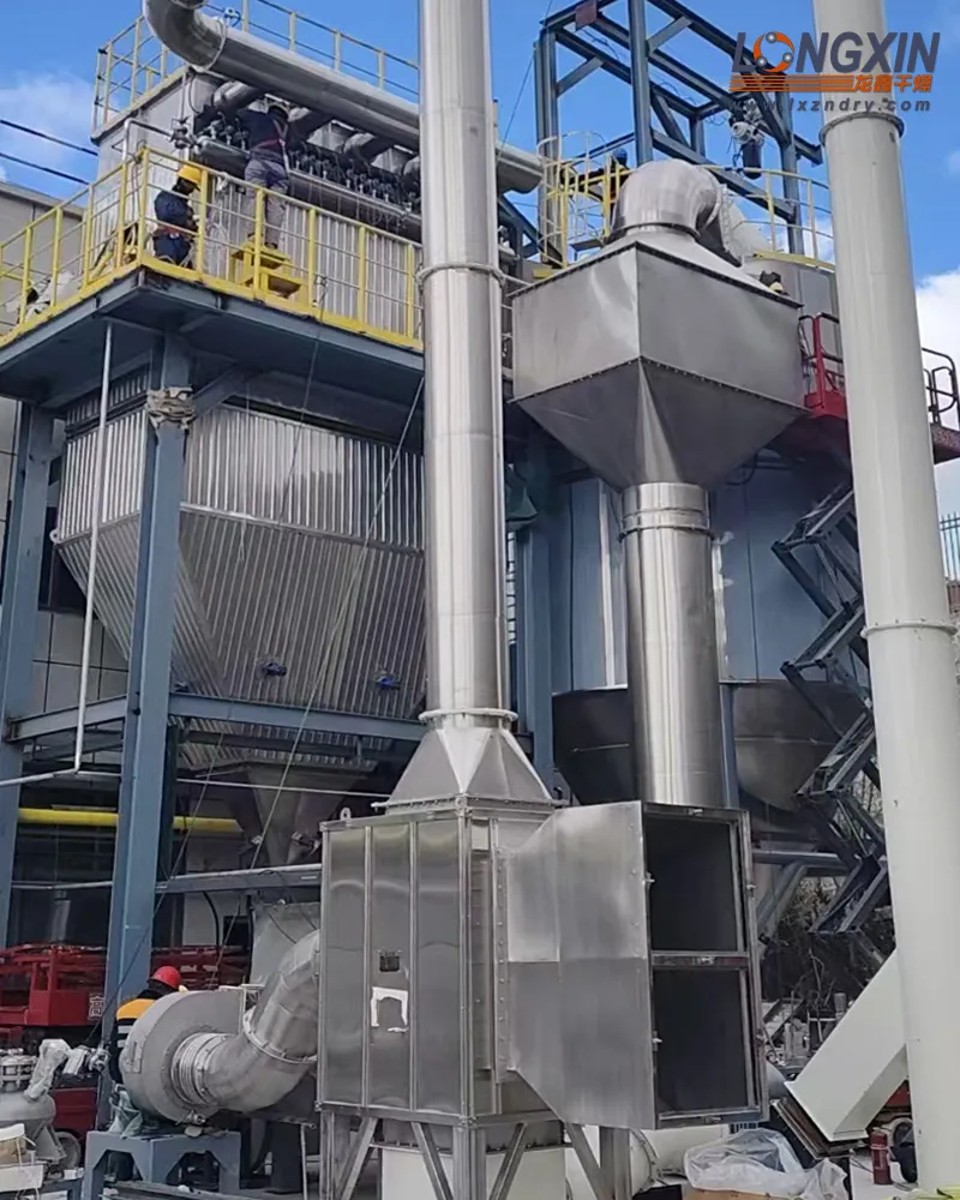 Pursuing Ultrafine & High-Purity Materials | Nano Grinding & Spray Drying Production Line for Spherical Alumina Separator Thermal Conductive Materials Boosts Lithium Battery SafetyExplosive Market Demand: Spherical Alumina Acts as Core Guarantee for Separator Thermal Conductive Materials
Amid the explosive growth of the new energy vehicle market, its whole industrial chain has entered a rapid development phase. Battery thermal management systems, the core link directly related to personal safety, are seeing exponentially rising demand for high-performance thermal conductive materials. Boasting high thermal conductivity (30–42 W/(m·K)), outstanding flowability, high filling ratio and excellent insulation & flame retardancy, spherical alumina has become the primary filler for thermal interface materials.
More crucially, in the lithium battery industry, refined alumina (including spherical alumina, boehmite, etc.) serves as an irreplaceable safety barrier as the key functional coating material for battery separators. The mainstream lithium battery separators are mainly made of polyethylene (PE) and polypropylene (PP), which feature low melting points (130–165°C) and poor thermal stability. Under high temperature or local overheating, they tend to thermally shrink or even rupture, easily triggering internal short circuits, fire hazards and explosions. Coating a layer of ultrafine high-purity alumina ceramic on one or both sides of separators can raise their heat resistance to over 500°C, effectively restrain thermal shrinkage, enhance mechanical strength and electrolyte wettability, thus drastically improving battery safety and cycle life.
As the world’s largest manufacturer of new energy vehicles and power batteries, China faces continuously surging demand for high-purity, ultrafine and spherical alumina powder, with unprecedented stringent standards on particle size distribution, purity, sphericity, dispersibility and other indicators.
High-Purity Alumina Ceramic Powder: Precision Control Chain from Raw Materials to Finished Products
The preparation of high-purity alumina ceramics constitutes a precision manufacturing chain integrating chemical purification, physical forming and high-temperature sintering, whose core lies in the ultra-fining, high-purification and spheroidization of raw powder. In traditional processes, industrial alumina has to go through multiple procedures including Bayer process purification, wet ball milling, washing & impurity removal, calcination for crystal phase transformation (α-Al₂O₃) and spray granulation to produce powder suitable for high-end ceramics or battery separator coating.
Nevertheless, conventional grinding equipment struggles to prepare nano-scale alumina slurry with D50 ≤ 1μm, narrow particle distribution, zero agglomeration and ultra-low metallic impurities. Meanwhile, traditional spray drying towers suffer from uneven atomization, turbulent hot air, low powder recovery rate and high hollow particle ratio, which severely undermine the flowability and sintering density of final powder. Therefore, the integrated production line combining nano grinding and intelligent spray drying is the key to breaking bottlenecks in manufacturing high-end alumina powder.
Longxin Intelligent: Integrated Line of High-Flow Pin-Type Nano Bead Mill & High-Temperature Spray Drying Tower for Ultrafine High-Purity Spherical Alumina Production
To address the urgent demand for high-safety battery materials in the new energy industry, Longxin Intelligent has innovatively launched an integrated production line consisting of high-flow pin-type nano bead mills and high-temperature intelligent spray drying towers. Custom-tailored for high-end powders such as spherical alumina, boehmite, activated alumina, nano alumina and high-purity granulated alumina, this line comprehensively elevates the quality of separator thermal conductive materials.
Centered on four core links: ultrafine grinding, precise separation, efficient granulation and intelligent control, the line forms a full closed-loop workflow from raw slurry to high-flow spherical powder, ensuring finished products comply with strict standards for power battery separator coating: high purity, narrow particle size distribution, high sphericity and low metallic impurity content.
How Longxin WSP Series High-Flow Pin-Type Nano Bead Mills Achieve Superior, Stable & Cost-Efficient Grinding
Longxin Intelligent WSP series high-flow pin-type nano bead mills redefine the limits of nano grinding via three core technological innovations:
Composite Turbine-Pin 3D Grinding System
Inside the silicon carbide grinding chamber, materials are subjected to dual forces of circumferential vortex flow and radial impact. Matched with 0.2–0.5 mm high-roundness zirconia beads, particles are refined through combined shear, collision and extrusion, enabling stable control of D50 between 100 nm and 2 μm.
Screenless Centrifugal Separation Technology
Fully eliminating traditional metal screens, it separates grinding media and slurry via centrifugal force fields to completely avoid screen clogging and metallic contamination. It supports ultra-long continuous operation and meets cleanliness requirements for high-purity material production.
Intelligent Closed-Loop Control System
Integrated with PLC, temperature/pressure sensors and online particle size detectors, the system can link with MES systems to realize automatic parameter adjustment, full quality traceability and flexible product changeover, compatible with multiple material systems including lithium iron phosphate, silicon-carbon anodes and boehmite.
The silicon carbide grinding chamber delivers 3 times higher thermal conductivity than stainless steel. Paired with jacket wall cooling, it maintains low discharge temperature, effectively preventing phase transformation or agglomeration of heat-sensitive materials like boehmite and stabilizing slurry performance.
High-Temperature Spray Drying Tower: CFD Simulation & Fully Self-Developed Technology for High-Sphericity Granulated Powder
Customized for high-quality slurry after nano grinding, Longxin Intelligent’s high-temperature intelligent spray drying tower features five technical highlights to guarantee flowability, sphericity and recovery rate of granulated powder:
CFD-Optimized Hot Air Distribution System
Numerical simulation precisely regulates the internal hot air flow field to realize uniform drying, eliminating local overheating or incomplete drying.
Fully Self-Developed Ultra-High-Speed Centrifugal Atomizer
Rotational speed reaches up to 20,000 rpm, generating finer atomized droplets with narrower size distribution and boosting pellet spheroidization rate.
Customizable Atomizer Disks for Multiple Scenarios
Flat disks, toothed disks and composite disks are available to adapt to alumina, boehmite and other slurries with varying viscosity and solid content.
Dual Oil-Air Cooling System with Real-Time Monitoring
Enables long-term stable operation of the atomizer under working temperatures above 200°C.
Advanced Offline Pulse Bag Dust Collector
CFD-optimized flow field structure fitted with heat-resistant filter bags (temperature resistance ≥200°C) and cold air protection system achieves powder recovery rate over 99%, minimizing loss of ultrafine powder.
Alumina powder granulated by this system boasts high sphericity and excellent flowability, which can be directly fed into automatic coating lines and greatly improve the uniformity and adhesion of separator coating layers.
Integration of Multi-Dimensional Energy-Saving Technologies: Longxin Intelligent Develops High-Efficiency Low-Consumption Spray Drying Systems
As high-energy-consuming equipment, spray drying towers usually see energy costs account for over 50% of total operating expenses. Through systematic multi-dimensional energy-saving strategies in equipment design and practical application, Longxin Intelligent effectively cuts energy consumption, lifts thermal efficiency and unifies high-efficiency drying with green manufacturing. Core energy-saving technical routes are listed below:
Hot Air Energy Management to Improve Heat Utilization Efficiency
Optimized temperature difference between air inlet and outlet: Raise inlet air temperature on the premise of qualified powder moisture content to reduce required hot air volume.
Waste heat recovery system: High-temperature exhaust gas carries 10–20% of process heat. Longxin Intelligent standardly equips air-air heat exchangers or exhaust recirculation preheating modules. Recovered waste heat can preheat fresh intake air to lower the load of main heaters, and preheat feed slurry to 40–60°C to reduce viscosity and optimize atomization effect.
Precise Regulation of Process Parameters to Cut Energy Consumption at the Source
Elevate feed solid content: Raising the solid loading of alumina slurry from 30% to 45–50% reduces water evaporation volume by nearly 30%, directly slashing energy consumption by over 20%. High-solid low-viscosity slurry produced by Longxin nano bead mills provides reliable support for high-concentration feeding.
Intelligent atomization matching: Variable-frequency centrifugal atomizers dynamically adjust rotational speed according to slurry properties to ensure uniform droplet size, avoiding secondary drying or fine powder loss caused by oversized droplets. Even atomization shortens drying duration and eliminates invalid heat loss.
Stable Continuous Feeding
High-precision screw pumps with PID flow closed-loop control eliminate temperature fluctuations induced by unstable feeding, stabilize the thermal field inside the tower and avoid repeated reheating cycles.
Optimized Equipment Structure & System Design
High-efficiency dust collection and powder recovery: Heat-resistant bag dust collectors with offline ash cleaning achieve recovery rate above 99%. Reduced material loss equals lower energy consumption per unit product. Automatic periodic ash cleaning stabilizes system pressure drop and cuts power consumption of induced draft fans.
Intelligent Control System for Dynamic Energy Conservation
3D thermal field monitoring: Multi-point sensors installed at air inlet, drying zone and air outlet build real-time thermal distribution models.
Adaptive algorithm parameter tuning: Automatically adjust inlet air temperature, atomizer rotational speed and exhaust air volume based on feed concentration and ambient temperature & humidity to keep equipment running at the minimum valid energy consumption point.
Recipe storage & one-click switching: Pre-save optimal drying curves for spherical alumina, boehmite, activated alumina and other materials to eliminate energy waste from trial-and-error process adjustment.
Intelligent Production Lines Safeguard Battery Performance: From Controllable Material Properties to Reliable System Operation
Longxin Intelligent’s integrated nano grinding & spray drying line not only solves manufacturing challenges of spherical alumina powder (ultrafine particle size, high purity and high sphericity), but also realizes batch consistency, full traceability and flexible production via full-process intelligent control. This solution has been successfully deployed in many leading battery material manufacturers to produce functional coatings such as spherical alumina and boehmite composite layers for power battery separators.
In an era prioritizing new energy safety, every micron of material precision matters to the travel safety of thousands of end users. Longxin Intelligent will keep deepening R&D of nano grinding and intelligent drying technologies, adhering to the mission of matching equipment performance with industrial demands. We deliver stable, efficient and intelligent full-process solutions for customers producing high-end powders including spherical alumina, high-purity alumina ceramic powder and boehmite, empowering the new energy industrial chain to step into a new era of higher safety and superior performance.Read More
Pursuing Ultrafine & High-Purity Materials | Nano Grinding & Spray Drying Production Line for Spherical Alumina Separator Thermal Conductive Materials Boosts Lithium Battery SafetyExplosive Market Demand: Spherical Alumina Acts as Core Guarantee for Separator Thermal Conductive Materials
Amid the explosive growth of the new energy vehicle market, its whole industrial chain has entered a rapid development phase. Battery thermal management systems, the core link directly related to personal safety, are seeing exponentially rising demand for high-performance thermal conductive materials. Boasting high thermal conductivity (30–42 W/(m·K)), outstanding flowability, high filling ratio and excellent insulation & flame retardancy, spherical alumina has become the primary filler for thermal interface materials.
More crucially, in the lithium battery industry, refined alumina (including spherical alumina, boehmite, etc.) serves as an irreplaceable safety barrier as the key functional coating material for battery separators. The mainstream lithium battery separators are mainly made of polyethylene (PE) and polypropylene (PP), which feature low melting points (130–165°C) and poor thermal stability. Under high temperature or local overheating, they tend to thermally shrink or even rupture, easily triggering internal short circuits, fire hazards and explosions. Coating a layer of ultrafine high-purity alumina ceramic on one or both sides of separators can raise their heat resistance to over 500°C, effectively restrain thermal shrinkage, enhance mechanical strength and electrolyte wettability, thus drastically improving battery safety and cycle life.
As the world’s largest manufacturer of new energy vehicles and power batteries, China faces continuously surging demand for high-purity, ultrafine and spherical alumina powder, with unprecedented stringent standards on particle size distribution, purity, sphericity, dispersibility and other indicators.
High-Purity Alumina Ceramic Powder: Precision Control Chain from Raw Materials to Finished Products
The preparation of high-purity alumina ceramics constitutes a precision manufacturing chain integrating chemical purification, physical forming and high-temperature sintering, whose core lies in the ultra-fining, high-purification and spheroidization of raw powder. In traditional processes, industrial alumina has to go through multiple procedures including Bayer process purification, wet ball milling, washing & impurity removal, calcination for crystal phase transformation (α-Al₂O₃) and spray granulation to produce powder suitable for high-end ceramics or battery separator coating.
Nevertheless, conventional grinding equipment struggles to prepare nano-scale alumina slurry with D50 ≤ 1μm, narrow particle distribution, zero agglomeration and ultra-low metallic impurities. Meanwhile, traditional spray drying towers suffer from uneven atomization, turbulent hot air, low powder recovery rate and high hollow particle ratio, which severely undermine the flowability and sintering density of final powder. Therefore, the integrated production line combining nano grinding and intelligent spray drying is the key to breaking bottlenecks in manufacturing high-end alumina powder.
Longxin Intelligent: Integrated Line of High-Flow Pin-Type Nano Bead Mill & High-Temperature Spray Drying Tower for Ultrafine High-Purity Spherical Alumina Production
To address the urgent demand for high-safety battery materials in the new energy industry, Longxin Intelligent has innovatively launched an integrated production line consisting of high-flow pin-type nano bead mills and high-temperature intelligent spray drying towers. Custom-tailored for high-end powders such as spherical alumina, boehmite, activated alumina, nano alumina and high-purity granulated alumina, this line comprehensively elevates the quality of separator thermal conductive materials.
Centered on four core links: ultrafine grinding, precise separation, efficient granulation and intelligent control, the line forms a full closed-loop workflow from raw slurry to high-flow spherical powder, ensuring finished products comply with strict standards for power battery separator coating: high purity, narrow particle size distribution, high sphericity and low metallic impurity content.
How Longxin WSP Series High-Flow Pin-Type Nano Bead Mills Achieve Superior, Stable & Cost-Efficient Grinding
Longxin Intelligent WSP series high-flow pin-type nano bead mills redefine the limits of nano grinding via three core technological innovations:
Composite Turbine-Pin 3D Grinding System
Inside the silicon carbide grinding chamber, materials are subjected to dual forces of circumferential vortex flow and radial impact. Matched with 0.2–0.5 mm high-roundness zirconia beads, particles are refined through combined shear, collision and extrusion, enabling stable control of D50 between 100 nm and 2 μm.
Screenless Centrifugal Separation Technology
Fully eliminating traditional metal screens, it separates grinding media and slurry via centrifugal force fields to completely avoid screen clogging and metallic contamination. It supports ultra-long continuous operation and meets cleanliness requirements for high-purity material production.
Intelligent Closed-Loop Control System
Integrated with PLC, temperature/pressure sensors and online particle size detectors, the system can link with MES systems to realize automatic parameter adjustment, full quality traceability and flexible product changeover, compatible with multiple material systems including lithium iron phosphate, silicon-carbon anodes and boehmite.
The silicon carbide grinding chamber delivers 3 times higher thermal conductivity than stainless steel. Paired with jacket wall cooling, it maintains low discharge temperature, effectively preventing phase transformation or agglomeration of heat-sensitive materials like boehmite and stabilizing slurry performance.
High-Temperature Spray Drying Tower: CFD Simulation & Fully Self-Developed Technology for High-Sphericity Granulated Powder
Customized for high-quality slurry after nano grinding, Longxin Intelligent’s high-temperature intelligent spray drying tower features five technical highlights to guarantee flowability, sphericity and recovery rate of granulated powder:
CFD-Optimized Hot Air Distribution System
Numerical simulation precisely regulates the internal hot air flow field to realize uniform drying, eliminating local overheating or incomplete drying.
Fully Self-Developed Ultra-High-Speed Centrifugal Atomizer
Rotational speed reaches up to 20,000 rpm, generating finer atomized droplets with narrower size distribution and boosting pellet spheroidization rate.
Customizable Atomizer Disks for Multiple Scenarios
Flat disks, toothed disks and composite disks are available to adapt to alumina, boehmite and other slurries with varying viscosity and solid content.
Dual Oil-Air Cooling System with Real-Time Monitoring
Enables long-term stable operation of the atomizer under working temperatures above 200°C.
Advanced Offline Pulse Bag Dust Collector
CFD-optimized flow field structure fitted with heat-resistant filter bags (temperature resistance ≥200°C) and cold air protection system achieves powder recovery rate over 99%, minimizing loss of ultrafine powder.
Alumina powder granulated by this system boasts high sphericity and excellent flowability, which can be directly fed into automatic coating lines and greatly improve the uniformity and adhesion of separator coating layers.
Integration of Multi-Dimensional Energy-Saving Technologies: Longxin Intelligent Develops High-Efficiency Low-Consumption Spray Drying Systems
As high-energy-consuming equipment, spray drying towers usually see energy costs account for over 50% of total operating expenses. Through systematic multi-dimensional energy-saving strategies in equipment design and practical application, Longxin Intelligent effectively cuts energy consumption, lifts thermal efficiency and unifies high-efficiency drying with green manufacturing. Core energy-saving technical routes are listed below:
Hot Air Energy Management to Improve Heat Utilization Efficiency
Optimized temperature difference between air inlet and outlet: Raise inlet air temperature on the premise of qualified powder moisture content to reduce required hot air volume.
Waste heat recovery system: High-temperature exhaust gas carries 10–20% of process heat. Longxin Intelligent standardly equips air-air heat exchangers or exhaust recirculation preheating modules. Recovered waste heat can preheat fresh intake air to lower the load of main heaters, and preheat feed slurry to 40–60°C to reduce viscosity and optimize atomization effect.
Precise Regulation of Process Parameters to Cut Energy Consumption at the Source
Elevate feed solid content: Raising the solid loading of alumina slurry from 30% to 45–50% reduces water evaporation volume by nearly 30%, directly slashing energy consumption by over 20%. High-solid low-viscosity slurry produced by Longxin nano bead mills provides reliable support for high-concentration feeding.
Intelligent atomization matching: Variable-frequency centrifugal atomizers dynamically adjust rotational speed according to slurry properties to ensure uniform droplet size, avoiding secondary drying or fine powder loss caused by oversized droplets. Even atomization shortens drying duration and eliminates invalid heat loss.
Stable Continuous Feeding
High-precision screw pumps with PID flow closed-loop control eliminate temperature fluctuations induced by unstable feeding, stabilize the thermal field inside the tower and avoid repeated reheating cycles.
Optimized Equipment Structure & System Design
High-efficiency dust collection and powder recovery: Heat-resistant bag dust collectors with offline ash cleaning achieve recovery rate above 99%. Reduced material loss equals lower energy consumption per unit product. Automatic periodic ash cleaning stabilizes system pressure drop and cuts power consumption of induced draft fans.
Intelligent Control System for Dynamic Energy Conservation
3D thermal field monitoring: Multi-point sensors installed at air inlet, drying zone and air outlet build real-time thermal distribution models.
Adaptive algorithm parameter tuning: Automatically adjust inlet air temperature, atomizer rotational speed and exhaust air volume based on feed concentration and ambient temperature & humidity to keep equipment running at the minimum valid energy consumption point.
Recipe storage & one-click switching: Pre-save optimal drying curves for spherical alumina, boehmite, activated alumina and other materials to eliminate energy waste from trial-and-error process adjustment.
Intelligent Production Lines Safeguard Battery Performance: From Controllable Material Properties to Reliable System Operation
Longxin Intelligent’s integrated nano grinding & spray drying line not only solves manufacturing challenges of spherical alumina powder (ultrafine particle size, high purity and high sphericity), but also realizes batch consistency, full traceability and flexible production via full-process intelligent control. This solution has been successfully deployed in many leading battery material manufacturers to produce functional coatings such as spherical alumina and boehmite composite layers for power battery separators.
In an era prioritizing new energy safety, every micron of material precision matters to the travel safety of thousands of end users. Longxin Intelligent will keep deepening R&D of nano grinding and intelligent drying technologies, adhering to the mission of matching equipment performance with industrial demands. We deliver stable, efficient and intelligent full-process solutions for customers producing high-end powders including spherical alumina, high-purity alumina ceramic powder and boehmite, empowering the new energy industrial chain to step into a new era of higher safety and superior performance.Read More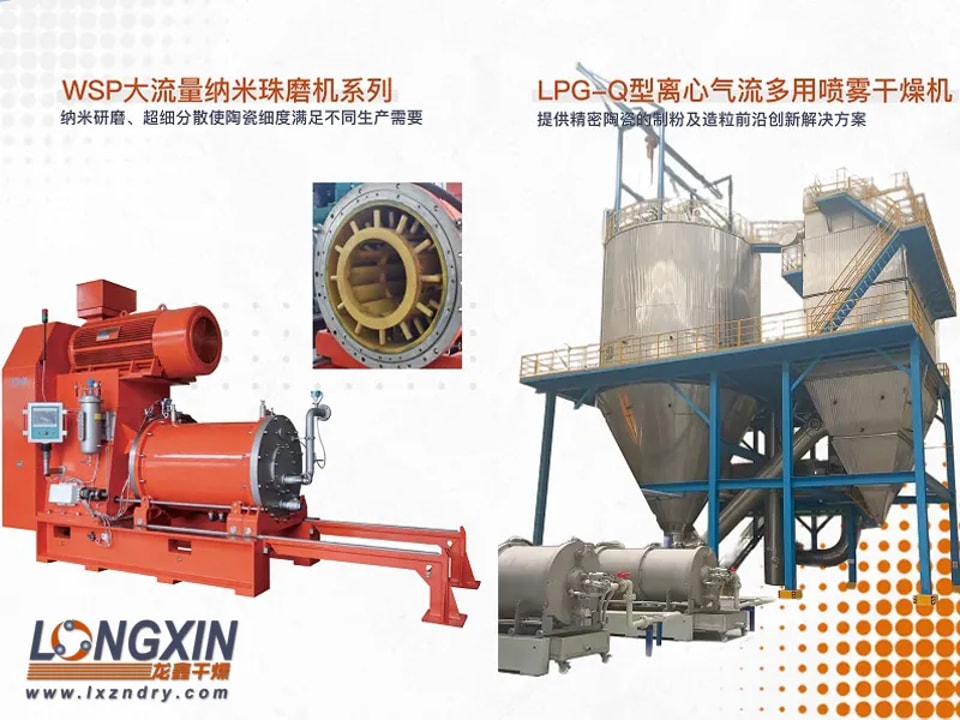 AI Fuels MLCC Market Growth; Breakthroughs in Barium Titanate Powder Spray Dryers Boost Rapid Domestic SubstitutionMarket Opportunities and Challenges of Barium Titanate Powder Amid the AI Boom
As AI technology penetrates 5G communications, IoT, automotive electronics and other sectors, demand for MLCCs, known as the "industrial staple", has exploded. Statistics show that premium 5G smartphones consume more MLCCs than their 4G counterparts, while new energy vehicles use five times as many MLCCs as conventional fuel cars in power systems, ranging from 2,000 to 2,500 pieces. The global MLCC market size is expected to exceed 149 billion RMB by 2025. As the world’s largest consumer market accounting for 45% of global demand, China boasts huge potential for domestic substitution.
As the core dielectric raw material of MLCCs, barium titanate (BaTiO₃) directly determines the dielectric constant, reliability and miniaturization potential of MLCCs. High-purity nano-sized barium titanate powder has become the mainstream market product. After sintering, it forms dense sintered bodies that enhance ceramic toughness and strength while lowering sintering temperatures. Nevertheless, the global high-end barium titanate powder market has long been monopolized by enterprises including Japan’s Sakai Chemical and U.S.-based Ferro. Domestic leading firm Sinocera holds merely 10% market share, making domestic substitution of high-performance powder an urgent priority.
Core Bottlenecks Restricting Domestic Production of Barium Titanate MLCC Powder
Liquid-phase methods (hydrothermal synthesis, sol-gel method, etc.) dominate the preparation of barium titanate MLCC powder. Grinding and drying are core processes governing powder quality, yet they are plagued by four major technical bottlenecks:
(1) Pain Points in the Grinding Stage
Severe particle agglomeration: Nano barium titanate has a large specific surface area, and van der Waals forces readily trigger hard agglomeration during grinding, worsening powder flowability and increasing porosity of sintered ceramics.
Uneven particle size distribution: Fluctuations in the rotational speed and media ratio of traditional sand mills widen the particle size span factor (ideal value < 1.2), resulting in inconsistent dielectric performance of MLCCs.
Risk of impurity contamination: Wear of grinding media and equipment surfaces easily introduces metallic impurities. Excess Fe²⁺, for instance, will degrade the insulation performance of MLCCs.
Conflict between energy consumption and efficiency: Conventional equipment requires over 8 hours of grinding to reach D50 = 100 nm, consuming massive energy and risking crystal phase transformation of barium titanate, which reduces its dielectric constant.
(2) Challenges in the Drying Stage
Thermal susceptibility defects: Barium titanate tends to undergo crystal transformation when drying temperature exceeds 200 °C, leading to higher dielectric loss.
Poor particle size control: Standard spray dryers feature a wide droplet size distribution (±10%), resulting in uneven powder particle sizes after drying and impairing uniformity during MLCC lamination molding.
Wall adhesion and contamination: Wet powder sticks to tower walls and forms secondary agglomerates. If the equipment is made of ordinary stainless steel, the leaching rate of Fe and Ni ions can reach 0.05%, lowering powder purity.
Insufficient sphericity: Traditional processes fail to achieve high spherical granulation (sphericity < 70%), leading to sintered MLCC compactness below 95% and unstable electrical performance.
Longxin Intelligent Full-Chain Solution: Disruptive Innovation Covering Grinding to Drying
To address the above pain points, Longxin Intelligent launches an integrated solution combining turbine pin-type nano dual-power sand mill and centrifugal airflow multi-purpose spray dryer, enabling precise full-process control.
Turbine Pin-Type Nano Dual-Power Sand Mill: Revolutionary Breakthrough in Grinding Technology
Dual-Power Feeding & Silicon Carbide Grinding Chamber
A combined screw pump and peristaltic pump feeding system delivers precise flow control from 50 to 1000 L/h, compatible with slurries of various solid contents. The grinding chamber lined with silicon carbide features over 10 times higher wear resistance and superior thermal conductivity compared with conventional stainless steel. It stabilizes chamber temperature within a narrow range and eliminates crystal phase transformation of barium titanate caused by overheating.
The hybrid turbine-pin disperser generates 3D turbulent flow. Raw powder with D50 = 5 μm can be refined to a smaller D50 with a low particle size span factor after treatment.
Screenless Centrifugal Separation Technology
The self-developed screenless centrifugal separator is equipped with an independent drive motor adjustable from 5,000 to 12,000 rpm. During operation, centrifugal force from the disperser pushes 99% of zirconia grinding beads toward the chamber periphery to flow alongside materials and reduce collision wear. The high-speed rotating separator generates centrifugal force exceeding pump pressure to retain zirconia beads inside the chamber, while materials flow out through the separator center. Separation efficiency hits 99.9% with minimal bead wear, completely solving screen clogging issues.
Intelligent Control System
Integrated PLC algorithms monitor multiple parameters in real time and automatically optimize grinding strategies. Variable frequency drive technology cuts energy consumption and boosts grinding efficiency, shortening processing cycles compared with traditional equipment.
Centrifugal Airflow Multi-Purpose Spray Dryer: Precision Control for Drying and Granulation
Dual-Mode Atomization System
Centrifugal atomization unit: The high-speed gear-boosted atomizer achieves a disc linear velocity of 220 m/s with adjustable rotational speed for accurate droplet size control. The patented vortex liquid distribution plate (Patent No. ZL 2021 2 2093525.2) prevents nozzle blockage and delivers high-sphericity spherical granulation.
Airflow atomization unit: Two-fluid atomizing nozzles paired with compressed air can atomize high-viscosity slurries. Multiple spray guns can be installed to expand production capacity when a single nozzle cannot meet output demands, catering to micro-nano powder manufacturing.
Switching between the two modes can be completed within 30 minutes to satisfy diverse process requirements for MLCC formulation powder.
High-Purity & Uniformity Assurance Technology
All material contact components adopt mirror-polished 316L stainless steel (low Ra value) and zirconia ceramics. An annular air curtain inside the drying tower avoids wall adhesion and secondary agglomeration, delivering powder purity above 99%.
A multi-stage hot air distributor paired with a PID temperature control system maintains precise temperature gradients inside the tower. Optimized mixing modes of hot air and liquid droplets accommodate the thermal sensitivity of barium titanate precursors.
Automation & Intelligent Upgrades
An AI model built on thousands of experimental datasets automatically recommends optimal drying parameters (inlet air temperature: 150–300 °C, outlet air temperature: 80–120 °C) and dynamically adjusts settings in real time. Built-in IoT modules support remote equipment monitoring, shorten fault early warning response time and improve maintenance efficiency.
Value of Technological Innovation: Core Engine for Domestic Substitution
Superior performance indicators: Uniform particle size, high sphericity, high dielectric constant and low dielectric loss, reaching the top-tier level of equivalent products worldwide.
Distinct cost advantages: Reduced overall energy consumption, lower production cost per ton of powder and higher MLCC manufacturing yield.
Expanded production capacity: A single intelligent production line delivers high annual output, double the capacity of traditional lines, helping electronic ceramic material manufacturers gain access to major supply chains.
Driven by the AI trend toward miniaturization and high performance of electronic components, Longxin Intelligent delivers core equipment support branded "Longxin Intelligent Manufacturing" for MLCC domestic substitution through full-chain technological breakthroughs in grinding and drying. The company accelerates the localization rate of barium titanate powder and reshapes the industrial landscape of electronic ceramic materials.
Read More
AI Fuels MLCC Market Growth; Breakthroughs in Barium Titanate Powder Spray Dryers Boost Rapid Domestic SubstitutionMarket Opportunities and Challenges of Barium Titanate Powder Amid the AI Boom
As AI technology penetrates 5G communications, IoT, automotive electronics and other sectors, demand for MLCCs, known as the "industrial staple", has exploded. Statistics show that premium 5G smartphones consume more MLCCs than their 4G counterparts, while new energy vehicles use five times as many MLCCs as conventional fuel cars in power systems, ranging from 2,000 to 2,500 pieces. The global MLCC market size is expected to exceed 149 billion RMB by 2025. As the world’s largest consumer market accounting for 45% of global demand, China boasts huge potential for domestic substitution.
As the core dielectric raw material of MLCCs, barium titanate (BaTiO₃) directly determines the dielectric constant, reliability and miniaturization potential of MLCCs. High-purity nano-sized barium titanate powder has become the mainstream market product. After sintering, it forms dense sintered bodies that enhance ceramic toughness and strength while lowering sintering temperatures. Nevertheless, the global high-end barium titanate powder market has long been monopolized by enterprises including Japan’s Sakai Chemical and U.S.-based Ferro. Domestic leading firm Sinocera holds merely 10% market share, making domestic substitution of high-performance powder an urgent priority.
Core Bottlenecks Restricting Domestic Production of Barium Titanate MLCC Powder
Liquid-phase methods (hydrothermal synthesis, sol-gel method, etc.) dominate the preparation of barium titanate MLCC powder. Grinding and drying are core processes governing powder quality, yet they are plagued by four major technical bottlenecks:
(1) Pain Points in the Grinding Stage
Severe particle agglomeration: Nano barium titanate has a large specific surface area, and van der Waals forces readily trigger hard agglomeration during grinding, worsening powder flowability and increasing porosity of sintered ceramics.
Uneven particle size distribution: Fluctuations in the rotational speed and media ratio of traditional sand mills widen the particle size span factor (ideal value < 1.2), resulting in inconsistent dielectric performance of MLCCs.
Risk of impurity contamination: Wear of grinding media and equipment surfaces easily introduces metallic impurities. Excess Fe²⁺, for instance, will degrade the insulation performance of MLCCs.
Conflict between energy consumption and efficiency: Conventional equipment requires over 8 hours of grinding to reach D50 = 100 nm, consuming massive energy and risking crystal phase transformation of barium titanate, which reduces its dielectric constant.
(2) Challenges in the Drying Stage
Thermal susceptibility defects: Barium titanate tends to undergo crystal transformation when drying temperature exceeds 200 °C, leading to higher dielectric loss.
Poor particle size control: Standard spray dryers feature a wide droplet size distribution (±10%), resulting in uneven powder particle sizes after drying and impairing uniformity during MLCC lamination molding.
Wall adhesion and contamination: Wet powder sticks to tower walls and forms secondary agglomerates. If the equipment is made of ordinary stainless steel, the leaching rate of Fe and Ni ions can reach 0.05%, lowering powder purity.
Insufficient sphericity: Traditional processes fail to achieve high spherical granulation (sphericity < 70%), leading to sintered MLCC compactness below 95% and unstable electrical performance.
Longxin Intelligent Full-Chain Solution: Disruptive Innovation Covering Grinding to Drying
To address the above pain points, Longxin Intelligent launches an integrated solution combining turbine pin-type nano dual-power sand mill and centrifugal airflow multi-purpose spray dryer, enabling precise full-process control.
Turbine Pin-Type Nano Dual-Power Sand Mill: Revolutionary Breakthrough in Grinding Technology
Dual-Power Feeding & Silicon Carbide Grinding Chamber
A combined screw pump and peristaltic pump feeding system delivers precise flow control from 50 to 1000 L/h, compatible with slurries of various solid contents. The grinding chamber lined with silicon carbide features over 10 times higher wear resistance and superior thermal conductivity compared with conventional stainless steel. It stabilizes chamber temperature within a narrow range and eliminates crystal phase transformation of barium titanate caused by overheating.
The hybrid turbine-pin disperser generates 3D turbulent flow. Raw powder with D50 = 5 μm can be refined to a smaller D50 with a low particle size span factor after treatment.
Screenless Centrifugal Separation Technology
The self-developed screenless centrifugal separator is equipped with an independent drive motor adjustable from 5,000 to 12,000 rpm. During operation, centrifugal force from the disperser pushes 99% of zirconia grinding beads toward the chamber periphery to flow alongside materials and reduce collision wear. The high-speed rotating separator generates centrifugal force exceeding pump pressure to retain zirconia beads inside the chamber, while materials flow out through the separator center. Separation efficiency hits 99.9% with minimal bead wear, completely solving screen clogging issues.
Intelligent Control System
Integrated PLC algorithms monitor multiple parameters in real time and automatically optimize grinding strategies. Variable frequency drive technology cuts energy consumption and boosts grinding efficiency, shortening processing cycles compared with traditional equipment.
Centrifugal Airflow Multi-Purpose Spray Dryer: Precision Control for Drying and Granulation
Dual-Mode Atomization System
Centrifugal atomization unit: The high-speed gear-boosted atomizer achieves a disc linear velocity of 220 m/s with adjustable rotational speed for accurate droplet size control. The patented vortex liquid distribution plate (Patent No. ZL 2021 2 2093525.2) prevents nozzle blockage and delivers high-sphericity spherical granulation.
Airflow atomization unit: Two-fluid atomizing nozzles paired with compressed air can atomize high-viscosity slurries. Multiple spray guns can be installed to expand production capacity when a single nozzle cannot meet output demands, catering to micro-nano powder manufacturing.
Switching between the two modes can be completed within 30 minutes to satisfy diverse process requirements for MLCC formulation powder.
High-Purity & Uniformity Assurance Technology
All material contact components adopt mirror-polished 316L stainless steel (low Ra value) and zirconia ceramics. An annular air curtain inside the drying tower avoids wall adhesion and secondary agglomeration, delivering powder purity above 99%.
A multi-stage hot air distributor paired with a PID temperature control system maintains precise temperature gradients inside the tower. Optimized mixing modes of hot air and liquid droplets accommodate the thermal sensitivity of barium titanate precursors.
Automation & Intelligent Upgrades
An AI model built on thousands of experimental datasets automatically recommends optimal drying parameters (inlet air temperature: 150–300 °C, outlet air temperature: 80–120 °C) and dynamically adjusts settings in real time. Built-in IoT modules support remote equipment monitoring, shorten fault early warning response time and improve maintenance efficiency.
Value of Technological Innovation: Core Engine for Domestic Substitution
Superior performance indicators: Uniform particle size, high sphericity, high dielectric constant and low dielectric loss, reaching the top-tier level of equivalent products worldwide.
Distinct cost advantages: Reduced overall energy consumption, lower production cost per ton of powder and higher MLCC manufacturing yield.
Expanded production capacity: A single intelligent production line delivers high annual output, double the capacity of traditional lines, helping electronic ceramic material manufacturers gain access to major supply chains.
Driven by the AI trend toward miniaturization and high performance of electronic components, Longxin Intelligent delivers core equipment support branded "Longxin Intelligent Manufacturing" for MLCC domestic substitution through full-chain technological breakthroughs in grinding and drying. The company accelerates the localization rate of barium titanate powder and reshapes the industrial landscape of electronic ceramic materials.
Read More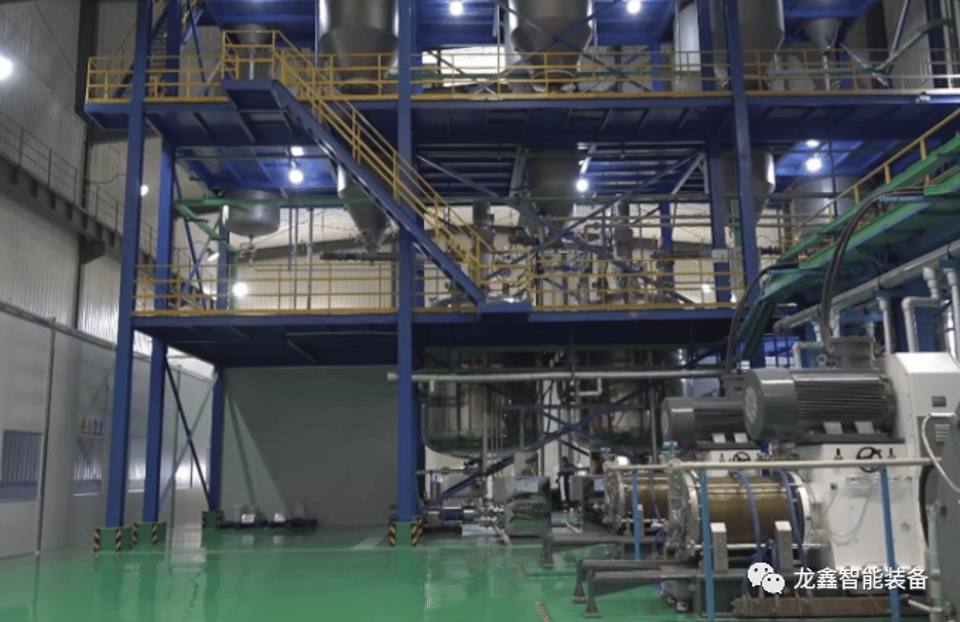 Lithium iron phosphate project - sand millAt present, the construction of 30,000 tons of lithium iron phosphate expansion project of a customer's production base is in full swing. It is not difficult to find from the construction site that Longxin intelligent bead mill, dryer and other products have been standing among them, preparing for the completion of the project and officially put into production.It is reported that the current infrastructure part of the project has been completed about 60%, is expected to complete the installation and commissioning of the main equipment in August, September will be officially mass production, after the completion of sales of 6.5 billion yuan. The project mainly produces low-temperature and high-rate lithium iron phosphate cathode materials, which are used in pure electric vehicle batteries, plug-in hybrid electric vehicle batteries, start-stop start vehicle batteries, energy storage batteries and other fields. At that time, the six WSP high-efficiency recycling hyperfine bead mills and other products produced by our company will operate efficiently and reliably to help the customer's power in the new energy track.Longxin WSP high-efficiency recycling ultrafine bead mill series is widely used in nanomaterials powder engineering, especially in the new energy battery industry, lithium iron phosphate battery cathode materials, lithium titanate and other materials. The special rotor structure design can achieve the maximum specific grinding energy, improve the grinding efficiency, and the minimum fineness can be less than 50nm.In recent years, Longxin has comprehensively laid out strategic emerging industries such as new energy, 5G materials, micro and nano materials, and environmental protection to achieve industrial upgrading, promote scientific and technological innovation, and inject new impetus into economic and social development and sustainable development.Read More
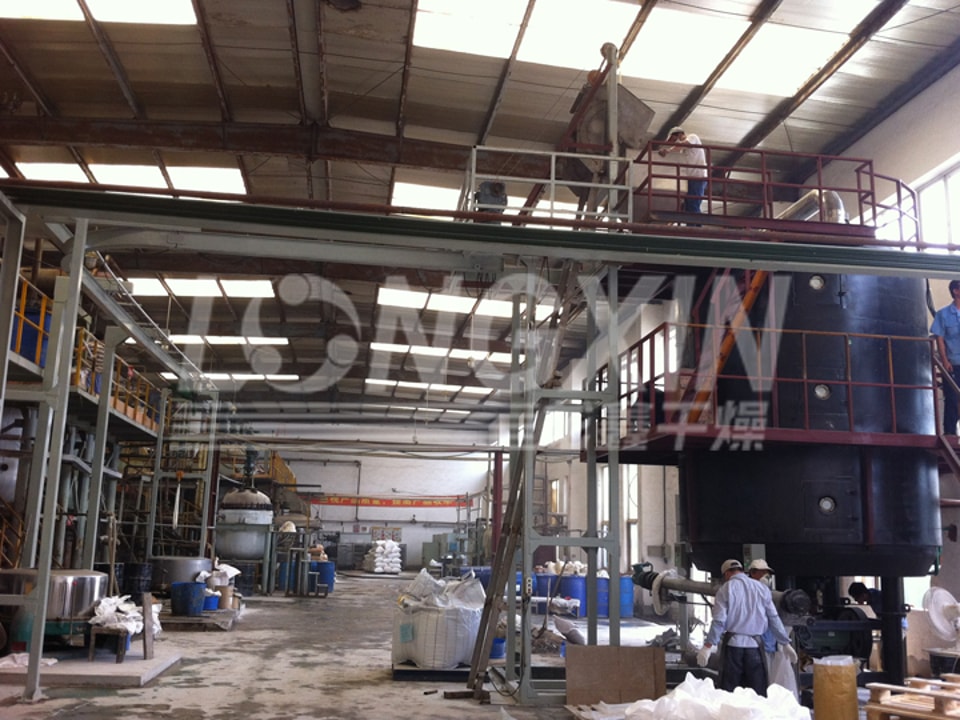 Ternary composite anode material disc continuous dryerCase introduction: ternary composite anode material disc continuous dryer is a multi-layer disc, rotary rake stirring, vertical continuous drying device, is a conductive drying based contact dryer. The equipment is developed on the basis of the fixed bed conduction dryer and the rake type stirring dryer, which has stronger drying force and better energy saving effect than the traditional disc dryer.
Ternary composite cathode material engineering Description:The ratio of nickel, cobalt and manganese (x: y:z) in the precursor products of ternary composite anode materials can be adjusted according to actual needs. Ternary material as a positive battery relative to lithium cobalt acid battery safety is high, but the platform is too low, suitable for power batteries, small batteries. Low cost, high gram capacity (>150mAh/g), working voltage and existing electrolyte matching (4.1V), good safety.Compared with Lithium cobalt oxide, the energy density of ternary needs to be improved, and Japan mentioned the same degree as lithium cobalt oxide, that is, the compaction of Japan's ternary is close to lithium cobalt oxide, and there is a gap in the country. If compacted up, with cost advantages and safety, ternary will replace lithium cobalt oxide.Longxin according to the market demand and material characteristics, continuous improvement and innovation, research and development and manufacture of ternary composite anode material disc continuous dryer.Ternary composite positive material disk continuous dryer equipment overview:The equipment is a multi-layer disc, rotary rake stirring, vertical continuous drying device, belongs to the conduction drying mainly contact dryer. The equipment is developed on the basis of the fixed bed conduction dryer and the rake type stirring dryer, which has stronger drying force and better energy saving effect than the traditional disc dryer.Ternary composite positive material dryer equipment features:1. Easy control, strong applicability, accurate material temperature control, uniform drying, stable quality.2. the operation is simple and easy: the operation of opening and stopping is very simple, and the equipment cleaning and observation are more careful and convenient.3. energy consumption is greatly reduced: high thermal efficiency, low energy consumption; The material handling system requires little power.4. easy installation, small footprint: the whole factory, the whole transportation, only need to lift in place; Due to the drying tray layer arrangement and vertical installation, the drying area is large and the floor area is small.5. good operating environment, recyclable solvent, dust emission meets the requirements.
Disk continuous dryer application range:The continuous disc dryer is a kind of efficient conductive continuous drying equipment. Its unique structure and working principle determine that it has the characteristics of high thermal efficiency, low energy consumption, small footprint, simple configuration, convenient operation and control, and good operating environment. Widely used in chemical, pharmaceutical, pesticide, food, feed, agricultural and sideline products processing industry drying operations.Welcome new and old customers to consult details, visit the factory to discuss the plan, work together!Read More
Ternary composite anode material disc continuous dryerCase introduction: ternary composite anode material disc continuous dryer is a multi-layer disc, rotary rake stirring, vertical continuous drying device, is a conductive drying based contact dryer. The equipment is developed on the basis of the fixed bed conduction dryer and the rake type stirring dryer, which has stronger drying force and better energy saving effect than the traditional disc dryer.
Ternary composite cathode material engineering Description:The ratio of nickel, cobalt and manganese (x: y:z) in the precursor products of ternary composite anode materials can be adjusted according to actual needs. Ternary material as a positive battery relative to lithium cobalt acid battery safety is high, but the platform is too low, suitable for power batteries, small batteries. Low cost, high gram capacity (>150mAh/g), working voltage and existing electrolyte matching (4.1V), good safety.Compared with Lithium cobalt oxide, the energy density of ternary needs to be improved, and Japan mentioned the same degree as lithium cobalt oxide, that is, the compaction of Japan's ternary is close to lithium cobalt oxide, and there is a gap in the country. If compacted up, with cost advantages and safety, ternary will replace lithium cobalt oxide.Longxin according to the market demand and material characteristics, continuous improvement and innovation, research and development and manufacture of ternary composite anode material disc continuous dryer.Ternary composite positive material disk continuous dryer equipment overview:The equipment is a multi-layer disc, rotary rake stirring, vertical continuous drying device, belongs to the conduction drying mainly contact dryer. The equipment is developed on the basis of the fixed bed conduction dryer and the rake type stirring dryer, which has stronger drying force and better energy saving effect than the traditional disc dryer.Ternary composite positive material dryer equipment features:1. Easy control, strong applicability, accurate material temperature control, uniform drying, stable quality.2. the operation is simple and easy: the operation of opening and stopping is very simple, and the equipment cleaning and observation are more careful and convenient.3. energy consumption is greatly reduced: high thermal efficiency, low energy consumption; The material handling system requires little power.4. easy installation, small footprint: the whole factory, the whole transportation, only need to lift in place; Due to the drying tray layer arrangement and vertical installation, the drying area is large and the floor area is small.5. good operating environment, recyclable solvent, dust emission meets the requirements.
Disk continuous dryer application range:The continuous disc dryer is a kind of efficient conductive continuous drying equipment. Its unique structure and working principle determine that it has the characteristics of high thermal efficiency, low energy consumption, small footprint, simple configuration, convenient operation and control, and good operating environment. Widely used in chemical, pharmaceutical, pesticide, food, feed, agricultural and sideline products processing industry drying operations.Welcome new and old customers to consult details, visit the factory to discuss the plan, work together!Read More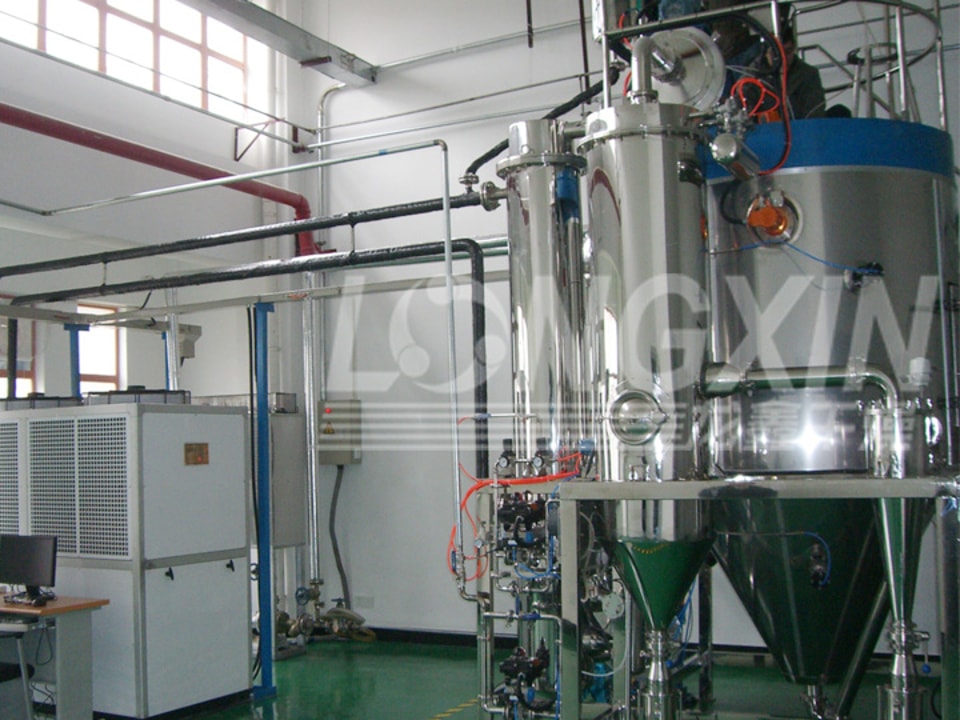 Special closed cycle dryer for silicon carbon anode materialCase introduction: Longxin According to the current preparation process of silicon carbon anode materials: sanding → coating → drying → calcination, in the drying process, the main method of closed cycle spray drying is used to nano the material, improve the transmission speed of electrons and ions to improve the conductivity and stability of the material.Lithium electronic batteries are gradually replacing nickel-metal hydride batteries with high energy, long cycle life and environmental friendliness, becoming a promising energy storage device. Negative electrode material is an important part of lithium-ion battery, which directly affects the energy density, cycle life and safety performance of the battery. Silicon carbon, a high-capacity anode material for batteries, is then produced.In the preparation process of silicon carbon, how to develop lithium ion batteries with higher density, greater charge and discharge performance, higher cycle stability and higher safety is a hot topic of research at present and even in the next few decades.According to the current preparation process of silicon carbon anode materials: sanding → coating → drying → calcination, in the drying process, the closed cycle spray drying method is mainly used to nano the material, improve the transmission speed of electrons and ions to improve the conductivity and stability of the material.Silicon carbon anode material before and after the material experiment:In the process of preparing silicon carbon negative battery materials, vacuum rake dryer is traditionally used for drying and solvent recovery, but the silicon carbon material is estimated to be less dispersed, the drying time is long, the continuous production cannot be produced, and the material handling and turning during production cause pollution to the environment. Based on many years of experience in equipment production and understanding of material technology, Longxin has improved the closed cycle spray dryer as a new process in the drying process of silicon carbon anode material production. It completely solves the problems existing in the traditional process, significantly reduces the production cost, improves the product quality, and also greatly improves the impact on the environment.Silicon carbon anode material features:1. The atomizer used by Longxin is a new type of atomizer developed and produced independently, which completely abandons the atomizer purchased by the vast majority of manufacturers in the market and fully meets the material particle size requirements.2. Realize automated continuous production, and can complete the recovery of organic solvents at the same time, production in a closed environment, reducing the impact on environmental pollution.Long Xin technical engineer, lithium positive and negative electrode materials have more than ten years of work experience, familiar with the product preparation process, can provide guidance and opinions in each link of the process, welcome the majority of lithium manufacturers to visit the factory and test materials, and jointly explore the new development of lithium industry drying.Read More
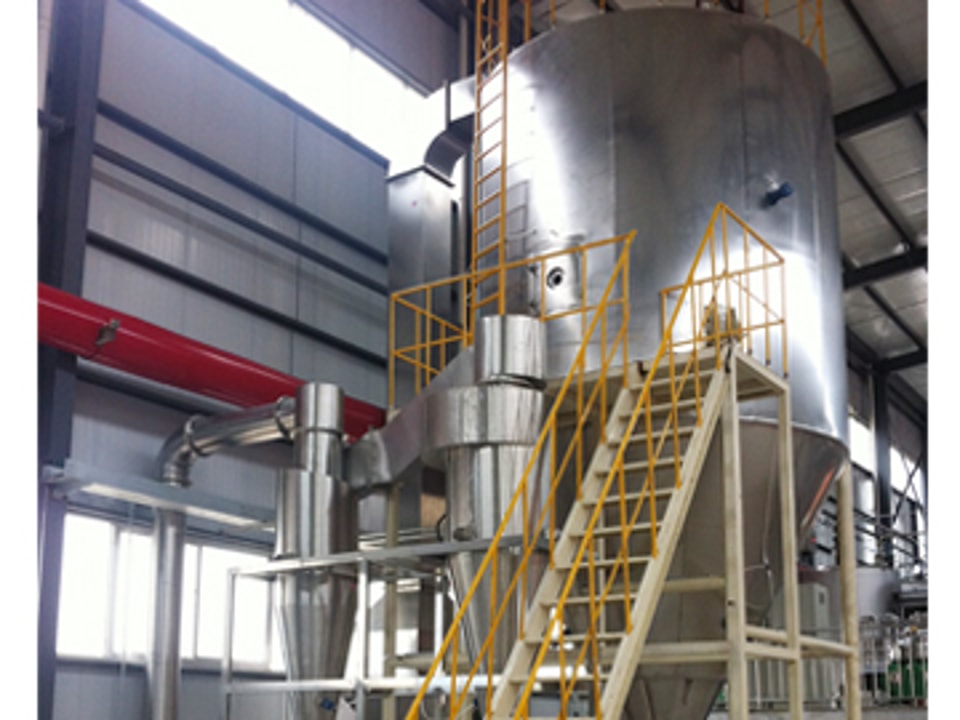 Lithium iron phosphate new ultrafine powder spray dryerCase profile: After drying, the product size D50 of the new ultrafine powder spray dryer developed by Longxin can achieve :15~20μm/5~10μm two specifications, sphericity: high sphericity, particle hollowness: solid ball, capacity scale :25~3000kg/h evaporation.Since the United States and Japan have published reports on olivine structure lithium iron phosphate (LiMPO4), lithium iron phosphate materials have received great attention from the market, and caused extensive research and rapid development. Compared with the traditional lithium ion secondary battery cathode material, spinel structure lithium manganate (LiMn2O4) and Lithium cobalt acid (LiCoO2), lithium iron phosphate (LiMPO4) raw material source is more extensive, cheaper and no environmental pollution, so the world is competing to achieve the industrial production of lithium iron phosphate.At present, the Chinese market almost all uses the high temperature solid phase process to produce lithium iron phosphate. Solid phase production of lithium iron phosphate is divided into ferrous oxalate process, iron red process and iron phosphate process according to different iron raw materials. The main processes are ferrous oxalate and ferrous phosphate. The cost of ferrous oxalate process is high because of the low yield, low production capacity and large amount of alcohol consumed in the mixing process. Although the raw material cost is high, the iron phosphate process has large yield, large production capacity and good product performance, and the previous process can be mixed by water ball grinding and sand grinding, and spray drying, and the cost is comparable to the ferrous oxalate process.
Longxin technical engineers found that most lithium iron phosphate manufacturers in the use of spray dryer drying, there will be high particle size, sphericity of irregular particles, hollow particles, single equipment production capacity can not be quantified and other problems, in view of such practical problems, Longxin by fully understanding the characteristics of the material, find a lot of data, under the premise of existing domestic drying equipment technology ,Independent innovation, developed a new type of ultrafine powder spray dryer for lithium iron phosphate, which can not only achieve particle size specifications, but also achieve the requirements of spherical lithium iron phosphate.The new type of ultrafine powder spray dryer for lithium iron phosphate mainly distributes the material liquid into droplets through the centrifugal force of the high-speed rotating atomizer, and dries instantly after contacting the hot air through the volute hot air distributor. Since the liquid material is atomized from the edge of the disk by centrifugal force in the high-speed turntable (linear speed above 110m/s), the relative size of the droplets is relatively uniform, the droplets are dried immediately when they contact with the hot air, and the droplets are basically hollow powder, and the particle size is relatively uniform.The finished product dried by the new ultrafine powder spray dryer of lithium iron phosphate has good uniformity, fluidity and solubility, high product purity and good quality. The production process has also been simplified, not only the operation control is convenient, and the drying speed is fast, the surface area of the material liquid is greatly increased after atomization, in the hot air stream, 95% - 98% of the water can be evaporated instantly, the dried product does not need to be crushed and screened, and the purity of the product is reduced at the same time. The particle size, bulk density and final water content of the product can be adjusted by changing the operating conditions within a certain range.Lithium iron phosphate new ultrafine powder spray dryer after drying product quality report:Read More
Lithium iron phosphate new ultrafine powder spray dryerCase profile: After drying, the product size D50 of the new ultrafine powder spray dryer developed by Longxin can achieve :15~20μm/5~10μm two specifications, sphericity: high sphericity, particle hollowness: solid ball, capacity scale :25~3000kg/h evaporation.Since the United States and Japan have published reports on olivine structure lithium iron phosphate (LiMPO4), lithium iron phosphate materials have received great attention from the market, and caused extensive research and rapid development. Compared with the traditional lithium ion secondary battery cathode material, spinel structure lithium manganate (LiMn2O4) and Lithium cobalt acid (LiCoO2), lithium iron phosphate (LiMPO4) raw material source is more extensive, cheaper and no environmental pollution, so the world is competing to achieve the industrial production of lithium iron phosphate.At present, the Chinese market almost all uses the high temperature solid phase process to produce lithium iron phosphate. Solid phase production of lithium iron phosphate is divided into ferrous oxalate process, iron red process and iron phosphate process according to different iron raw materials. The main processes are ferrous oxalate and ferrous phosphate. The cost of ferrous oxalate process is high because of the low yield, low production capacity and large amount of alcohol consumed in the mixing process. Although the raw material cost is high, the iron phosphate process has large yield, large production capacity and good product performance, and the previous process can be mixed by water ball grinding and sand grinding, and spray drying, and the cost is comparable to the ferrous oxalate process.
Longxin technical engineers found that most lithium iron phosphate manufacturers in the use of spray dryer drying, there will be high particle size, sphericity of irregular particles, hollow particles, single equipment production capacity can not be quantified and other problems, in view of such practical problems, Longxin by fully understanding the characteristics of the material, find a lot of data, under the premise of existing domestic drying equipment technology ,Independent innovation, developed a new type of ultrafine powder spray dryer for lithium iron phosphate, which can not only achieve particle size specifications, but also achieve the requirements of spherical lithium iron phosphate.The new type of ultrafine powder spray dryer for lithium iron phosphate mainly distributes the material liquid into droplets through the centrifugal force of the high-speed rotating atomizer, and dries instantly after contacting the hot air through the volute hot air distributor. Since the liquid material is atomized from the edge of the disk by centrifugal force in the high-speed turntable (linear speed above 110m/s), the relative size of the droplets is relatively uniform, the droplets are dried immediately when they contact with the hot air, and the droplets are basically hollow powder, and the particle size is relatively uniform.The finished product dried by the new ultrafine powder spray dryer of lithium iron phosphate has good uniformity, fluidity and solubility, high product purity and good quality. The production process has also been simplified, not only the operation control is convenient, and the drying speed is fast, the surface area of the material liquid is greatly increased after atomization, in the hot air stream, 95% - 98% of the water can be evaporated instantly, the dried product does not need to be crushed and screened, and the purity of the product is reduced at the same time. The particle size, bulk density and final water content of the product can be adjusted by changing the operating conditions within a certain range.Lithium iron phosphate new ultrafine powder spray dryer after drying product quality report:Read MoreContact US
×Support order samples, customization, wholesale direct, and complete payment. If the product you look for does not have corresponding customized content, pls fill out the form below to contact us, and we will reply ASAP.

- Hengshanqiao Town, Changzhou, Jiangsu Province-213119, China
- No. 2600, Zhencheng Road, Jiangyin City, Jiangsu Province, 214441, China
- 503a, 5th Floor, No.2582 Gudai Road, Minhang District, Shanghai, 201101
- techservice@longxinglobal.com.cn
 13611616575
- +86 13611616575
 +86 13611616575