Against the backdrop of explosive growth in the new energy vehicle market, battery safety has become the core lifeline of industrial development, and high-performance thermal conductive materials have entered a period of rapid expansion accordingly. Demand for spherical alumina, the leading thermal conductive filler, has surged dramatically.
Spherical alumina used as diaphragm thermal conductive materials must meet stringent standards for ultrafine particle size (precise size control) and high purity (ultra-low impurity content), which calls for collaborative technological breakthroughs in grinding and drying processes. Longxin Intelligent has developed an integrated production line combining high-flow pin-type nano bead mills and high-temperature spray drying towers as a one-stop solution tailored to such requirements. This system comprehensively overcomes bottlenecks of conventional manufacturing processes in grinding throughput, particle size precision, purity assurance and dried powder quality.
Full English Translation of the Complete Article
Pursuing Ultrafine & High-Purity Materials | Integrated Nano Grinding & Spray Drying Production Line for Spherical Alumina Diaphragm Thermal Conductive Materials Empowers Lithium Battery Safety
With the explosive expansion of the new energy vehicle market, its supporting industries have embarked on rapid development. Thermal management, the critical sector directly related to personal safety, generates massive demand for high-performance thermal conductive materials, among which spherical alumina stands as the primary filler with rapidly rising market demand.
Fine alumina serves as a core coating material for lithium-ion battery separators. The main raw materials of separators, polyethylene and polypropylene, feature relatively low melting points and poor thermal stability. Under elevated temperatures, separators tend to shrink significantly or even rupture, triggering battery short circuits. Single-sided or double-sided coating of separators improves their high-temperature stability, mitigating safety hazards such as cathode-anode contact, combustion and explosion caused by thermal shrinkage. Coated separators gain increased thickness, delivering enhanced structural stability and extended service life. When fine alumina is coated onto separators of power batteries for new energy vehicles and consumer lithium batteries, it effectively optimizes the separators’ thermal shrinkage resistance and guarantees battery safety.
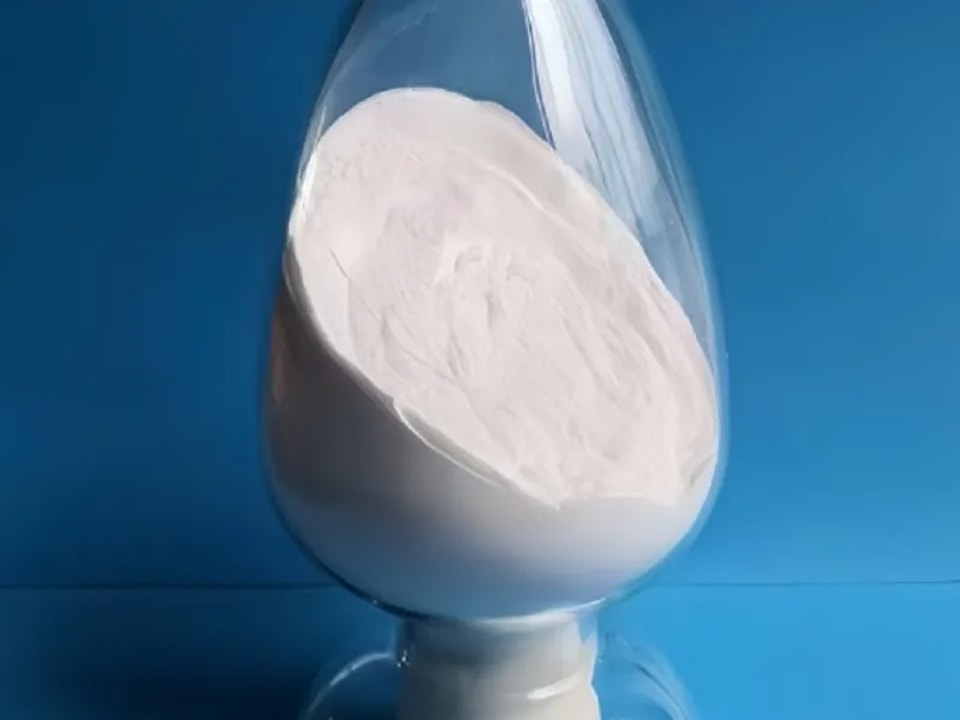
Market Demand Analysis: Soaring Demand for Spherical Alumina
Market statistics reveal a remarkable upward trend in spherical alumina consumption. Data from Gaogong Industry Research Institute shows the global thermal conductive powder market reached 5.04 billion RMB in 2022. Spherical alumina thermal powder accounted for 50.8% of the market share, valued at 2.56 billion RMB, representing a year-on-year increase of 30.7%. As the world’s core consumer market, China’s spherical alumina thermal powder market hit 750 million RMB in 2022, growing 41.5% year-on-year. Its global market share has climbed year after year, reaching 29.3% in 2022. Forecasts project China’s market size will surge to 2.1 billion RMB by 2025, with its global proportion rising further to 38.9%.
Behind these figures lies rigid demand for premium spherical alumina from power batteries, electronic control units, drive motors and charging piles for new energy vehicles. The popularization of fast-charging technology creates severe heat dissipation pressure on batteries and electronic components, imposing stricter standards on spherical alumina’s ultrafine particle size and high purity, and pushing the whole industry toward upgraded technical specifications.
Manufacturing Process of High-Purity Alumina Ceramics: Transformation Path from Raw Ore to Precision Finished Products
High-purity alumina ceramics form the foundation of refined alumina products such as spherical alumina. Rigorous production procedures directly determine the performance of downstream materials. The complete workflow consists of four core stages: raw powder preparation, green body forming, high-temperature sintering and precision machining, all requiring precise control over powder purity and fineness.
Raw Powder Preparation: Achieve Ultrafine Granularity & Ultrahigh Purity
The primary objective of this stage is to refine raw materials into ultrafine, high-purity powder. Production starts with bauxite purification. Industrial alumina (Al₂O₃) manufactured via the Bayer process is mixed with sintering additives (e.g. MgO) and fed into ball mills for wet grinding using deionized water or ethanol as the grinding medium. This process breaks particle agglomerates and pulverizes materials down to micron or submicron sizes, drastically boosting powder specific surface area and chemical reactivity for subsequent procedures.
Ground slurry undergoes repeated washing and sedimentation solid-liquid separation to remove soluble impurities and grinding-derived contaminants, securing high raw material purity. Calcination follows at 1200–1400°C to eliminate chemically bound water and complete crystal phase transformation, forming stable α-Al₂O₃. To resolve poor flowability of calcined powder, spray granulation and drying are implemented: powder is mixed with binders and plasticizers to form homogeneous slurry, which is pumped into a spray drying tower and atomized into tiny droplets. Instant contact with hot air produces hollow spherical powder with outstanding flowability, enabling automated forming operations. Bag dust collectors installed throughout drying and conveying processes recover raw materials to cut production costs, maintain a safe workshop environment and comply with environmental regulations.
Green Body Forming: Customized Processes for Diverse Product Specifications
Forming techniques are selected based on finished product requirements:
- Uniaxial pressing: Cost-effective for simple flat and cylindrical components;
- Isostatic pressing: Transmits uniform omnidirectional pressure via elastic molds to fabricate high-density, homogeneous green bodies for high-performance applications;
- Slip casting: Ideal for large thin-walled complex parts;
- Extrusion: Continuous manufacturing of tubular and rod-shaped products;
- Injection molding: Suits intricate 3D components such as internally threaded parts and micro turbine rotors, delivering high efficiency and consistent dimensional accuracy, with post-sintering debinding required to remove residual binders.
High-Temperature Sintering: The Critical Stage for Ceramic Densification
After forming, green bodies are heated in high-temperature kilns up to 1800°C following precise temperature curves. Material transport mechanisms including diffusion and evaporation-condensation form interparticle necks, promoting grain growth and pore elimination. The final dense, high-strength microstructure endows alumina ceramics with superior mechanical properties and structural stability.
Precision Machining: Diamond Tool Finishing
Sintered alumina ceramics feature extreme hardness and minor shrinkage deformation. Diamond grinding wheels and heads with electroplated or sintered abrasive grains are used to machine flat surfaces, outer circles, inner bores and complex profiles, achieving micron-level dimensional accuracy, geometric tolerances and surface finish to satisfy premium-grade application demands.
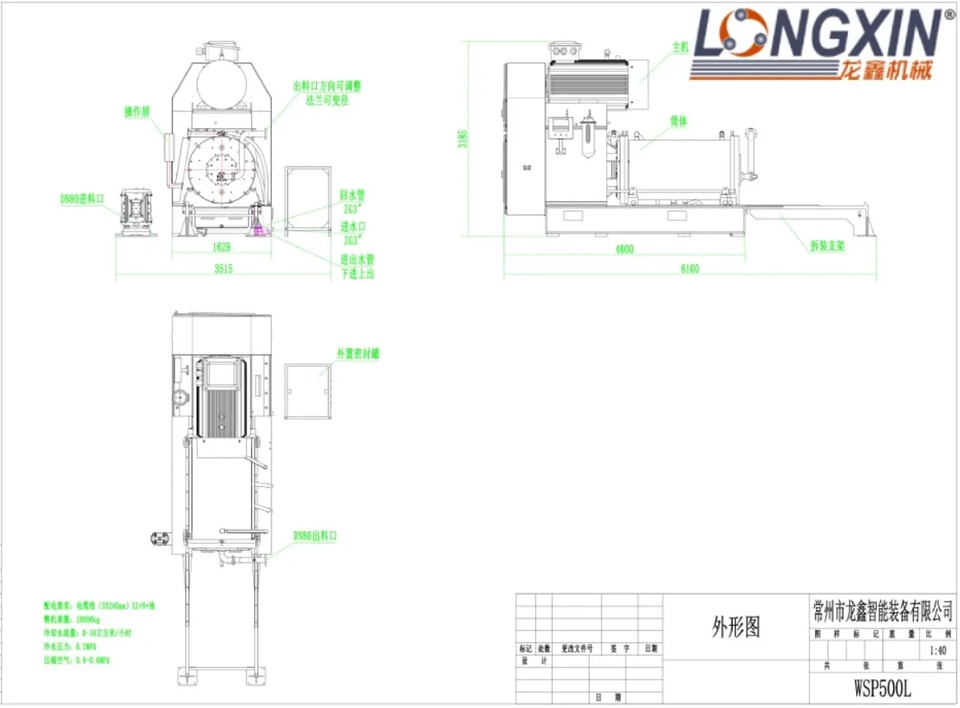
Dual-Core Equipment: High-Flow Pin-Type Nano Bead Mill & High-Temperature Spray Drying Tower Empower Ultrafine, High-Purity Spherical Alumina
Stringent requirements for ultrafine particle size and ultra-low impurity content of separator-grade spherical alumina demand collaborative innovation across grinding and drying processes. Longxin Intelligent’s integrated production line pairing high-flow pin-type nano bead mills and high-temperature spray drying towers serves as a tailor-made all-in-one solution, fully resolving traditional process limitations in grinding capacity, particle size control, purity protection and dried powder quality.
Advantages of the High-Flow Pin-Type Nano Bead Mill
The grinding unit addresses traditional equipment’s drawbacks of low throughput, wide particle size distribution and impurity contamination risks:
- A composite turbine-pin rotor structure drives materials along a 3D motion path combining circumferential vortex flow and radial impact. Paired with 0.3–0.5 mm zirconia grinding beads, triple forces of shear, collision and extrusion gradually refine particles. Spherical alumina D50 can be stably controlled between 100 nm and 2 μm, with narrower particle size distribution than the industry average, perfectly matching ultrafine powder requirements for separator coating.
- A screenless centrifugal separation design eliminates metal screen contact with materials, restricting metallic impurities to an extremely low level and guaranteeing high alumina purity. It also prevents screen clogging caused by high-viscosity slurry or fibrous contaminants, extending continuous operation lifespan several times over conventional equipment and drastically lifting production efficiency.
Advantages of the High-Temperature Spray Drying Tower
The drying tower processes ultrafine slurry post-grinding, preserving particle characteristics while enhancing powder flowability:
- Optimized hot air distribution and ultra-high-speed atomization atomize slurry into uniform micro-droplets that instantly dry upon contact with hot air, generating hollow spherical powder. The process retains ultrafine particle sizes achieved in grinding and resolves common issues of ultrafine powder agglomeration and poor flowability, supporting automatic feeding and uniform coating in subsequent separator manufacturing.
- A new offline pulse bag dust collector with high-temperature-resistant filter bags and cold air protection system recovers over 99% of ultrafine spherical alumina powder without introducing secondary contamination during drying, further strengthening the product’s purity edge.
Longxin High-Flow Pin-Type Nano Bead Mill: Technical Details Deliver Superior Grinding Performance
As the core grinding equipment, the mill integrates proprietary innovations in structural design, wear-resistant materials and intelligent control to enable reliable ultrafine processing of spherical alumina.
- A modular grinding assembly paired with an advanced screen-free separation system breaks the conventional integrated grinding-separation design constraints.
- Turbine pin components are manufactured from tungsten carbide (HRC 90 hardness) with specialized surface coatings. Uniform energy density distribution is maintained at rotational speeds of 1200–1800 r/min to avoid localized over-grinding and particle agglomeration, ensuring consistent spherical alumina particle sizes.
- The grinding chamber is constructed from silicon carbide (HV 1800+ hardness) with exceptional wear resistance and thermal conductivity. Its service life exceeds stainless steel by 5 times, while thermal conductivity triples that of stainless steel. Combined with jacket cooling, stable operating temperatures are maintained to prevent crystal phase transformation or oxidation of spherical alumina during grinding, securing consistent product performance.
- The intelligent control system acts as the equipment’s operational brain. Equipped with PLC modules and real-time temperature, pressure and flow sensors, it continuously collects key process parameters and automatically adjusts rotor speed and feed flow via built-in algorithms. If particle size deviates from set targets, rotational speed is optimized autonomously to stabilize particle dimensions. The mill supports MES system connection, forming a full closed-loop workflow of online monitoring, real-time adjustment and data traceability to meet flexible multi-variety, small-batch production demands. Pre-stored process recipes for different alumina batches drastically shorten product changeover time.
- Outstanding economic performance in energy consumption and maintenance: The silicon carbide grinding chamber’s superior heat transfer eliminates extra heat exchangers, cutting unit energy consumption by over 20% vs. traditional mills. High-efficiency small-diameter zirconia beads reduce grinding media consumption by 15% at equivalent throughput. Long-lasting wear-resistant components lower annual maintenance costs by 30%, delivering substantial economic benefits to manufacturers.
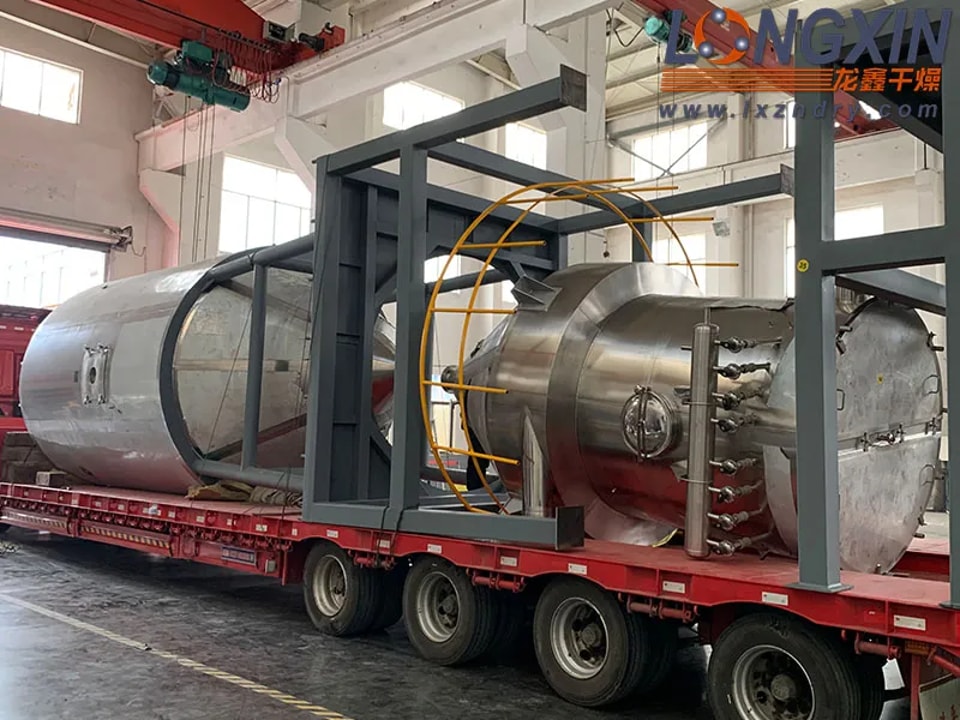
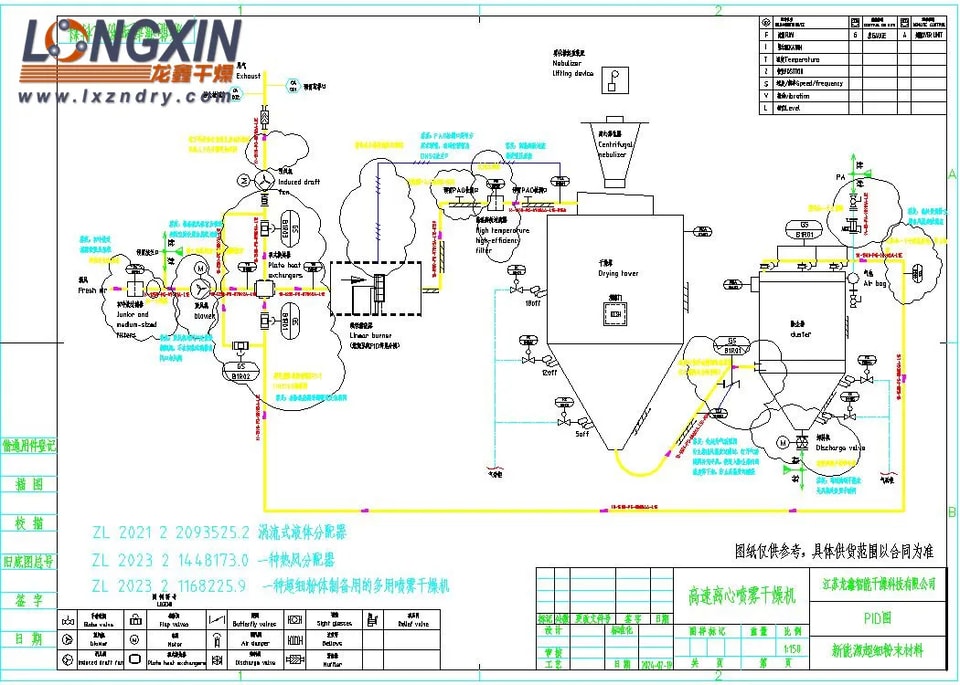
High-Temperature Spray Drying Tower: Refined Design Ensures Superior Dried Powder Quality
Customized for spherical alumina slurry drying, the tower features comprehensive technical upgrades covering hot air distribution, atomization, cooling and dust recovery to retain ultrafine particle size, high purity and excellent flowability of finished alumina powder.
- CFD fluid dynamics simulation optimizes the hot air distribution system. Simulated internal hot air flow patterns refine air duct geometry and inlet angles to form a uniform, stable swirling airflow field inside the tower. Full contact between atomized droplets and hot air avoids localized overheating that causes particle sintering or degradation, while delivering consistent moisture content across all powder to satisfy strict drying standards for separator coating materials.
- Fully self-developed ultra-high-speed centrifugal atomizers deliver reliable performance with rotational speeds ranging from 15,000 to 25,000 r/min. Slurry is atomized into 5–50 μm uniform droplets to ensure consistent powder particle size after drying and eliminate coarse particle impurities. Precision dynamic balancing minimizes operational vibration and failure rates, outperforming competing industrial equipment in continuous run stability.
- Interchangeable atomizer disks support diverse process requirements: Flat disks suit low-viscosity slurry to produce fine powder; turbine disks boost atomization efficiency for medium-to-high viscosity feedstock. Multiple disk options expand process adaptability for various grades and batches of spherical alumina.
- Combined oil-air dual cooling systems stabilize high-temperature operation: The oil cooling loop rapidly dissipates heat from the atomizer spindle, while auxiliary air cooling maintains atomizer operating temperature below 80°C. The control system monitors atomizer speed, temperature, vibration as well as tower internal temperature and pressure in real time, triggering automatic alarms and parameter adjustments upon abnormalities to prevent equipment thermal damage and sustain uninterrupted production.
- Advanced offline pulse bag dust collectors improve recovery efficiency and powder purity: CFD-optimized flow field structures eliminate airflow dead zones, paired with PTFE filter bags resistant to temperatures up to 300°C to capture over 99% of ultrafine alumina powder. Cold air shielding protects filter bags from direct contact with high-temperature hot air to extend service life. Offline ash cleaning enables filter maintenance without production shutdowns, sustaining continuous manufacturing and eliminating cross-contamination during cleaning to preserve alumina purity.
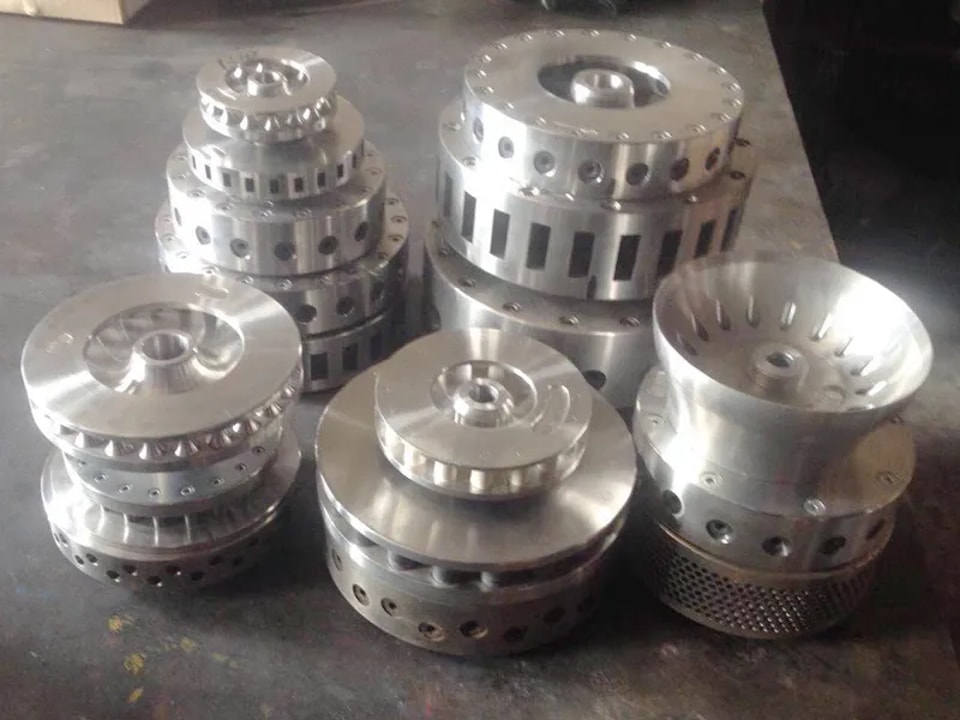
Integrated Multi-Dimensional Energy-Saving Technologies: Longxin Intelligent Develops High-Efficiency, Low-Consumption Spray Drying Systems
Energy optimization for high-temperature spray drying towers relies on deep integration of thermodynamics, fluid mechanics, automation and material processing rather than simple superposition of isolated technologies. Centered on the integrated grinding-drying production line, Longxin Intelligent embeds energy-saving design throughout equipment development, process matching and intelligent operation, achieving a balance of high production performance and low energy use and setting new benchmarks for green manufacturing of high-quality alumina powder.
Hot Air Energy Management to Boost Thermal Efficiency
- Optimized inlet-outlet temperature differential: Maximize inlet air temperature within powder moisture specifications to reduce required hot air volume.
- Waste heat recovery system: High-temperature exhaust retains 10–20% of process heat, recovered via standard air-air heat exchangers or exhaust recirculation preheating modules. Recovered heat preheats fresh intake air to reduce main heater load and preheats feed slurry to 40–60°C to lower viscosity and improve atomization results.
Precision Process Parameter Control Reduces Energy Use at the Source
- Elevated feed solid content: Raising slurry solid loading from 30% to 45–50% cuts evaporation volume by nearly 30%, directly lowering energy consumption by more than 20%. High-solid, low-viscosity slurry output from Longxin nano bead mills enables high-concentration feeding.
- Intelligent atomization matching: Variable-frequency centrifugal atomizers dynamically adjust rotational speed based on slurry properties for uniform droplet sizes, preventing secondary drying from oversized droplets or fine powder loss. Consistent atomization shortens drying duration and eliminates wasted thermal energy.
Stable Continuous Feeding
High-precision screw pumps paired with PID flow closed-loop control eliminate temperature fluctuations caused by unstable feed rates, maintaining a steady thermal field inside the tower and avoiding repeated reheating cycles.
4.
Optimized Equipment Structure & System Design
High-efficiency dust recovery with offline pulse cleaning achieves >99% powder yield; reduced material loss translates to lower energy consumption per unit product. Automated regular ash cleaning stabilizes system pressure drop and cuts induced draft fan power draw.
5.
Intelligent Control System Delivers Dynamic Energy Savings- 3D thermal field monitoring: Multi-point temperature sensors installed at air inlet, drying zone and outlet generate real-time thermal distribution models.
- Adaptive algorithm parameter tuning: Automatically adjusts inlet air temperature, atomizer speed and exhaust air volume based on feed concentration and ambient temperature/humidity to maintain operation at the minimum effective energy point.
- Recipe storage & one-click switching: Pre-sets optimal drying curves for spherical alumina, boehmite, activated alumina and other materials to eliminate energy waste from trial-and-error process adjustments.
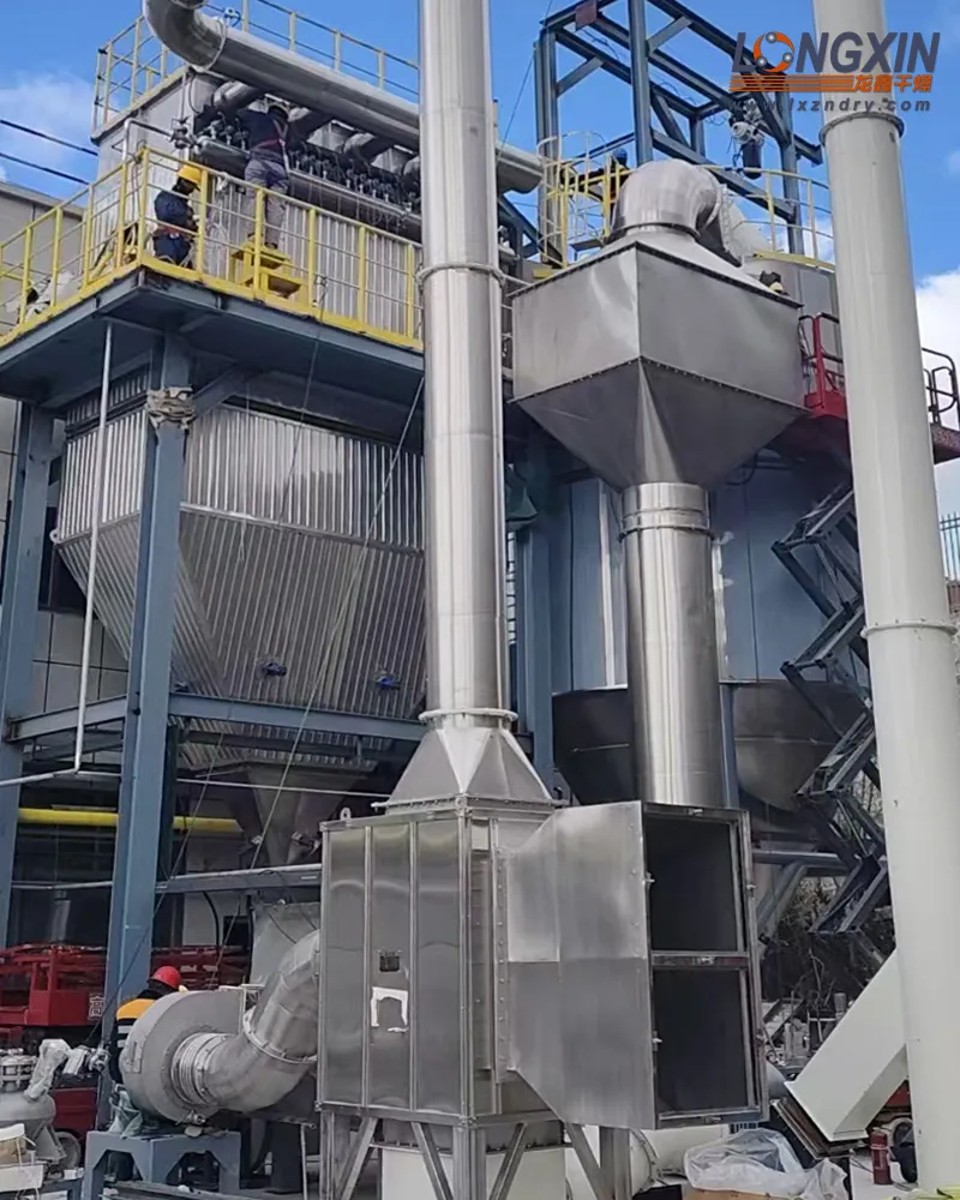
Intelligent Production Lines Drive Industrial Upgrading: Ultrafine High-Purity Spherical Alumina Safeguards Lithium Battery Performance
Longxin Intelligent’s integrated spherical alumina grinding and drying line combining high-flow pin-type nano bead mills and high-temperature spray drying towers is far more than a simple combination of machinery. Through process coordination and intelligent full-process control, it delivers consistent ultrafine, high-purity alumina powder that serves as core separator thermal conductive material, fundamentally improving lithium battery safety at the raw material level.
Product Performance Advantages
Spherical alumina manufactured by this line features stable D50 particle sizes and narrow particle size distribution, dispersing evenly in separator coating slurry to form dense, high-thermal-conductivity coating layers. The coating prevents short circuits induced by separator rupture, while the high thermal conductivity of spherical alumina accelerates heat dissipation during battery operation, mitigating localized overheating and lowering risks of combustion and explosion.
2.
Production Efficiency & Cost Advantages
The line enables fully continuous spherical alumina manufacturing. The high-flow pin-type nano bead mill delivers hundreds of liters hourly, lifting throughput 2–3 times compared to traditional equipment. Matching drying capacity of the high-temperature spray tower creates seamless grinding-drying workflow integration, boosting daily output of a single line by over 30% vs. batch manufacturing systems. Low energy consumption and minimal maintenance reduce unit production costs of spherical alumina by 15–20%, supporting manufacturers to strengthen market competitiveness without compromising product quality.
Technological Innovation Establishes New Standards for Alumina Ceramic Powder Manufacturing
Looking ahead, new energy vehicles will advance toward longer driving ranges and faster charging, raising performance thresholds for separator thermal conductive materials. Longxin Intelligent will continue deepening R&D into nano grinding and drying technologies: developing more wear-resistant grinding chamber materials, refining intelligent control algorithm precision and expanding multi-device linked unmanned production lines. We will continuously push the limits of spherical alumina particle size and purity control, delivering stronger raw material manufacturing solutions to elevate lithium battery safety performance and fuel high-quality development of the new energy industry.
As a professional equipment manufacturer and technical service provider for refined alumina products including spherical alumina, alumina ceramic powder, ultrafine aluminum hydroxide, boehmite, activated alumina, nano alumina, high-purity alumina and granulated alumina powder, Longxin Intelligent centers its development strategy on technology-driven product upgrading. Our integrated intelligent grinding-drying production lines supply high-consistency refined alumina manufacturing equipment and customized solutions to global clients. We look forward to collaborating with industrial partners to advance refined alumina technology and power innovation across new energy, electronics, medical and other high-tech sectors.
Pursuing Ultrafine & High-Purity Materials: Integrated Nano Milling & Spray Drying Line for Spherical Alumina Diaphragm Thermal Conductive Materials Boosts Lithium Battery Safety
Against the backdrop of explosive growth in the new energy vehicle market, battery safety has become the core lifeline of industrial development, and high-performance thermal conductive materials have entered a period of rapid expansion accordingly. Demand for spherical alumina, the leading thermal conductive filler, has surged dramatically.
Spherical alumina used as diaphragm thermal conductive materials must meet stringent standards for ultrafine particle size (precise size control) and high purity (ultra-low impurity content), which calls for collaborative technological breakthroughs in grinding and drying processes. Longxin Intelligent has developed an integrated production line combining high-flow pin-type nano bead mills and high-temperature spray drying towers as a one-stop solution tailored to such requirements. This system comprehensively overcomes bottlenecks of conventional manufacturing processes in grinding throughput, particle size precision, purity assurance and dried powder quality.


 13611616575
 +86 13611616575